Basement ceramic tiles

Unique in Flanders: have your basement poured with ceramic tiles

Unique in Flanders: have your basement poured with ceramic tiles

When soil moisture enters your basement, problems such as a damp basement floor, damp basement walls, musty odours and fungi. You obviously want to avoid this. One possible solution to this is basement waterproofing. Where basement waterproofing previously only possible with concrete, AquaConsult offers a unique alternative: covering your basement with ceramic tiles. Read all about it here.

What is basement cupping?

In many basements, the basement walls and floor are not sufficiently resistant to the pressure of groundwater. This causes salts to form in the walls, which then affect the plaster present. In this way, ground moisture can enter your basement through the basement walls and/or floor, which can have negative consequences. To combat this, you can have your basement drained.

Basement waterproofing or cellar sealing involves applying a thick layer of waterproof cement to the basement floor and walls. This creates a new protective layer, as it were, that prevents groundwater from penetrating. Specifically, such basement waterproofing works as follows:

  1. We remove the current occupation as much as possible to make the substrate visible. This allows us to determine where water is seeping through the wall, and a quick-drying waterproof cement mortar is applied to those areas.
  2. Once we determine that no more water is coming through the walls, we apply a first sealing layer.
  3. When this first layer has dried sufficiently, we continue with another layer of cement mortar.

After performing (or having performed) these steps, water will no longer enter your basement.

Please note: Every situation is unique. In some cases, a basement pit is not sufficient, and a basement drainage or -ventilation needed. Get assistance from AquaConsult and request a free expertise to ensure you make the best choice for your basement.

Pair the practical with the pleasant: have your basement poured with a tile finish

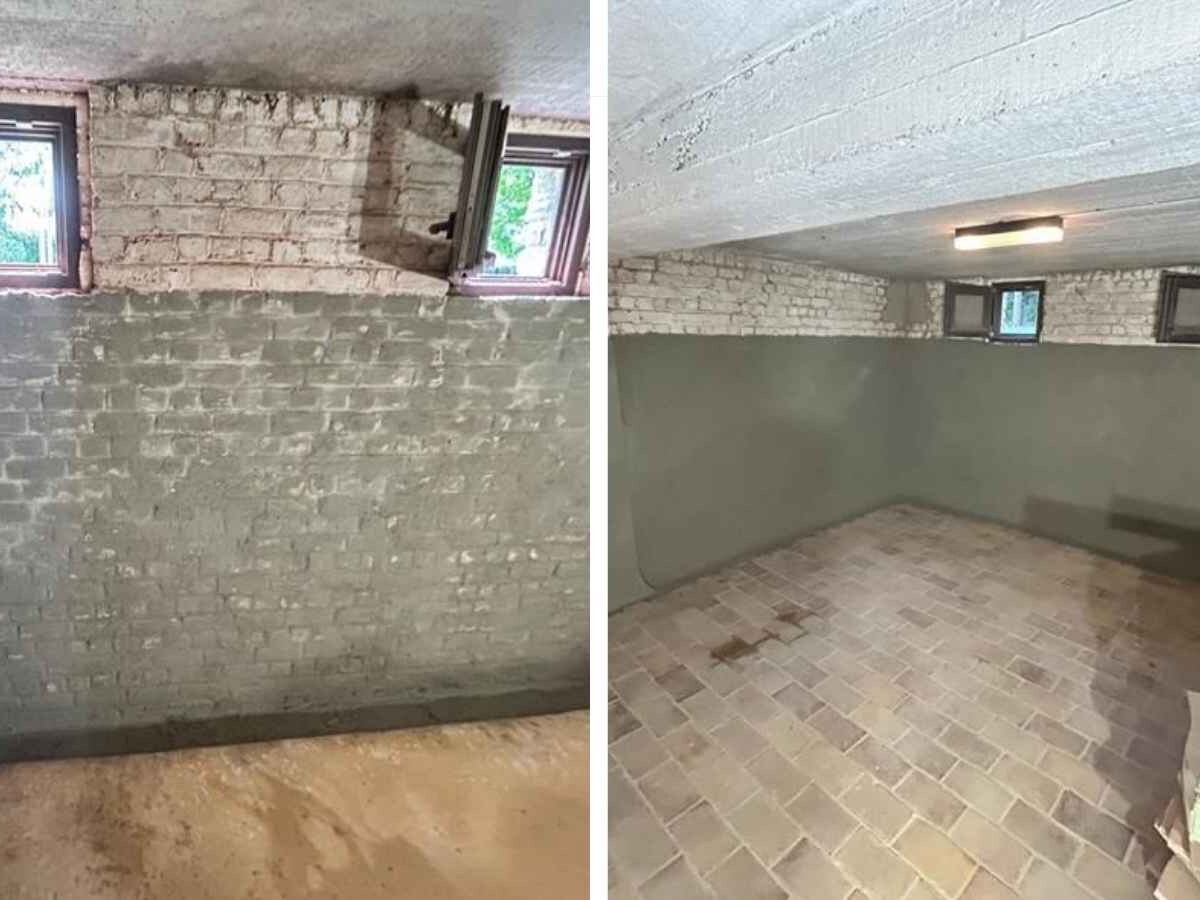
Traditionally, basement waterproofing is done exclusively with a waterproof layer of concrete. But, you can also go a step further and have your basement waterproofed with rectified ceramic tiles. AquaConsult is unique in this, and there are several advantages:

1. Less loss of space

A basement casing is always accompanied by some loss of space. Typically, such loss with a traditional casing is about 8 cm, but with a tile finish this loss is reduced to about 5 cm.

2. Complete and beautiful finish

This basement sealing method automatically creates a nicer-looking basement that is also fully finished immediately.

3. Cheaper

Basement waterproofing with ceramic tiles also comes with a more interesting price tag than basement waterproofing with concrete. Basement waterproofing actually involves renovating the entire basement, which is obviously not cheap. However, with this unique process, the sealed cellar is also immediately finished with rectified 60 × 60 cm ceramic tiles, saving you in finishing costs. In addition, fewer materials are also needed to keep your basement dry, which benefits your wallet.

basement ceramic tiles

basement ceramic tiles

Say goodbye to your damp basement for good

Are you struggling with a damp basement and looking for a suitable solution?
Then you have come to the right place at AquaConsult.
Contact us now, or request a free moisture expertise.

Free expertise

More information and brochure request

Answer the questions below and get more information and our brochure based on them. Would you like the cost price calculated? Then indicate this clearly in the text field below and we will do the necessary.


Mechanical ventilation

Mechanical ventilation: the solution to your humidity problem?

Mechanical ventilation: the solution to your humidity problem?

Ventilation is the process of removing polluted air and bringing in fresh, clean air. This is vital to prevent various long-term problems. An effective approach for this is to use mechanical ventilation. But what exactly does this entail? In what way does it help combat moisture problems? And how can mechanical ventilation contribute to the fight against corona virus? All your questions are answered in this article.

Why is good ventilation important?

The average Fleming spends most of his or her time indoors. Nevertheless, we note that indoor air quality is often considerably less than outdoors. This is often true for basements, where ventilation tends to be generally challenging. This brings all kinds of negative consequences:

  • Without proper ventilation, all kinds of moisture problems arise. In particular, problems such as condensation moisture are very simple to solve with ventilation. And solve condensation moisture? Then you can immediately do something against black mold.
  • Poor ventilation can also cause all kinds of health problems.
  • Damp rooms are also harder to heat, so ventilating also helps you bring down that energy bill.
  • Besides preventing and solving moisture problems, ventilation is also very good for purifying the air in your home, making the air healthier and more pleasant to live in.

So thoroughly ventilating your home has only advantages.

What is the difference between natural and mechanical ventilation?

As already stated, through ventilation, you remove polluted air and bring in fresh, clean air. With natural ventilation, this supply and removal occurs naturally. Grids embedded in the walls allow polluted air out while fresh air comes in through another grid. Or you open a window. That too is ventilation.

Yet natural ventilation is not always a good idea. Especially in well-insulated houses, this can be difficult, as everything was done there to keep the warm air in. Also, many people leave the ventilation closed in winter to keep the cold air out. At that point there is no longer even any ventilation.

There is also a big disadvantage to natural ventilation: you cannot (or at least very difficult) control the supply and extraction of air, in winter cold air enters the building, causing your energy bill to skyrocket.

With mechanical ventilation, these tricky points fall away and you can control the air extraction and/or supply in a partially or fully mechanical way. Three different combinations are possible.

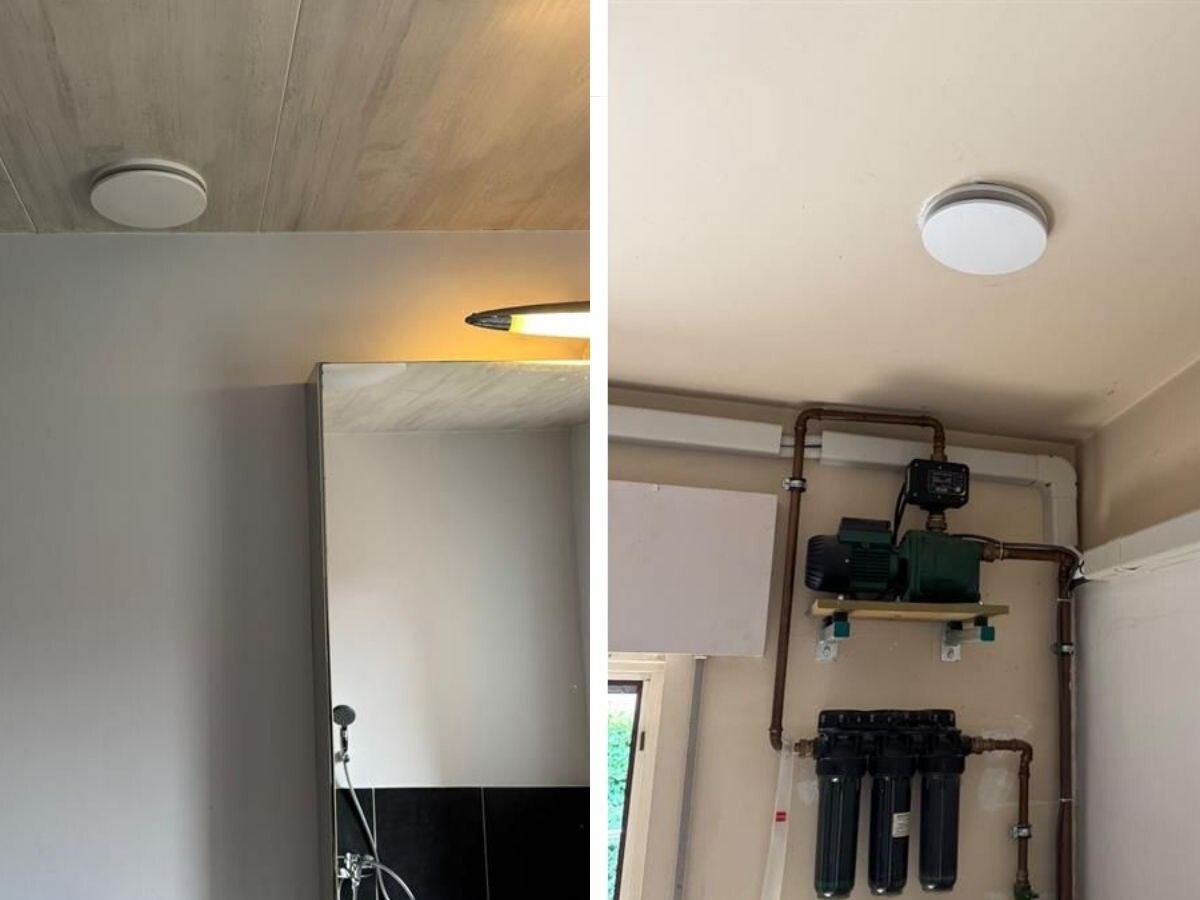
Mechanical ventilation

The different types of mechanical ventilation

Mechanical ventilation systems are divided into types from A to D. Ventilation system type A is natural ventilation, so we won't expand on that. Ventilation system type B is mechanical ventilation, but this form is rarely used in homes. We take a quick look at the details of ventilation systems type C and D.

Ventilation system type C(+)

Mechanical ventilation often refers to ventilation system C. This system is partly mechanical: the supply of air is natural, but its removal is mechanical. Two types can be distinguished in this:

  • With a type C mechanical ventilation system, this exhaust of air occurs continuously.
  • In a type C+ ventilation system, the mechanical component is a whole lot smarter, and will exhaust air based on the CO² level or humidity in the room.

Type D ventilation system

Type D mechanical ventilation goes one step further. Here, both supply and exhaust are fully mechanical. Several additional options exist, such as choosing a heat exchanger to save more energy. There is also the option of filtering for pollen and dust, which is especially beneficial for people with allergies.

With this type of mechanical ventilation, also known as balanced ventilation, the supply and return of air remains constantly balanced.

Which mechanical ventilation system is the best choice?

Now that you know the difference between mechanical ventilation type C and type D, we briefly list the pros and cons.

  • Type C is the more cost-efficient option of the two, as only one fan is needed, more specifically for exhaust control. A Type D fan system typically consumes more energy, as it supports two fans.
  • Nevertheless, using a heat exchanger in balanced ventilation can help save energy. In Type C, more energy is lost in warming up the colder air supply.
  • Type D is distinguished by filtering the outside air for pollen and fine dust. This results in improved air quality, allowing people with allergies to breathe more comfortably.

Both mechanical ventilation systems help against moisture problems anyway. If you ventilate properly, condensation moisture does not get a chance. It only benefits your health.

We take on viruses

You can also have something else built into the balanced ventilation: the GPS-FC24-AC, a ionisation system. Such an ionisation system sends electrons into the air that cling to particulate matter, pollen, as well as pathogens such as those from coronavirus. After a 60-minute exposure, covid-19 particles had decreased by as much as 90%.

This is one of the products officially approved by the Federal Public Health Service To be useful in the fight against coronavirus. Is the product not on that list? Then it is prohibited from being sold in Belgium.

Need mechanical ventilation?

Do you suffer from damp walls? Perhaps mechanical ventilation could be the solution to your problem. Request a free moisture expert assessment now and we will help you find the best solution.

Free expertise

More information and brochure request

Answer the questions below and get more information and our brochure based on them. Would you like the cost price calculated? Then indicate this clearly in the text field below and we will do the necessary.


Treating rising damp yourself: here's how to do it

Treating rising damp yourself: here's how to do it

Do you suffer from damp walls? You may be dealing with rising damp. It is important to address this problem to prevent further damage. Fortunately, it is often possible to treat rising damp yourself. In this article, we share all the essential information about this.

Rising damp, a moisture problem you would rather not have

Rising damp is caused by groundwater being absorbed by the foundation and walls, this because there are problems with the dam in the wall. This leads to moisture spots that are mainly visible close to the ground, but the moisture can also spread further into the wall. Both interior and exterior walls can suffer significant damage as a result.

This moisture problem can occur in both old and new houses, and it brings with it all kinds of negative consequences. Some examples are:

  • Loose plaster, mould or spots on walls
  • Structural damage to the home
  • Health problems, mainly respiratory
  • A significantly higher energy bill
  • ...

It is therefore very important to treat rising damp at its base. It is often possible to treat the rising damp yourself.

Treating rising damp yourself with wall injections

When you want to treat rising damp yourself, there is usually only one method that is effective: the injecting the wall. This involves drilling holes in your wall, which you then fill (read: inject) with a damp-proof gel. That gel then spreads deep into the pores of the wall. The chemical components of the gel react with the elements in the wall, resulting in a water-repellent layer that blocks rising moisture.

Step by step treat rising damp yourself

Step 1: the preparation

A prepared man is worth two. This is no different here. These are some preparatory steps you should take before treating rising damp yourself:

  • Make sure you are sure that the cause of the damp wall is rising damp. This is because each moisture problem requires a specific approach to moisture control. If the damp wall is caused by another factor, injecting the walls will not be effective in solving the problem.
  • Further remove any damaged plaster up to about 20 centimetres from the affected area.
  • Repair all holes and cracks with a suitable repair mortar.
  • Finally, make sure the surface is completely dust-free.

Step 2: drilling the holes

After the preparation, it is time for the real work: drilling the holes in the wall. Holes should be drilled along the full length of the floor. The holes should be spaced 10 centimetres apart each time, and they should come just above the floor line. It is recommended that you mark off the holes first.

After determining the locations of the drill holes, measure the thickness of the wall to be treated. The drilling depth should be about 90% of the wall thickness, often this amounts to 2 centimetres less than the thickness of the wall. To actually drill the holes, it is recommended to use a long 12-millimetre stone drill bit. After drilling, the holes should be carefully cleaned with a hoover to remove drill cuttings.

Step 3: injecting the wall

After drilling the holes, you can inject the walls. You fill the holes with the damp-proofing agent, and you do this using a caulking gun or spray gun. Do this as follows:

  • Insert the nozzle as deeply as possible into the hole.
  • Start injecting at the back, moving towards the entrance of the hole in a smooth motion. Stop about 1 centimetre from the wall surface.
  • Repeat for all drill holes, making sure each hole is completely and evenly filled.
  • Use the inches left over to seal the drill holes with cement mortar. This ensures a nice finish.

A handy tip to remember: if emulsion gel is spilt, it is advisable to clean the spill immediately with warm soapy water. By doing this quickly, you prevent the emulsion gel from drying up and becoming more difficult to remove.

The pros and cons of treating rising damp yourself

There are some advantages to injecting your wall yourself. For one, you can cut costs, and you can completely decide when to inject your wall. You also have more control over the entire process and can closely monitor your wall and spot any problems in time.

However, performing wall injections yourself does not come without dangers either:

  • Wall injections are an effective method of combating rising damp. However, it can be challenging to determine with certainty whether rising damp is actually the cause of the damp problems in your wall. A thorough moisture analysis by experts is often needed to confirm this.
  • Injecting a wall is a complex and invasive task that often requires experience and expertise. If you do not have sufficient knowledge and skills, you risk making mistakes.
  • Moreover, mistakes can lead to worsening of the moisture problem or even cause additional damage.
  • Finally, do not underestimate wall injection. Injecting walls requires insight and patience. A wall can absorb 50 to 70 litres of moisture per metre, so it takes a long time to dry completely after treatment. Salpet formation can also occur in the interim, which also complicates the process.

Treating rising damp yourself: the conclusion

Although fighting dampness yourself is possible, it requires patience and precision. Nevertheless, we recommend hiring professional help, as it guarantees a correct execution and final solution. Due to favourable prices and a reduced VAT rate, professional moisture control is often not much more expensive.

Tackling rising damp for good

Do you have a moisture problem, and suspect it could be rising damp? Our field engineers are real experts when it comes to this moisture problem. Contact AquaConsult now for a no-obligation free expertise.

Free expertise

More information and brochure request

Answer the questions below and get more information and our brochure based on them. Would you like the cost price calculated? Then indicate this clearly in the text field below and we will do the necessary.


mould on wall

Four ways to prevent mould in the home

Four ways to prevent mould in the home

Mould on the wall is a big problem. It is the cause of problems to your home as well as to your health. There are ways to make your house mould-free. AquaConsult will be happy to help you.

How do fungi arise?

Mold on the wall need moisture to grow and survive. Therefore, they arise in places in the house where there is a higher humidity prevails. For instance, the basement, kitchen and bathroom are the main places in the house for the development of mould, and this is primarily triggered by human activities that lead to condensation moisture:

  • In the kitchen, there is often a lot of steam from boiling water.
  • In the bathroom moisture is created by hot water from the shower or bath.
  • Various moisture sources easily find their way into the basement, but due to a lack of ventilation, it is difficult for the moist air to escape from the basement.

Also underlying moisture problems such as rising damp or penetrating moisture can eventually lead to mould. Leaks or broken downspouts can also be the culprit. That way, moisture from outside can also wriggle its way inside. Do you notice mould in your home? If so, be sure to contact a moisture expert To find out what is at the origin.

Mold problems in the home

Why should I prevent mould in my home?

First of all, it is important to know why you should prevent mould. This is because mould is associated with all sorts of negative consequences, on the one hand for your home and on the other for the health of you and your family members.

  • As mentioned earlier, mould can cause damage to your home; especially in an advanced state. Mould then settles on wood or in the wall. The longer the mould has time to grow, the weaker that wall becomes.
  • Fungi are also a drain on health; especially for children, the elderly and those with underlying lung or respiratory conditions. The biggest culprit here is black mold by the mycotoxins which they excrete. Common health complaints after mould exposure are nausea, headache, breathing problems, coughing, allergic reactions or irritated skin.

Removing mould on the wall is not an easy task either. So it is better to prevent than to cure.

How do I prevent mould in the house?

There are several ways to prevent mould in the home. We list the most important ones here.

1. Adjust your habits

As mentioned earlier, mould occurs in the most humid places in the house, such as the kitchen or bathroom. By adjusting your habits a little, you can easily prevent mould:

  • One of the most important habits to prevent mould is drying your bathroom after you shower. Showering creates a lot of steam in the room and that moisture can soak into the walls if you don't make sure the walls are dry.
  • In addition, it is recommended to always put on your cooker hood when you cook.
  • Carpets in damp rooms also retain moisture, which in turn can promote mould. Limit placing carpets in these areas, or make sure you let your bath mat dry regularly.

2. Pay attention to the humidity in your home

Does the humidity in the house above the 60%? Then the humidity in the house is too high, so moisture does not have a chance to dry out. So the moisture is much more likely to soak into the walls, giving mould free rein.

You can easily keep an eye on things by using a hygrometer. This measuring instrument is designed to keep track of the humidity in your home. A thermometer can also be a help, as a room that is too humid is often harder to heat. Notice that you find it harder to get your home to the desired temperature during a cold autumn or winter day? If so, this could be due to increased humidity.

3. Tackle moisture problems in time

As briefly outlined above, mould in the home is one of the many symptoms of a moisture problem. It is important to address moisture problems as soon as possible so that mould does not have the chance to develop.

Think you are suffering from a moisture problem? Then take contact AquaConsult and we will help you as soon as possible.

4. Ventilate the room

The biggest and easiest way to prevent moulds is ventilation. On the one hand, this can be done simply by opening your windows for about 15 minutes every day, but on the other hand, a mechanical ventilation system a help. This system is then installed in the rooms most likely to cause moisture problems; such as the bathroom and kitchen. With balanced ventilation, you regulate the air in your home yourself.

Too late... How to remove moulds?

Did you find this article just too late, and you still notice mould spots on your walls or ceilings? If so, it is obviously important to remove the moulds in your home.

You yourself can remove mould from wall if they are small, scattered spots. Use soda and water or buy a fungicide. When doing this, always ensure protection with a mouth mask and gloves. For large mould spots on walls, it is advisable to call in a professional such as AquaConsult, as they not only remove the mould but also address the underlying cause.

What if the fungus is extensive?

Black mould, as mentioned earlier, can be dangerous to both your health and your home. It is often unwise to tackle this problem yourself, especially with large and persistent areas of mould. Moreover, removing them yourself is not always a permanent solution. A moisture expert tackles the cause of the problem, improving the air quality in your home and preventing black mould from threatening the health of you and your family members.


Are you suffering from black mould? Request a free moisture assessment from AquaConsult now.

Free expertise

More information and brochure request

Answer the questions below and get more information and our brochure based on them. Would you like the cost price calculated? Then indicate this clearly in the text field below and we will do the necessary.


Why thermal bridges may well be the cause of your moisture problem

Cold bridges: the hidden culprits behind moisture and condensation

Find out everything you need to know about cold bridges.

What are thermal bridges?

A thermal bridge is a weak link in the insulation of your home. Cold bridges occur where insulation is absent or poor. It is literally a place in a house where the "cold" is conducted from outside to inside. They are also called thermal bridges, thermal bridges or building knots.

The insulation envelope is missing or interrupted, causing heat loss. This lowers the indoor temperature and increases the need for heat. Moreover, cold bridges can also indirectly cause moisture problems. Moisture and thermal bridges are always the biggest problems in all renovation projects.

And that's not all: cold bridges can also cause problems in summer. For example, thermal bridges allow warm air to enter, making it difficult to keep your home pleasantly cool.

The causes of cold bridges

Cold bridges can have different origins.

  • Most thermal bridges occur at breaks in the insulation, in other words when insulation materials are not joined seamlessly.
  • Cold bridges can also occur where there is no insulation at all. In older homes, this is often seen near shutters and floors.
  • Less well known is that aged exterior joinery can also be a source of thermal bridges. Older profiles sometimes contain no thermal break, giving free rein to cold.

Where are thermal bridges located in a house?

A thermal bridge often occurs in all places where insulation does not connect properly. You can therefore sometimes detect a thermal bridge very clearly around exterior doors and windows, where the insulation is not optimally connected to floors or the door and window openings themselves. A few millimetres of opening are enough to allow a thermal bridge during a cold winter period. Of course, a few millimetres of insulation loss will not cause serious moisture problems, but it will slightly increase energy bills.

Some examples of places where thermal bridges can occur:

  • Transition from a wall to a window
  • Window frames
  • Eaves
  • The place where the floor is in contact with the cavity wall

How do you recognise thermal bridges?

You cannot always see a thermal bridge, but you can feel it. If you rub your hand over a piece of wall or floor and notice a difference in temperature, you are dealing with a thermal bridge. If you see black mould or condensation on concrete slabs or windows, that could also be an indication of a thermal bridge.

thermal bridge

What (moisture) problems cause thermal bridges?

Cold bridges are the cause of a lot of moisture problems in the home. Especially alarming is the structural moisture damage it can cause on the cold wall. A cold bridge weak enough to cause the wall temperature to drop below 14°C works moisture problems such as condensation in hand.


Where indoor moisture (which is naturally present in warm indoor air) can condense against walls, get fungi a chance to form and moisture stains also develop. Houses with condensation and mould are additionally just not good for the health. Moreover, it is bad for plastering, wallpaper and/or painting. With wood structures, it can then cause the wood to rot, resulting in instability. It is a real domino effect.

Because the walls at the level of a thermal bridge cool down significantly, the natural moisture in the air will condense in these places.


Not only do cold bridges cause moisture problems, but they also cause another major problem: energy and heat loss. As mentioned earlier, thermal bridges create a temperature difference between the wall where there is a thermal bridge and the rest of the house. So in winter, you will need more energy to heat your home, resulting in higher energy bills. With today's high energy prices, you naturally want to avoid these.

Coldbridge

Influence of thermal bridges on K-level and E-level

The Flemish government encourages homeowners to better insulate and airtight renovate houses (think cavity wall insulation or crepi / exterior wall insulation). A renovation aimed at eliminating cold bridges has several benefits for property values:

  • A more positive K-level (a degree of thermal losses through the building envelope)
  • A more positive E-level (a measure of a building's overall energy performance)

How do you solve thermal bridges?

Good ventilate, insulating and heating are 3 rules of thumb to prevent cold bridges.


In older homes, it is not always simple to tackle thermal bridges; this is immediately a major renovation. Fortunately, you are entitled to grants or subsidies If you do an energy renovation.


During such a renovation to solve thermal bridges, all insulation is properly connected to each other so that the insulation covers the entire house and there are no more energy leaks. If the insulation is completely continuous and not defective anywhere, thermal bridges do not stand a chance.


So is it even worth addressing cold bridges, since it is such a major renovation? Yes. Without cold bridges, a lot of moisture problems and reduces energy bills.

First aid for moisture problems

Are you suffering from moisture problems? Contact AquaConsult now and we will be happy to help you.

Free expertise

More information and brochure request

Answer the questions below and get more information and our brochure based on them. Would you like the cost price calculated? Then indicate this clearly in the text field below and we will do the necessary.

[null]


Moisture control

How do I maintain ideal humidity in my home?

How do I maintain ideal humidity in my home?

How pleasant the indoor air in your home feels is often related to humidity. Is the humidity in the house too high or too low? Then it can cause ailments and health problems and damage to your home. But what is the ideal humidity level? And how do you check it?

What is humidity?

Under (relative) humidity we mean the number of particles of water vapour circulating in the air at any given time. A good humidity is between 40% and 60%. The air consists of between the 40% and the 60% of particles of water vapour at that time. The ideal level of humidity in the house is 50%.

What if the humidity in the house is not right?

There are two possible scenarios: the humidity in the house can either be too low or too high. Each of these situations has its own consequences.

What are the consequences of a too low humidity?

When humidity is too low, the air in the house is too dry and the relative humidity is below 40%. Low humidity is especially common in winter because the cold air contains less moisture. Typically, too low humidity can cause the following:

  • Due to dry air, you may suffer from minor ailments such as cracks in your lips, dry eyes, headaches and irritation to your mucous membranes or your airways (which manifests as an itchy cough). It can also make it harder for you to concentrate and make you more tired.
  • It can also cause minor damage in your home in the form of cracks in woodwork, such as the floor or furniture.

Nevertheless, too low humidity in the home is not a major problem. The problems really start when the humidity is too high.

What are the consequences of a too high humidity in the house?

Is your humidity too high? Then the relative humidity is higher than 60%. For this, there are a lot of different possible causes, which are often not always easy to detect. Everyday activities from washing, cooking, ironing to simply breathing and perspiring contribute to increased humidity. In fact, scientific studies show that an average family produces up to 15 litres of excess moisture per day. That's not nothing! But an underlying moisture problem can also cause humidity levels in the home to be too high.

The consequences of too high humidity in your home are worse than those of too low humidity; both for your home and for your own health.

  • You will often condensation moisture notice in heated areas such as your living room or bathroom. A movement of air always occurs between a warm and an unheated room. Because of the lack of (mechanical) ventilation, this moist air will condense in the colder rooms, and more specifically on cold surfaces.
  • Damage to the house may follow. This usually comes in the form of mould on the walls, loose plaster or wallpaper, wood rot and dust mites and other pests popping up. Such issues are especially common in the bathroom. That air always has high humidity - because of your washing - and is very prone to problems such as dampness and mould. So when you know that some moulds in the home secrete extremely toxic substances, you want to avoid this at all costs.
  • Also, the air smells musty.
  • In addition, your energy bill may hit rock bottom. This is because a humid room is much more difficult to heat than a room with normal humidity. Studies show that you have to use 20% more energy to heat a humid room.
  • Do you already suffer from underlying conditions? Then excessive humidity can cause a lot of health problems. Excessive humidity worsens conditions such as rheumatism or asthma, house dust mites can trigger allergies, and children, the elderly or those with weaker immune systems can suffer additional respiratory and pulmonary problems. Especially since excessive humidity means there is not enough fresh air and oxygen in the air.

So it is not a luxury to do something if you suffer from excessive humidity in your home.

Measuring humidity

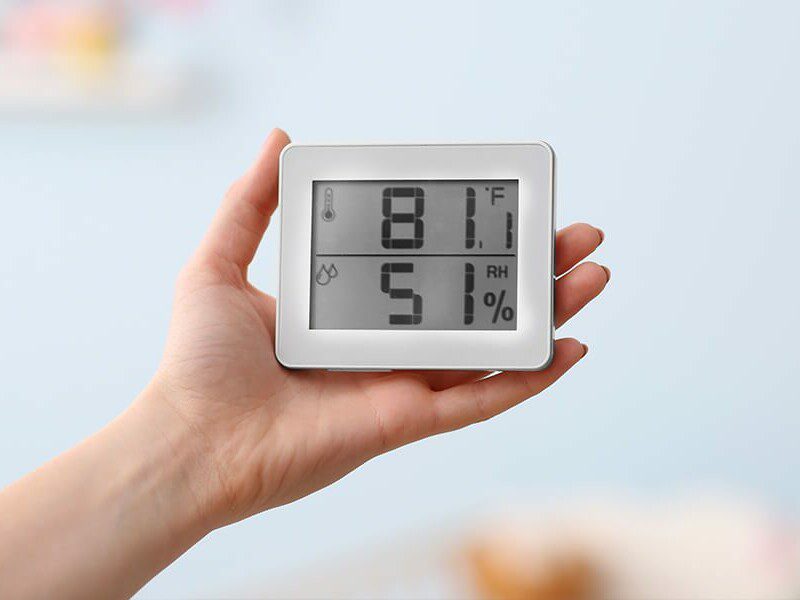
You can measure the humidity in your home yourself using a hygrometer. This is a measuring instrument specifically designed to measure humidity levels in the home. This can help understand humidity levels in the indoor environment.

To ensure an accurate reading, it is important to position the hygrometer correctly. You obviously want to get a representative measurement of the humidity so that you can take appropriate action if the air turns out to be too dry or too humid. This is why we recommend not placing the hygrometer on the wall of an outside wall or near a window. This is because the humidity near external walls and windows often differs somewhat from the rest of the house.

A hygrometer is available these days for as little as 15 euros. Usually, these handy devices also have other useful functions.

Humidity and health

How can I optimise humidity in my home?

Tips for better humidity in the home

We list our tips:

  • Ventilating your home adequately is always a good idea. Open your windows for about 15 minutes every day, and ventilate extra when cooking or showering.
  • If the increased humidity is confined to one room (e.g. a humid bathroom or bedroom), an extraction system or a dehumidifier can help.
  • Always turn on your cooker hood while cooking and also clean it regularly.
  • Cook with lids as much as possible, try to dry your laundry outside as much as possible and wait a while before opening your dishwasher when it is done.
  • Sometimes an abnormal humidity in the house is not caused by poor ventilation, but by a underlying moisture problem. In such cases, it is advisable to have appropriate moisture control measures take. It is wise to use the expertise of a professional to get involved.

A universal and definitive solution: balanced ventilation

The best optimal solution, in other words the solution that guarantees the best humidity in the house, is the installation of a mechanical ventilation system, preferably a balanced ventilation. With balanced ventilation, you have total control over the air in your home. Does the indoor air have excessive humidity? Then you can easily take that air outside and bring in fresh air. Not only does this help control the number of water vapour particles in the air in your home, but it also provides fresh air with plenty of oxygen. Things that make you breathe better and therefore less likely to suffer from lung and respiratory problems.

Get assistance from AquaConsult

Are you suffering from excessive humidity somewhere in Flanders? Contact Aquaconsult now and our experts will be happy to help you.

Free expertise

More information and brochure request

Answer the questions below and get more information and our brochure based on them. Would you like the cost price calculated? Then indicate this clearly in the text field below and we will do the necessary.


Air purification corona

Air cleaning: the most underrated weapon against corona

Air cleaning: a crucial but often forgotten defence against corona

We all want to protect ourselves and our families from corona as much as possible. Balanced ventilation and ionisation are good tools for that, but what is the difference between balanced ventilation and ionisation? And how do they help clean the air keep your home corona-free?

The coronavirus and ventilation

Ventilation is not only a solution to moisture problems such as condensation moisture. It is also employable in the fight against coronavirus.

We all know that corona is spread by close contact, but it is also spread through the air. Through aerosols. Those aerosols are even a more important dispersant than close contact. That's why you may consider the power of ventilation do not underestimate.

But good natural ventilation is sometimes difficult or even impossible. In some buildings, you simply cannot create a good natural draft. Then comes mechanical ventilation useful.

With mechanical ventilation, there are several more options. For instance, you can install a ventilation that only carries air from inside to outside. Such ventilation is good for small places, but if you want to ventilate your house really well, you can opt for balanced ventilation. Balanced ventilation does both: it brings out the dirty air from inside, but also brings in fresh, clean air. Still, even then you are not fully protected against COVID-19. That's when you need ionisation technology.

What is ionisation?

Ionisation is a technology that you can have built into a balanced ventilation system. It purifies the air of all the dirty particles you don't want to breathe: pollen, fine dust, tobacco smoke and so much more. The biggest advantage to ionisation? It also cleans the air of germs; of both bacteria and viruses. So it cleans the air from coronavirus as well.

What is the difference between balanced ventilation and ionisation?

Balanced ventilation purifies the air: it brings dirty air out and brings clean, fresh air in. But this does not purify the air of microparticles we do not want to inhale. That's where ionisation comes in. Ionisation technology cleans the air of pollen, fine dust and germs by filling the air with ions.

How does ionisation technology work?

Ions are positively or negatively charged molecules. The technology produces billions of electrons per second that attack microparticles in the air. Among those microparticles, therefore, are viruses such as coronavirus.

The ions cause the microparticles to adhere to each other, making them heavier and sink to the ground. This prevents people in the room from inhaling those microparticles.

Scientifically proven: ionisation works.

That ionisation works in the fight against coronavirus is scientifically proven. The designer of the technology (Global Plasma Solutions) had an independent scientists test the ionisation for various viruses and bacteria.

Specifically, the scientists examined how quickly the spread of viruses is reduced when exposed to ionisation. The coronavirus was reduced by as much as 90% after a one-hour exposure to the ionisation technology. So it is definitely worth investing in.

Where is this ionisation technology available?

For balance ventilation and ionisate technology, Aquaconsult works together with Aeroconsult. The first company in Belgium to offer ionisation technology to private individuals. Technology that approved by the Belgian government in the fight against coronavirus. The same technology is used in Boeing's aircraft to keep the air fresh and healthy on long flights.

Ionisation at your home?

Want to know more about AeroConsult and ionisation? Then be sure to visit their website.

Free expertise

More information and brochure request

Answer the questions below and get more information and our brochure based on them. Would you like the cost price calculated? Then indicate this clearly in the text field below and we will do the necessary.


Privacy Preference Center

EN