How to remove moisture stains from the wall?
There is nothing more annoying than being faced with the facts and seeing that you have damp patches in your wall. Above all, don't worry because there is a solution for everything. Only, it is important to identify the cause of the damp spots before you can start removing them. Find out how to get rid of damp spots in this article.
Types of wall dampness
Typically, there are two different types of moisture stains that can affect your walls.

Consequences of damp spots on the wall
Failure to address the cause of wall dampness will lead to all kinds of negative consequences. These include:
Causes and corresponding solutions of damp spots in the wall
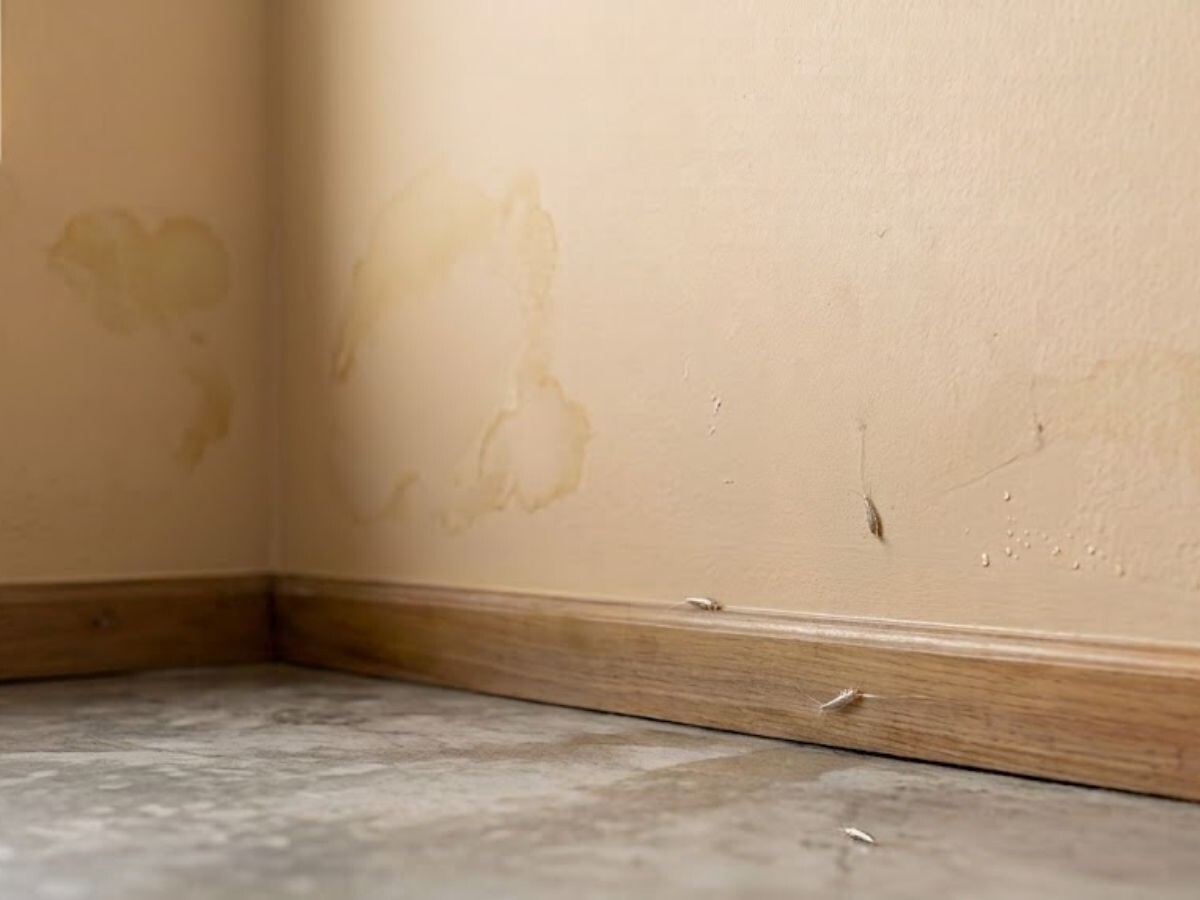
The word says it all. Damp spots on your walls are caused by moisture. Moisture, in turn, can be caused by various reasons:
Each cause requires its own solution. Often, identifying the cause and determining the necessary cause is not obvious, so it is best to leave this to an expert. In addition, damp patches disappear by themselves after a professional has done what is necessary to solve the moisture problem. So do not hesitate to seek the help of an expert.
1. Facade exposed to rainwater for too long
Did you get moisture problems due to rainwater coming into contact with the façade over a long period of time? Then chances are that the moisture spots on your wall are due to penetrating moisture. In this, the moisture spots occur in all sorts of random places, and not only on the ground floor.
The ideal solution to this moisture problem is to have your facade impregnate or hydrophobing. This involves applying a transparent and waterproof layer to the façade using a transparent product. Hydrofuge is a product that makes your exterior walls water-repellent. As a result, you will no longer get moisture stains on the interior wall either.
In addition, the impregnation can be enhanced by painting the facade with damp-proof paint. A coat of this paint on the exterior wall helps prevent damp spots on the wall due to penetrating moisture. It also gives your facade a fresh, new look.
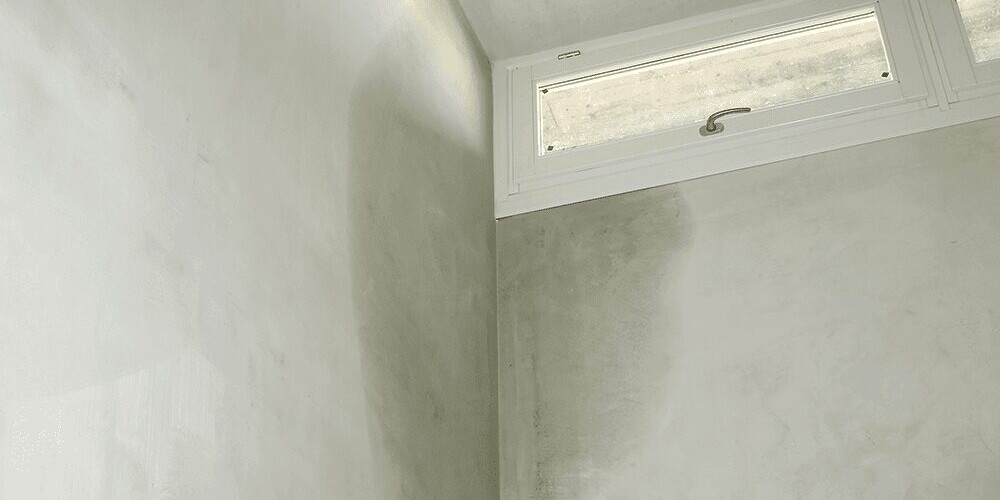

2. A clogged gutter or leak
A gutter ensures that when it rains, the water can leave through the downspout. If you don't have a gutter, the water will flow down your facade and risk exposing your facade to rainwater for too long. Moisture problems can therefore also result from a clogged gutter or a leak in the pipes. Unfortunately, this does not resolve itself; on the contrary, it only gets worse. By the way, a clogged gutter is worse than having no gutter at all, because with a clog, a large amount of water accumulates in one place.
Solving this problem can be done as follows:
3. Rising damp
If the damp patches on the wall are mainly at ground level, chances are you are dealing with rising or rising damp. Rising damp is caused by direct contact between a brick wall and a damp-containing wall. In problems of rising damp, groundwater is the main cause. The foundation and walls absorb this water, resulting in the most severe damp close to the ground, but it can also spread further into the wall. This can cause significant damage to both internal and external walls.
You can treat rising damp with the following methods:
However, both solutions require the expertise of professionals.
4. Condensation moisture
Somewhere where the air is too humid (think a bathroom), it creates condensation moisture. And this too can eventually cause moisture spots on walls.
If you suffer from condensation moisture, on the one hand, it is important to focus on ventilation. With inadequate ventilation, the moisture sticks and condenses on cold surfaces. You have several options here:
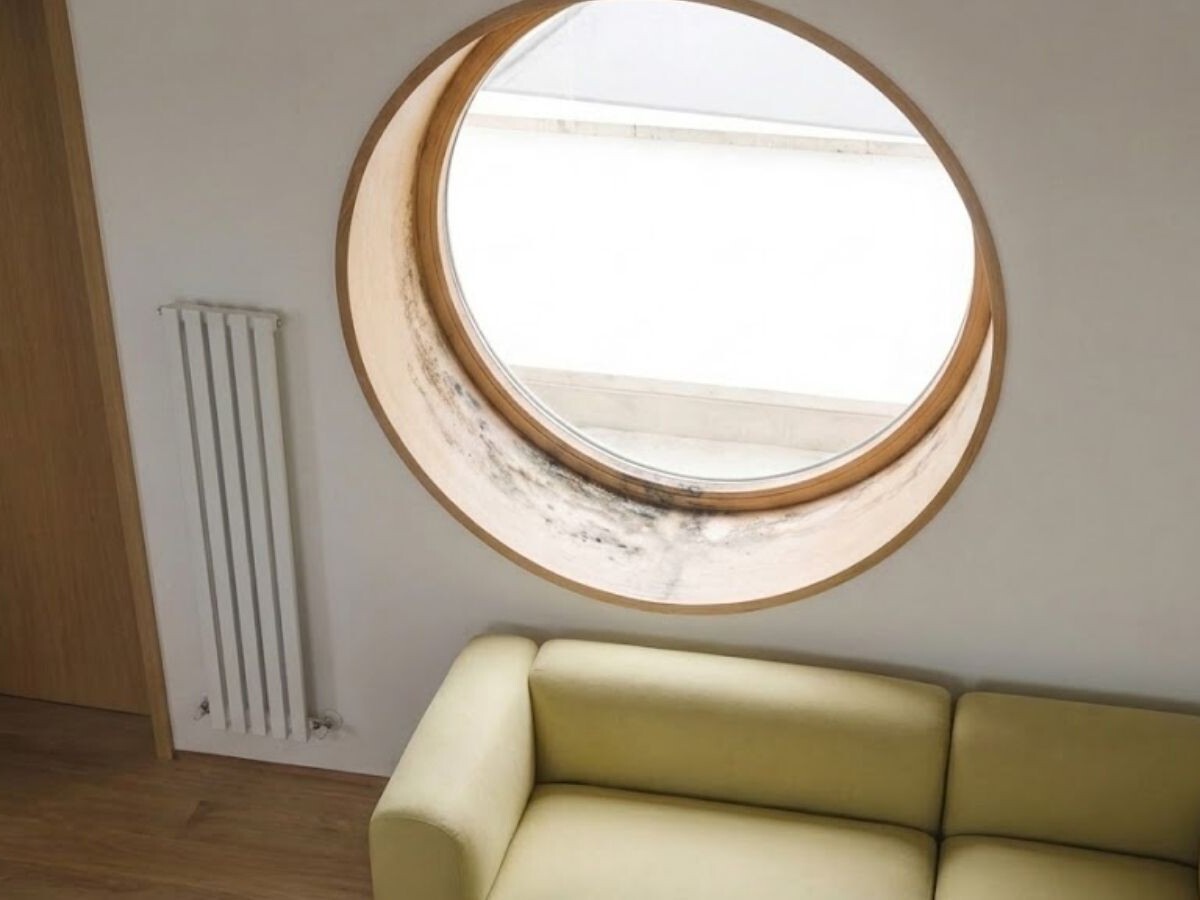
Condensation can be caused not only by a lack of ventilation, but also by thermal bridges. Cold bridges are weak points in a home's insulation, where heat is lost, leading to the cooling of interior walls and the formation of condensation and mould. These problems often occur where insulation materials do not fit properly, such as at window frames, eaves and the transition between walls and windows. To avoid thermal bridges, it is important to apply insulation carefully and continuously, in addition to ensuring adequate ventilation and heating. In this case, replacing and improving the insulation is the solution to the moisture problem, making the damp spots on the wall disappear permanently.
What can you do yourself to remove damp patches on a wall?
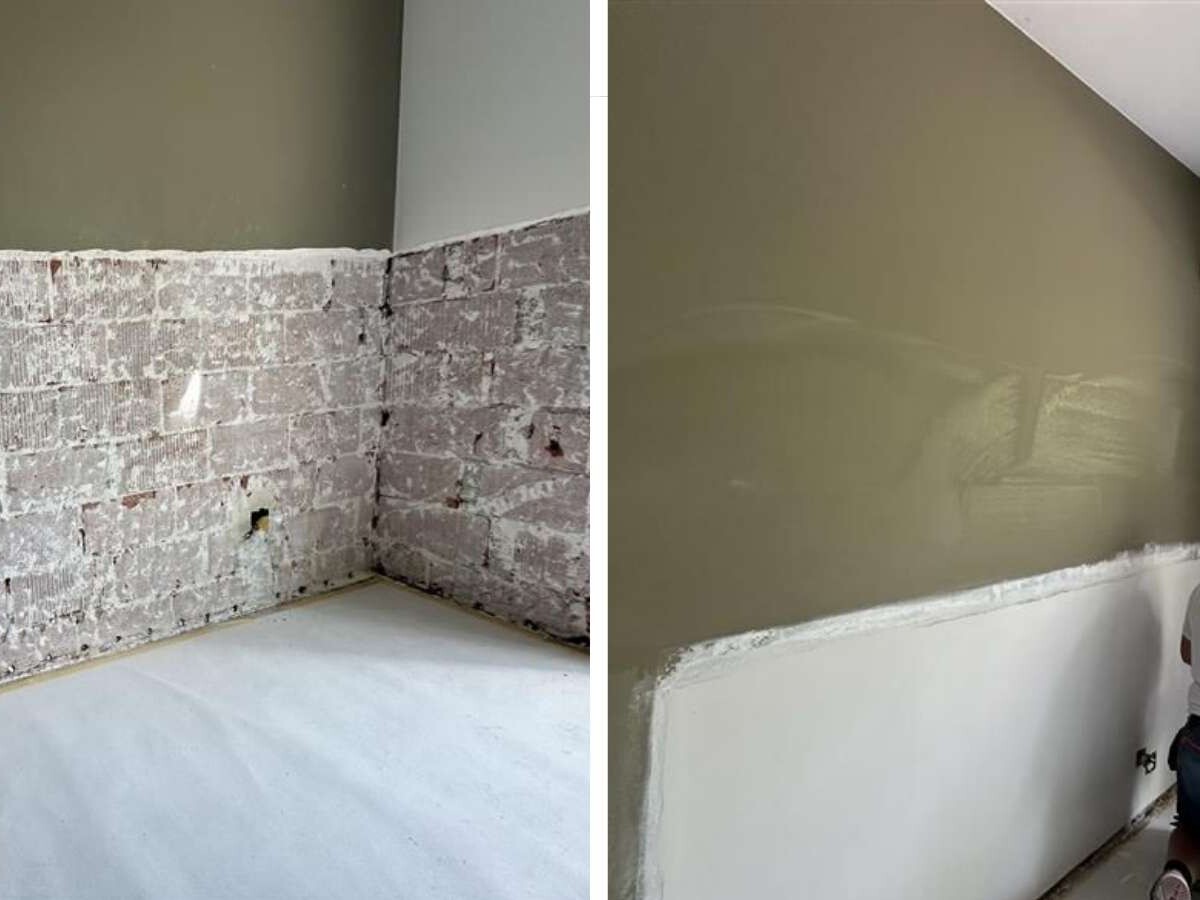
As we already mentioned, the first thing to do is definitely contact a professional to fix your dampness problem. Only after that can you repair your wall yourself. If you do want to get started yourself, here are some useful tips:
Note! The instructions above help to remove damp patches from your wall, not to conjure away mould. Moulds are best killed with chlorine-based bleach. After the moulds disappear, rinse away the chlorine with warm water.
Do you suffer from moisture spots on your walls?
You avoid moisture problems rather, but if they are there, they just have to go. Case in point. Unfortunately, solving and removing damp problems is not exactly a job that can be done in a flash. That's why AquaConsult offers you support you can't resist. Looking for more information on moisture control? Then be sure to read our blog On moisture problems and solutions.
Request more information
Answer the questions below and get more information based on them. Do you want the cost price calculated? Then indicate this clearly in the text field at the bottom and we will do the necessary.