
Advantages
Working method
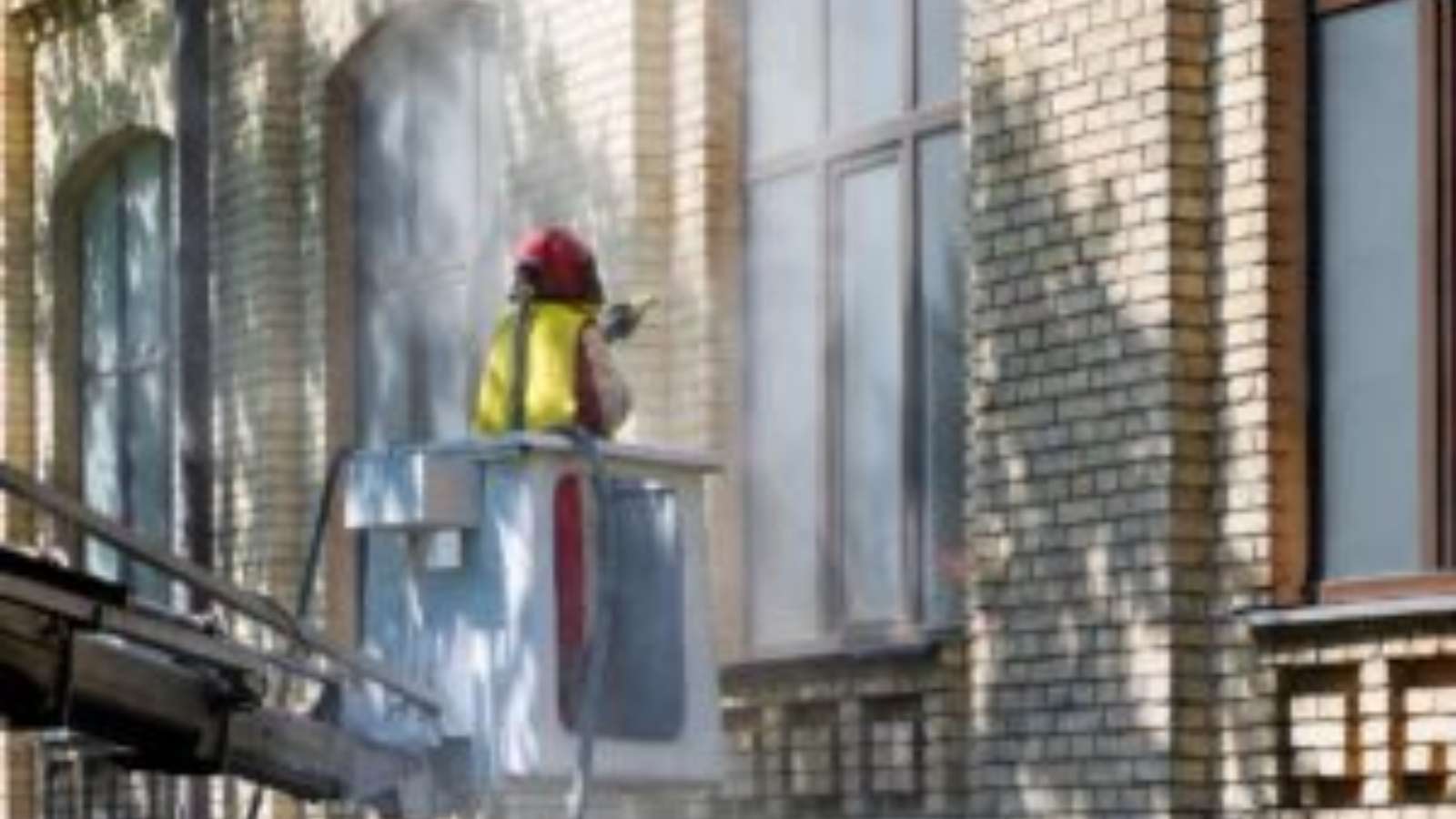
First, our specialists check the facade and inspect its condition. A hydrofuge or facade impregnation can only be carried out successfully if the substrate can ensure good adhesion. The further procedure depends on the type of substrate of the facade. After the inspection and possibly some minor repairs, the facade can be impregnated. The impregnating agent is then applied to the facade using a sprayer.
More information and brochure request
Answer the questions below and get more information and our brochure based on them.
Frequently asked questions about façade impregnation
The cost of impregnating a façade averages between €8 and €15 per square metre, excluding VAT and any prior cleaning or repair work. The total cost depends mainly on the total surface area, the accessibility of the external walls and the porosity of the facing brick. You can, however, keep costs down thanks to tax benefits. If your home is more than 10 years old, you’ll benefit from a VAT rate of 6% instead of the usual 21%. In addition, façade impregnation is also eligible for the My Renovation Premium, provided you combine this treatment with the installation of external wall insulation.
The main drawback of façade impregnation arises when it is carried out incorrectly or using cheap, non-breathable products. If a completely sealing acrylic or silicone product is used, moisture from inside the house can no longer evaporate outwards. This leads to internal moisture problems. AquaConsult overcomes this drawback by using only high-quality, vapour-permeable products. This keeps rainwater out, whilst still allowing the wall to breathe. Another point to bear in mind is that the façade must be in perfect condition beforehand. Any cracks or damaged pointing must therefore be repaired before you can impregnate the façade.
Although various products are available in DIY shops, we recommend leaving façade impregnation to an expert. For long-lasting results, the water-repellent treatment must be applied evenly to the wall using a professional low-pressure sprayer until it is fully saturated. As a DIY enthusiast, you lack the necessary equipment and experience to accurately measure the porosity and exact moisture content of the façade in advance. What’s more, if you carry out the work yourself, you’ll lose the official guarantee on the work carried out and the products used. By choosing a certified damp specialist such as AquaConsult, you can be sure of getting the right product for your type of façade and you’ll retain your right to the reduced VAT rate and the Flemish renovation premiums.
Nowadays, the ‘impregnation’ or water-repellent treatment of an external wall is mainly carried out using the spray method. This involves applying a liquid impregnating agent to the façade from top to bottom using a professional low-pressure sprayer. For very specific, highly absorbent or extremely porous surfaces, a special impregnating cream can also be used, which is applied manually to the bricks using a roller or brush. Before we treat the façade, our experts carry out thorough preparatory work. The external wall is first completely cleared of moss, dust and grease, as the water-repellent treatment can only adhere properly to a clean, repaired and dry surface.
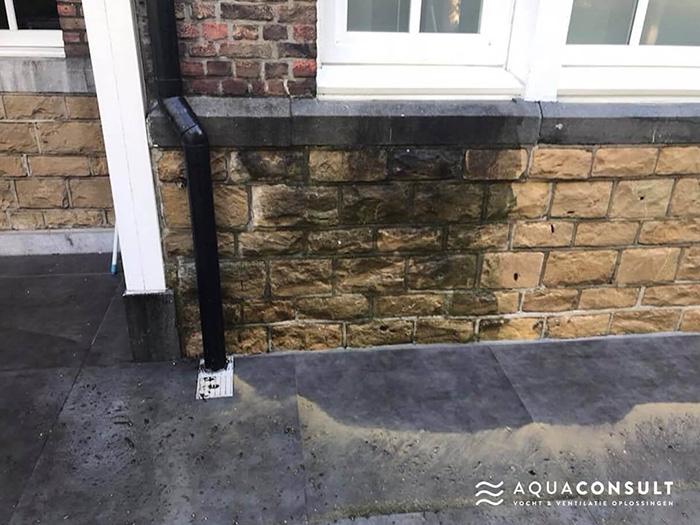
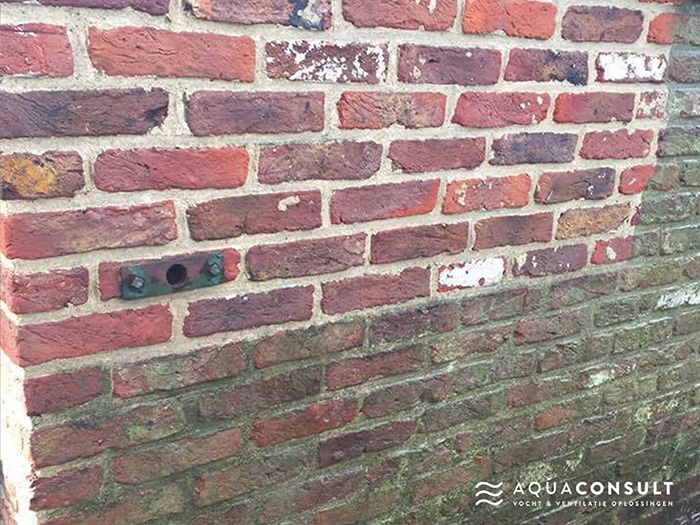
Impregnating or waterproofing a façade creates an invisible, extremely strong barrier against the unpredictable Belgian weather and offers an immediate solution to penetrating moisture. Applying a professional water-repellent treatment alters the surface tension of the facing brick. As a result, rainwater no longer penetrates the pores of the facing, but simply beads up and rolls off. As the walls remain permanently dry as a result, the natural insulating properties of the building materials are optimally protected. This prevents cold air from entering quickly and the heat generated indoors from escaping rapidly. This immediately ensures a lower energy bill and a better EPC rating for your home. What’s more, a dry façade completely eliminates the risk of damp damage. Another aesthetic and structural advantage is that biological growth, such as moss and algae, cannot take hold on a dry surface. This is a particular benefit for homes in wooded areas, such as the Antwerp Kempen or the Flemish Ardennes. Furthermore, the impregnation layer has a self-cleaning effect in areas subject to specific atmospheric conditions. On the Belgian coast, it protects façades from the aggressive, salty sea air. In busy cities such as Ghent, too, it prevents soot, particulate matter and traffic pollution from settling into the brickwork.
In a rainy country like Belgium, where façades are exposed to heavy rainfall and strong winds every year, façade impregnation is, in most cases, essential to preserve the stability and value of your property. Traditional building materials such as brick, sand-lime brick and standard cement mortar are naturally porous and, without a protective coating, act like a sponge. When a façade becomes completely saturated after several rain showers, the moisture penetrates deeper into the structure. This not only causes aesthetic damage such as salt efflorescence and white stains on the exterior, but also leads to peeling wallpaper, flaking paint, persistent mould growth and an unhealthy living environment indoors. The need is particularly acute for specific façades and historic buildings. Homes whose façades face the rain-exposed side – usually the west or south-west – are subjected to the heaviest driving rain and, without a water-repellent treatment, are the first to show signs of structural damage. Furthermore, in historic city centres such as Bruges, Mechelen or Leuven, we see many older buildings with authentic and highly absorbent façade bricks and lime mortars. Over the centuries, these materials have lost their natural resistance. For such buildings, façade impregnation is the only way to protect their historic character from the elements and modern air pollution, without hermetically sealing the wall.
A high-quality façade impregnation treatment carried out professionally by a damp specialist such as AquaConsult has an average lifespan of ten to fifteen years. This is not a universal standard, as the exact durability of the protective coating is closely linked to the porosity of the substrate, the quality of the product and the specific geographical location of the property. At AquaConsult, we use only professional, vapour-permeable impregnating agents that form a chemical bond with the mineral substrate. These molecules penetrate deep into the facing brick and are highly resistant to UV radiation and temperature fluctuations, meaning they remain effective for much longer than cheap products from DIY stores. The wear and tear on the water-repellent coating varies considerably from region to region due to local climates. Homes in the West Flemish coastal region and open polder areas are exposed to extreme mechanical and chemical stresses due to the combination of strong winds, sandblasting and salty sea air. As a result, the protective layer degrades more quickly and often requires inspection after just ten years. In more sheltered provinces such as Limburg or East Flanders, the impregnation continues to work effectively for up to fifteen years. We recommend having our experts carry out a simple water test after a decade to determine exactly whether the external wall is still adequately protected.
It is technically impossible and strongly discouraged to impregnate a wet facing brick. The effectiveness of the water-repellent treatment is based on the principle that the liquid must be able to penetrate deep into the pores and capillaries of the facing brick in order to form a water-repellent barrier there. If these pores are saturated due to recent rain or underlying moisture problems If the surface is already completely saturated with water, the impregnating agent cannot penetrate it. The product will then remain on the surface, wash away at the first sign of rain, or dry out as an unsightly white film on your exterior wall. Furthermore, treating a damp external wall too early poses structural risks to the property. By applying a waterproof coating to a wet wall, you trap the existing damp within the building envelope. As soon as the temperature drops below freezing, the trapped water expands and causes the outer layer of the facing bricks and the mortar joints to crack. To prevent this, our experts follow a strict protocol whereby they always first a free expertise carry out. If the wall turns out to be damp due to a structural problem such as rising damp, then they sort this out first via wall injections or basement waterproofing before they carry out the final and safe waterproofing of the façade.