Feeling unwell because of the air conditioning or damp in your home? The impact on your health in summer
A runny nose, a sore throat, tiredness or shortness of breath during a heatwave? When temperatures rise and we seek relief from the heat, air conditioning is often blamed for the summer flu. But is that really fair? At AquaConsult We know that the real culprit in Flemish homes during a heatwave is often not the air-conditioning system itself, but the interaction between the air-conditioning and the moisture in the home. Because a high-quality air-conditioning system can work wonders for your indoor climate, especially during a heatwave, but only if you have the underlying humidity levels under control.

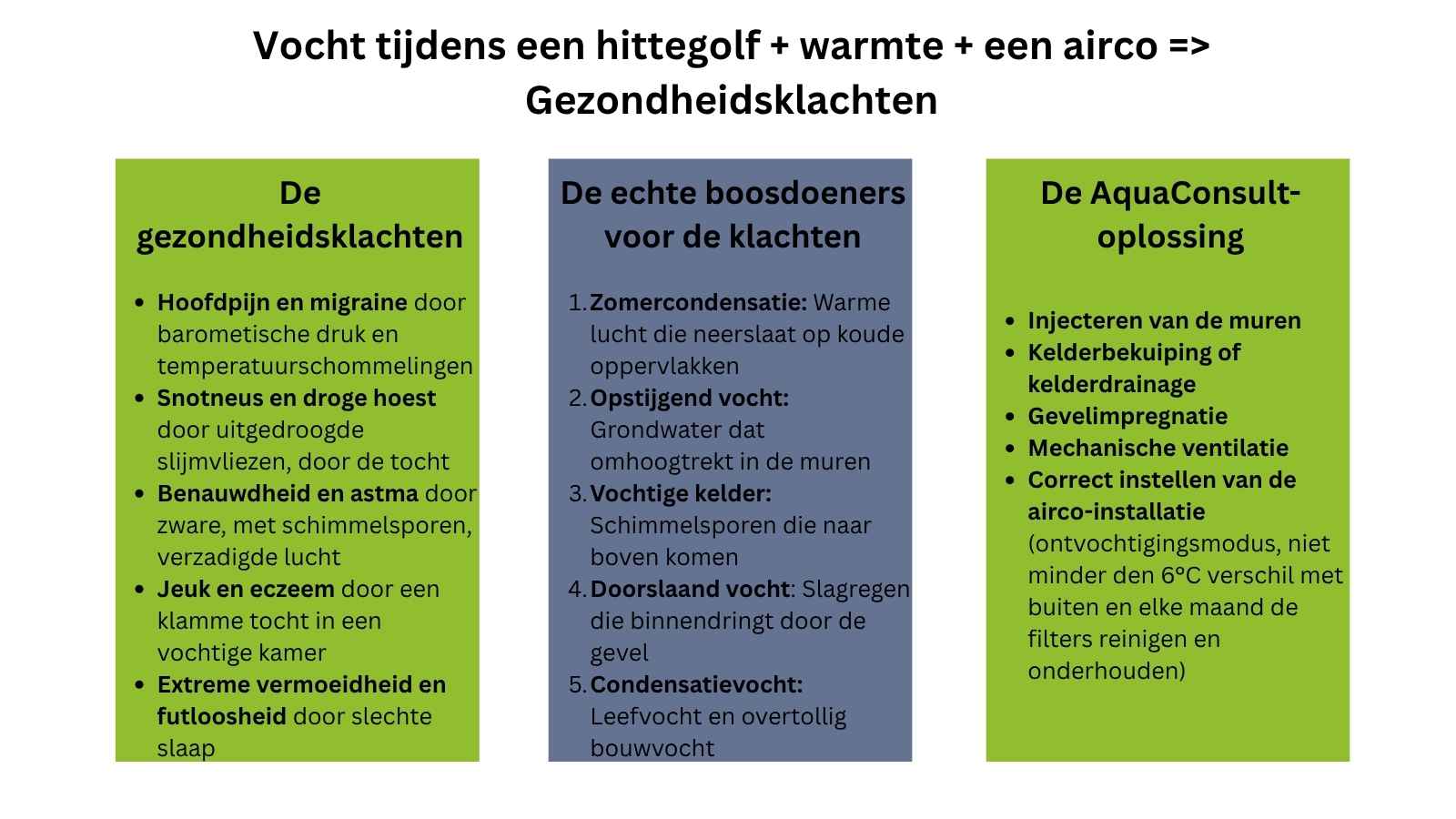
Your health at risk: Symptoms during a heatwave
When a heatwave hits our country once again, we find ourselves seeking relief from the heat indoors even more than usual during the summer. We often wake up with health problems, such as the air conditioning is immediately blamed.
But in reality, it’s a bit more complex. The combination of the extreme heat, high humidity and an incorrectly set or poorly maintained air-conditioning system poses a risk to your health in various ways.
When the outside temperature rises, the air can hold much more moisture. As soon as this warm, saturated air enters your home and comes into contact with the invisible, structural moisture problems, then there is a tropical indoor climate. If your air conditioning then tries to cool your home without tackling the underlying source of damp, a dangerous interaction occurs that has a direct impact on your body. There are, therefore, a number of specific health complaints caused by summer damp.
1. Breathing difficulties and an acute feeling of breathlessness
- Shortness of breath and chronic breathlessness: Warm air saturated with moisture literally feels heavier. The water vapour displaces some of the oxygen molecules, forcing your lungs to work much harder to take in enough oxygen. This leads to a constant feeling of breathlessness, especially during warm summer nights.
- Severe asthma attacks caused by air-conditioning shock: When you try to cool a room with structurally high humidity using an air-conditioning unit, the temperature drops rapidly, but the air remains saturated. In asthma and COPD patients, this triggers a sudden constriction of the airways due to the cold, damp airflow.
2. Allergic reactions caused by mould
- Chronic sneezing fits and a runny nose: Mold and house dust mites multiply rapidly as soon as the relative humidity rises above 60% in summer. Because an air-conditioning system constantly circulates the indoor air, millions of invisible mould spores and allergens are continuously blown around the room and inhaled. This keeps your immune system constantly on alert, resulting in a persistent runny nose or blocked sinuses.
- Stinging, red eyes and a sore throat: Mould spores, which are kept in suspension by the airflow from the air conditioning, settle directly on your mucous membranes. This causes persistent irritation, such as burning eyes and a constant, dry, tickly cough, which do not occur in a dry home.
3. Impaired thermoregulation
- Extreme tiredness and lack of sleep: To cool down during a heatwave, your body needs to be able to let sweat evaporate into the air. In a stuffy, damp house, the air is already too saturated. Sweat remains on your skin, you cannot release your body’s internal heat, and your heart rate remains high. This results in light, restless sleep and total exhaustion during the day.
- Severe headaches and migraines: A damp sleeping environment, combined with the barometric pressure of a heatwave, disrupts your body’s moisture balance. Add to this the fact that an air-conditioning system in a damp house struggles to maintain a stable temperature, leading to significant temperature fluctuations. These fluctuations cause the blood vessels in your head to constrict and dilate rapidly, which triggers migraines.
4. Skin problems and joint pain
- Flares of eczema, psoriasis and heat rash: Skin that is constantly damp in a humid room is prone to infection. When the air conditioning then pumps active but polluted, humid air into the room, the pores become blocked. This causes existing skin problems to flare up during a heatwave, which is, of course, accompanied by intense itching.
- Joint and muscle pain: The combination of high humidity and the cold draught from an air-conditioner penetrates deep into your joints. People with osteoarthritis or rheumatism often experience more stiffness and pain in a damp house during the summer than in a dry one.
5. The invisible danger: Bacterial lung infections
- The air-conditioning condensate tank hazard: When the humidity in the home is consistently too high, for example due to rising damp or a damp cellar, the air-conditioning system must drain litres of water per day. If, due to a design fault or overdue maintenance, this condensation water becomes trapped somewhere in the unit, the heat causes it to become a breeding ground for bacteria and harmful moulds. The system then blows these pathogens directly into your respiratory tract, which can lead to severe pneumonia.
The cause: How a chronic damp problem and your air conditioning are working together to harm your health
These health problems never just appear out of the blue. They are the direct result of an unhealthy home. An underlying, untreated moisture problem is activated during a heatwave, and this, in combination with an air-conditioner which then spread the damp problem throughout the room, are the cause of your summer health problems.
The invisible amplifier: What damp problems arise in the summer?
Many Flemish people associate damp problems exclusively with winter. But nothing could be further from the truth. In summer, the heat causes sources of moisture within the building structure to evaporate more rapidly than usual, making the indoor humidity feel clammy and tropical.
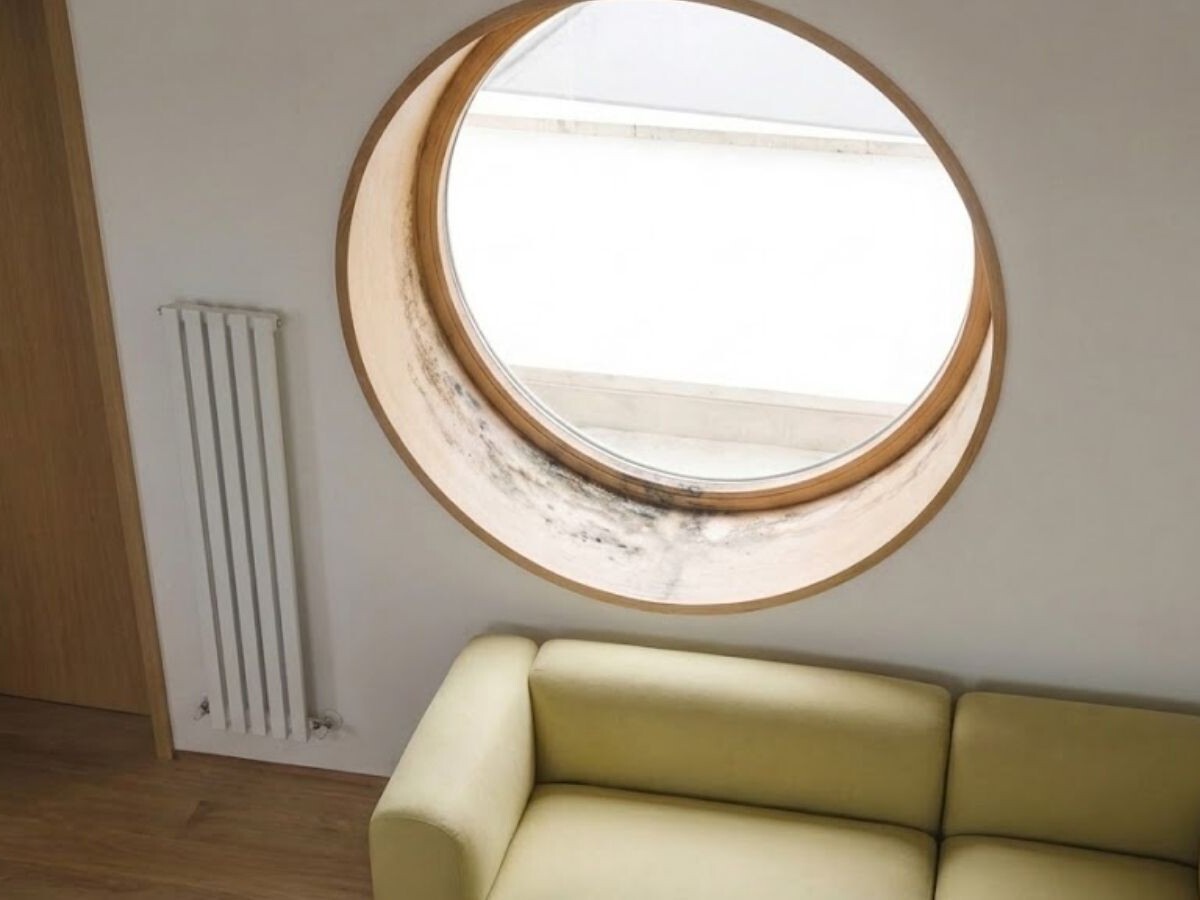
- Summer condensation on cold surfaces: This is the typical summer damp problem. Warm and extremely humid outside air flows into your home through open windows or ventilation. As soon as this warm air comes into contact with the colder surfaces in the house, it cools down abruptly. This creates invisible, damp patches where fungi multiply rapidly, after which the air conditioning blows the mould spores throughout the room.
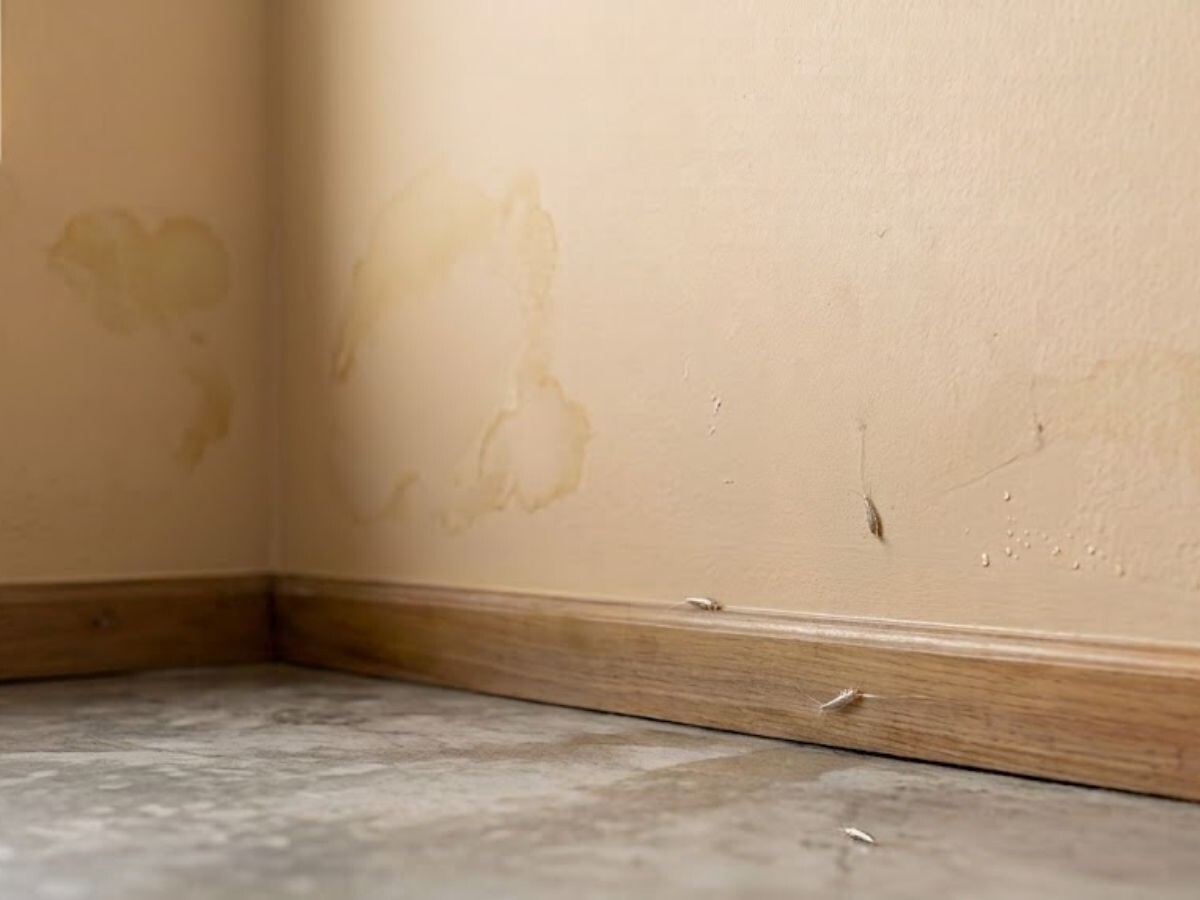
- Rising damp via the foundations: When a property has a missing or worn-out damp-proof course, the walls continuously absorb groundwater. The blazing sun heats these external walls intensely, causing the absorbed groundwater deep within the wall to evaporate inwards. This causes the humidity in your living spaces to shoot up, which makes the house feel even more stuffy.
- Climate change in the cellar: Cellars remain relatively cool in summer. When warm, humid air flows in through ventilation grilles in summer and comes into contact with the cold cellar walls, it immediately creates condensation. This creates a damp cellar for fungi. The unhealthy air, containing mould spores, rises through the floor and up the stairs to the rest of the house, where the air conditioning takes over.
- Penetrating moisture after intense, tropical summer downpours: Summer in Flanders is often characterised by sudden, heavy thunderstorms. This enormous volume of driving rain penetrates deep into porous, damaged walls or external walls without facade impregnation. As soon as the sun starts beating down on the façade again, an evaporation effect occurs. The moisture is then literally forced through the wall and into the building. This causes invisible damp patches behind cupboards and skirting boards.
- High internal moisture production: In the summer, we shower more often, sometimes dry our washing indoors and cook in warm rooms. If a home is not sufficiently mechanically ventilated will be, this remains body fluids linger in the air for an extremely long time due to the general summer heat. Even recently renovated homes that are still struggling with building moisture In summer, they turn into a greenhouse as soon as the temperature in the house rises.
The catalyst: How incorrect use of air conditioning exacerbates the damp problem
When there is a structural damp problem like this, we often try to combat the muggy heat with an air-conditioner. Although, in theory, an air-conditioning system purifies the air and removes moisture through condensation, incorrect use or poor maintenance in a damp house can actually have a negative impact on your health.
- Like trying to mop up with the tap running: An air-conditioning unit is designed to filter excess moisture out of the air. However, if litres of fresh moisture are constantly entering the home through the walls or the cellar, the unit simply cannot cope. The air-conditioning unit continues to run at full power to dehumidify, which leads to a huge energy bill, whilst the humidity remains at an unhealthily high level for your body.
- Creating a condensation shock: If you set the air conditioning to a very cold setting whilst it’s 30°C outside, the air in the room will cool down very quickly. Cold air can hold far less moisture than warm air. As there is already a damp problem in the house, the air immediately becomes supersaturated. So you’re blowing around an extremely clammy, cold mist that hits your mucous membranes straight away and triggers respiratory problems.
- The circulation of fungal spores: Because an air-conditioning system constantly recirculates the existing indoor air, in a damp house it acts as a distribution centre for allergens. The mould spores that form on the walls due to the damp problem are dislodged by the air flow from the air conditioning and blown non-stop around the room. As a result, you inhale these spores in much higher concentrations.
- Risk of blockages and bacterial growth due to excessive condensation: Precisely because the air conditioning system in a damp house has to extract so much water from the air, the internal drip tray or drain hose quickly becomes overfilled. If this water is prevented from draining away due to a minor blockage or a lack of maintenance, the warm indoor unit turns into the ultimate breeding ground for bacteria and fungi. As soon as you switch on the system, you are releasing these pathogens directly into your breathing zone.
The AquaConsult approach: Enjoying the summer in good health without damp problems
A healthy indoor climate in summer requires a two-pronged approach. First, the underlying, structural damp problem must be resolved once and for all, before you can then set your air-conditioning system correctly.
Tackle the source of damp once and for all with AquaConsult’s damp-proofing solutions
As an expert in moisture control AquaConsult does not believe in merely treating the symptoms. For every specific damp problem in the summer, and certainly during a heatwave, we offer a targeted, certified moisture solution which keeps the house permanently dry:
- Solution to summer condensation: Mechanical ventilation systems. To prevent warm, humid outside air from condensing on cold walls, we install high-quality ventilation systems such as our Ventilation System D. These systems continuously monitor humidity levels and extract the humid air in a controlled manner before it has a chance to condense and cause mould to form.
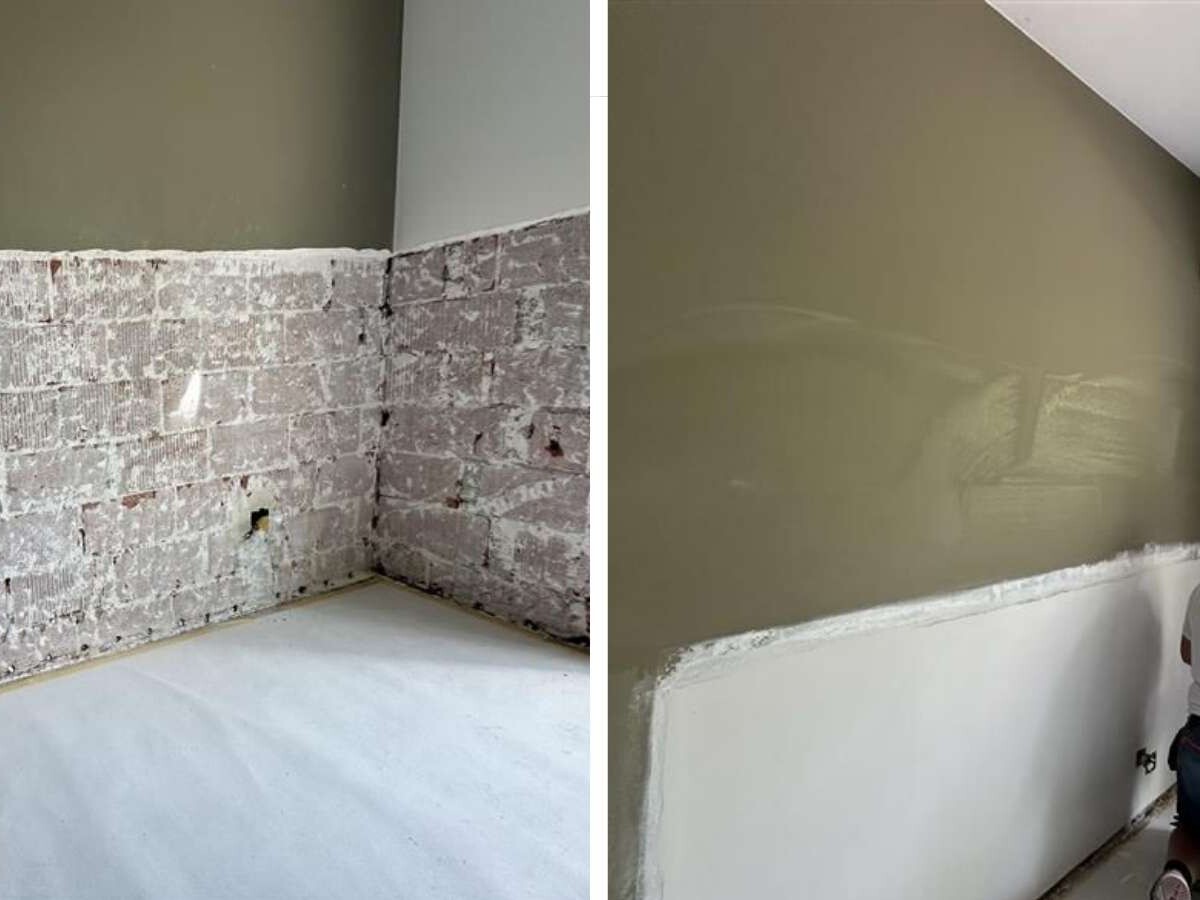
- Solution for rising damp: The professional injecting the walls. Is your home affected by groundwater that evaporates into the walls due to the summer heat? We inject the affected walls with a high-quality, environmentally friendly gel that cures completely. This forms an impermeable, lifelong barrier – a new waterproofing layer – which rising damp is coming to a definitive end.
- Solution for a damp cellar: Basements or Basement drainage. To put a stop to the typical summer condensation and musty odours in the cellar, we make the space completely watertight. We do this by installing a cellar tank, sealing the walls with several layers of waterproof cement, or by fitting a cellar drainage system. With basement drainage, groundwater seeping in is automatically drained away via a dimpled membrane and a pump, ensuring that the air rising upwards is bone-dry and clean.
- Solution for penetrating moisture after summer showers: Facade impregnation. To prevent heavy, tropical downpours from seeping into your walls, we treat your external wall with a transparent, breathable coating. This façade impregnation makes the façade completely hydrophobic, or water-repellent. Driving rain will then roll straight off the wall, whilst the façade can still breathe from the inside.
- Solution for high levels of condensation or construction-related moisture: Mechanical ventilation. Remains body fluids or building moisture lingering in the warm indoor air? AquaConsult will then an accurate moisture measurement to map out the air circulation. By strategically installing mechanical ventilation in damp areas, such as the bathroom and kitchen, excess moisture doesn’t stand a chance of spoiling the air quality.
Air conditioning as your ally: Correct settings and essential maintenance
Once AquaConsult has resolved the structural damp problems, you can air conditioning finally doing what it’s really good at, namely acting as an efficient dehumidifier and air purifier, without overburdening your immune system.
Do, however, always follow these golden rules during a heatwave:
- Use Dry mode: Do you feel a bit clammy, but don’t need the temperature to drop drastically straight away? If so, switch the air conditioning from Cool mode to Dry mode, which is indicated by the droplet symbol. In this setting, the fan runs at a lower speed. This allows the warm indoor air to remain in contact with the ice-cold evaporator for longer, ensuring maximum condensation and effective removal of moisture, without making the room freezing cold.
- Please observe the 6°C rule: Avoid thermal shock and that infamous ‘air-con cold’. Make sure the difference between the indoor and outdoor temperatures never exceeds 6°C. Is it 31°C outside? Then set the air conditioning to a comfortable 25°C. This is cool enough to help you recover and gentle enough on your mucous membranes.
- Filter cleaning and maintenance: As the air conditioning system filters and circulates the air, hygiene is crucial. During the summer months, make it a regular habit to clean the filters every month. Remove the filters from the indoor unit, vacuum out any dirt and, if necessary, rinse them with lukewarm water. Allow them to dry completely before putting them back in place. This prevents accumulated bacteria or remnants of old mould spores from being blown back into the air. Also, ensure that the condensate drain is free from blockages, so that no standing water remains anywhere in the system.
Take the first step today towards a healthy indoor environment this summer
Don’t spend this summer sniffling and wondering what’s causing your sudden health problems. Don’t let treating the symptoms prevent you from a sky-high energy bill for your air-conditioning system …without tackling the real cause – and therefore the damp problem. Enquire today a free expertise at AquaConsult. Our experts will visit you to measure the exact humidity levels in your home using professional equipment. That way, you can enjoy a truly fresh, comfortable and, above all, healthy home this summer.
More information and brochure request
Answer the questions below and get more information and our brochure based on them. Would you like the cost price calculated? Then indicate this clearly in the text field below and we will do the necessary.