Why your home feels like a tropical rainforest during a heatwave
It’s a familiar scenario in summer. Outside, the temperature is climbing towards 30 degrees or more. You keep the shutters down and the windows closed to keep the sun out. Yet, after a few days of the heatwave, it feels not just warm inside, but above all sticky and stifling. Your T-shirt sticks to your back, the air feels heavy and it seems as if the oxygen in the house has run out. Your own familiar home suddenly feels like a tropical rainforest. Why does this summer heat feel so unbearably stifling indoors? And, more importantly, how do you transform that sweltering greenhouse back into a comfortable and cool home? We at AquaConsult We’d be happy to explain this to you and share our long-term solution.

The science behind your sticky, clammy home
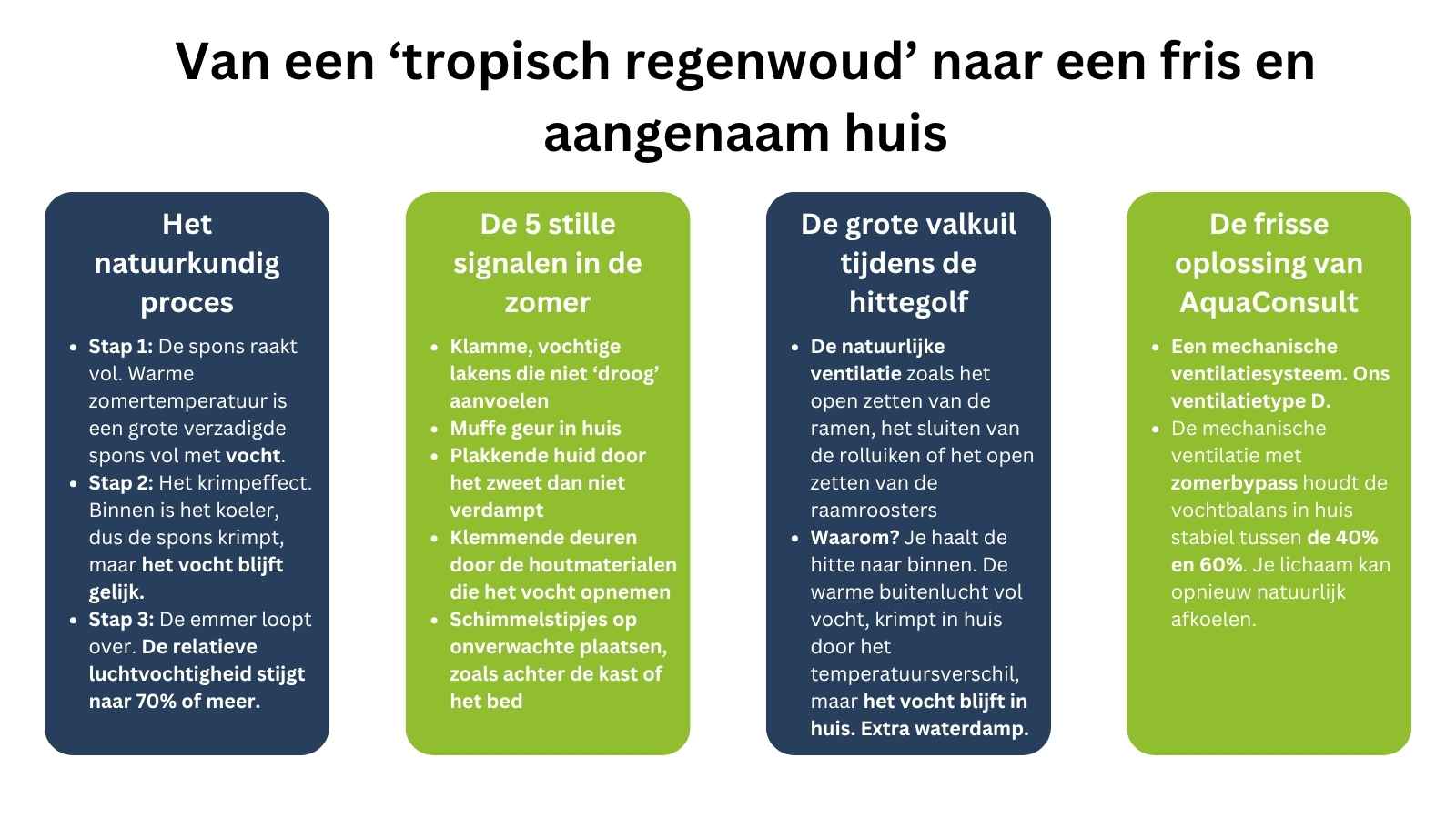
The secret behind that stuffy feeling at home has everything to do with the physics of our indoor climate. Many people therefore wonder whether the temperature affects the humidity in the home. The answer is, of course, a resounding ‘yes’, and it explains exactly why your home can feel so uncomfortable in summer. There is a direct link between the temperature of the air and the amount of moisture it can hold. Warm air expands and acts like a sponge. So, the warmer the air, the more water vapour it can hold, and therefore the more humid the air becomes.When it’s sweltering outside, and certainly when a thunderstorm is brewing during a heatwave, the outside air is saturated with moisture. As soon as that warm, humid air finds its way into your home, the air inside also becomes saturated. Because the temperature indoors is often just a little lower than outside, or simply because the air isn’t circulating, the relative humidity indoors rises rapidly. The result is that typical, oppressive heat in which sweat can no longer evaporate from your skin. Your home no longer cools down, but instead traps the heat and moisture.
So when is the humidity in the house too high?
At AquaConsult, during the hot summer months, we’re often asked: “When is the humidity in the house actually too high?” In winter, we tend to associate damp with condensation on the windows, but in summer the signs are more subtle. To determine whether your indoor climate is still healthy during a heatwave, we look at the percentages. In a healthy Flemish home, the ideal relative humidity is between 40% and 60%. Within these limits, the air feels comfortable, your respiratory system functions optimally and mould doesn’t stand a chance. But during a heatwave, this figure indoors can easily rise to 70% or higher. And that brings us back to a frequently asked question: “Is 70% humidity too high?”
So a humidity level of 70% indoors is certainly too high. But what does this actually mean for your comfort? And why does it feel so stifling?
The last straw
During a heatwave, something unusual happens to the humidity indoors.
- The sponge becomes saturated: The air outside is simply warmer, which means it is full of moisture due to summer evaporation. And during a heatwave, this air also seeps into the house, leading to higher humidity.
- The air cools down indoors, but the damp remains: As you’ve already taken all the necessary measures, it’s a few degrees cooler inside than outside. But when this warm, humid air cools down indoors, it shrinks, as it were. The sponge gets smaller, but the amount of moisture remains the same.
- The last straw: Because the cooler indoor air can hold less moisture as it contracts, the relative humidity shoots up immediately to 70% or 80%. The air is then supersaturated.
So why does this feel so ‘tropical’ and stifling?
This is the point at which your body starts to protest. Normally, the human body cools itself down by sweating. The normal, dry ambient air absorbs the tiny droplets of sweat, causing your skin to cool down.
But if the relative humidity in your home exceeds 70%, the air is already so saturated with water vapour that there is no room left for your sweat. The sweat can no longer evaporate and remains on your skin. Your body can no longer release its heat, making you feel stifled and as if there’s not a breath of wind to be found.
The signs: How can you tell if the humidity is too high during a heatwave?
As you don’t have the heating on in summer and the windows are often open, you don’t tend to see condensation on the windows. However, there are other, very clear signs that indicate the humidity in your home is too high.
- Damp sheets and furniture: You get into bed and the bedding feels clammy or almost damp, as if it hasn’t dried properly.
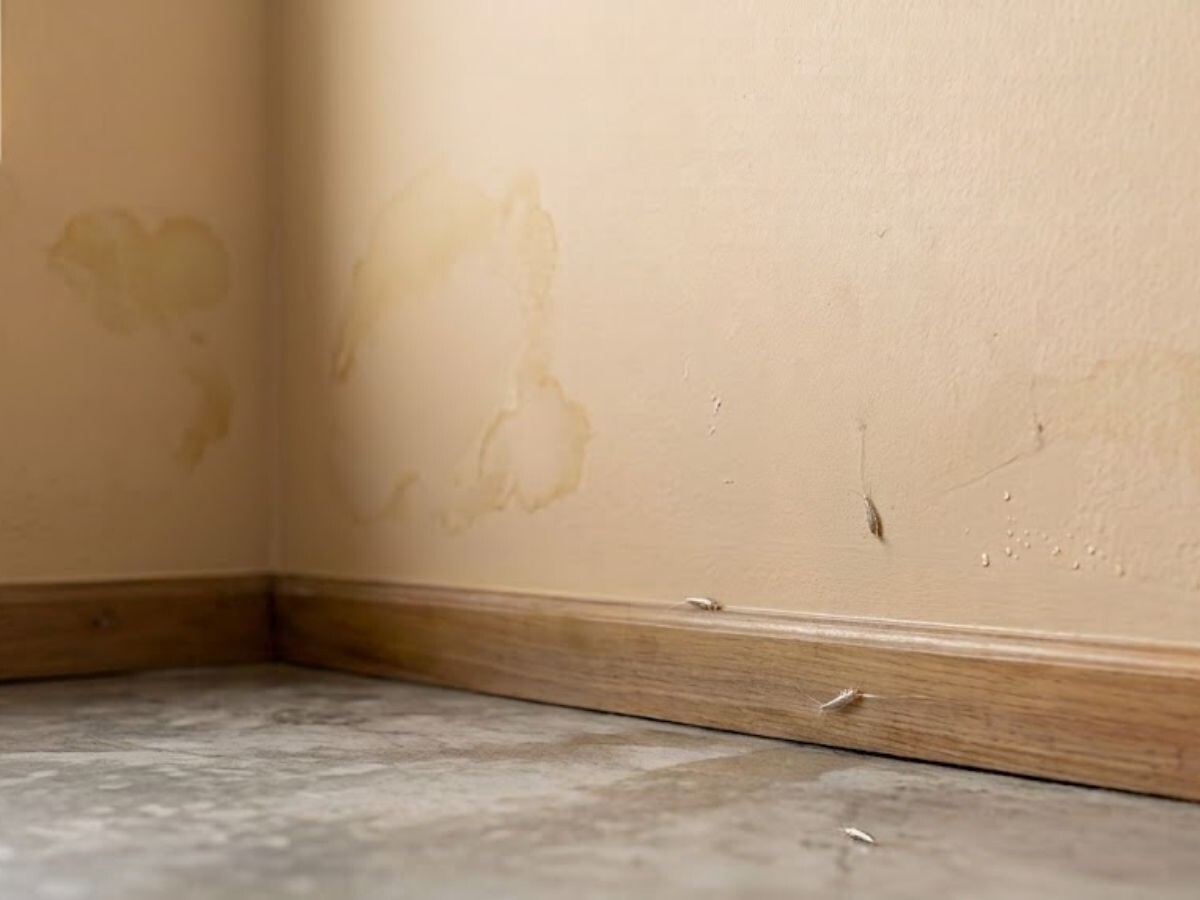
- A musty smell: When you walk into a room, especially the bedroom or the cellar, there’s a typical, musty ‘cellar smell’.
- Skin that sticks: Even if you’re sitting still with the fan on, your skin won’t dry out and you’ll still be left with a shiny, sticky film.
- Wood that swells: Kitchen cupboards, interior doors or wooden floors may suddenly start to stick or become harder to close because the wood absorbs excess moisture from the air.
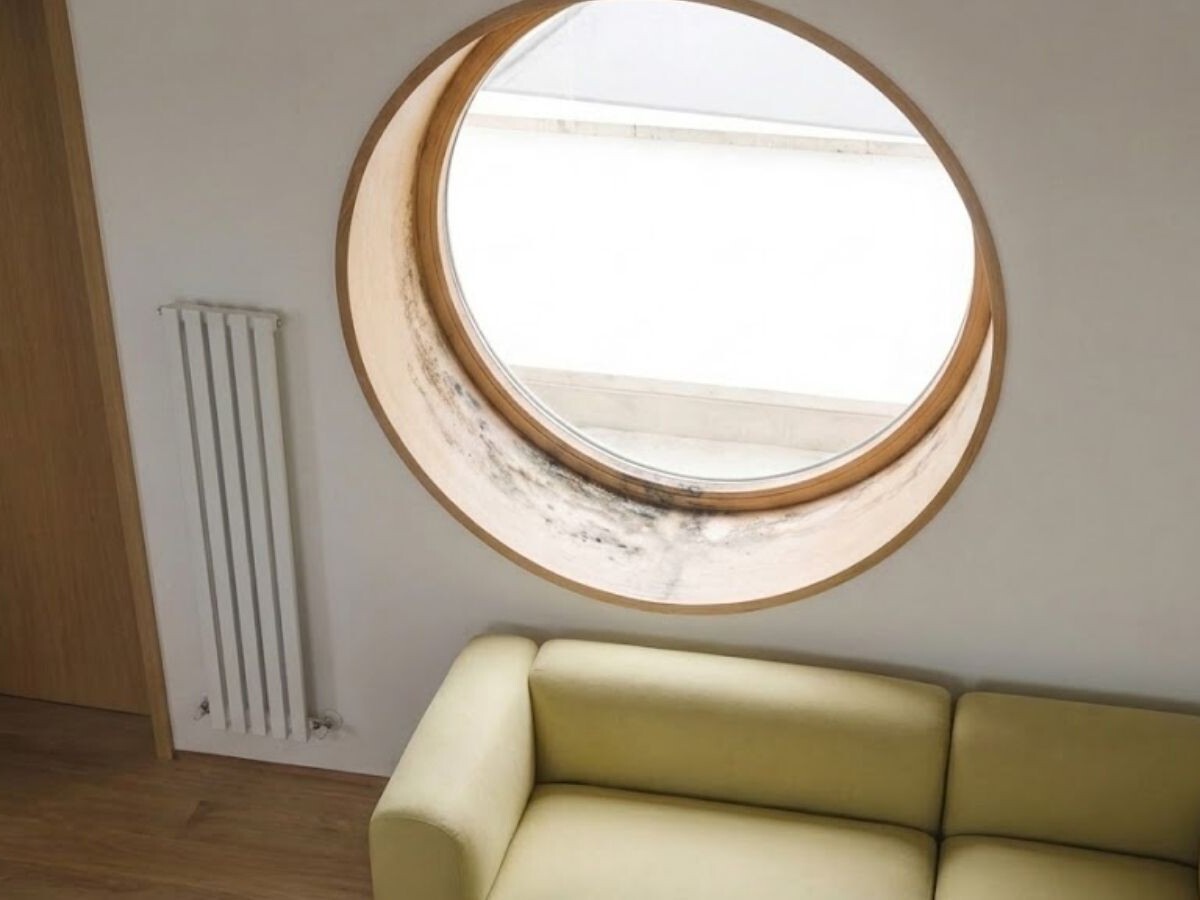
- Unexplained patches of mould: Small, dark spots suddenly appear behind cupboards or in the corners of the bathroom and bedroom. This is because mould thrives in these warm, tropical conditions.
Do you notice any of these signs in your home? If so, there’s a good chance that the moisture balance in your home has been seriously disrupted.
Natural ventilation as a solution… or is it a pitfall after all?
When you start to break out in a sweat and the walls of your home begin to radiate heat, most Belgians’ first instinct is, quite naturally, to seek relief through natural ventilation. We open everything up.
Although this feels very intuitive, natural ventilation during a heatwave is, unfortunately, the biggest pitfall for your indoor climate.
1. Leave windows and doors wide open in the evening and at night
- The idea: It’s getting cooler outside, so if I open everything up now, the heat will blow out of the house.
- The pitfall: Yes, the outside air feels cooler on your skin in the evening and around midnight, but that same night-time air is often extremely saturated with moisture in the summer. By leaving your windows wide open for hours on end, you create a draught that literally lets litres of invisible water vapour into your bedrooms and living rooms. As soon as you close the windows again in the morning, the moisture becomes trapped. You are then literally bringing the heat into your home yourself.
2. Leave windows slightly ajar or in the ‘tilt’ position during the day
- The idea: If I let in a breath of fresh air, at least it’ll still be possible to breathe inside.
- The pitfall: Leaving a window tilted open during a heatwave is an open invitation to the hot, humid air from outside. The hot, humid outside air flows in slowly but continuously. Because it is slightly cooler inside thanks to your sun blinds, the incoming air cools down, contracts and causes the relative humidity in your home to rise immediately to between 70% and 80%. In doing so, you create exactly the greenhouse effect you are trying to avoid.
3. Relying on built-in window ventilation grilles
- The idea: My windows have ventilation grilles, so natural air circulation takes care of it.
- The pitfall: Window vents operate on the basis of wind pressure and temperature differences. On a windless, sweltering summer’s day, there is hardly any pressure difference between indoors and outdoors. As a result, the vents do absolutely nothing, or they passively allow the warm, humid air to flow in without any active extraction to counteract it. There is no control whatsoever.
4. Creating cross-ventilation
- The idea: If I open the front door and the back window at the same time, I effectively drive the warm air out.
- The pitfall: Although a breeze indoors feels wonderfully cooling on your sticky skin at that moment, you’re filling the structure of your home with damp air. As soon as the doors close again, the airflow stops and the oppressive humidity is trapped in your furniture, walls and fabrics.
With natural ventilation, you are completely at the mercy of the whims of nature. You cannot filter the airflow, you cannot regulate it and, most importantly, you cannot remove the moisture from the air. You are bringing the tropical climate from outside straight into your own home. Anyone who wants to keep their home truly comfortable and dry during a heatwave needs to move away from natural ventilation and opt for control with our solution.
From a tropical jungle to a cosy home: The solution
How do you transform that damp, stuffy indoor space into an oasis of comfort? The answer lies not only in a traditional air-conditioning system – which does cool the air but doesn’t control the humidity – nor in simply opening your windows. The real key to success is actively controlling the humidity levels in your home. And that is exactly where our advanced mechanical ventilation system is designed for.
1. Continuous removal of internal ‘moisture bombs’
Even if you keep all the windows and doors tightly shut during the day, you’re constantly producing moisture indoors. Just think of cooking, having a refreshing shower to cool down, and the inevitable sweating. In a stagnant, unventilated room, all that moisture lingers in the air, causing the relative humidity to rise more quickly to that dreaded 70%.
A mechanical ventilation system from AquaConsult, our whisper-quiet ventilation system D, recognises this. It continuously and systematically extracts the warm, stale and polluted air from damp rooms, before it even has a chance to reach your living room or bedroom.
2. The magic of the summer bypass: Free night-time cooling
One of the most effective features of our mechanical ventilation system during a heatwave is the automatic summer bypass.
- During the day: The ventilation system is running on a smart, low setting. It extracts the indoor air and allows only a minimal, controlled amount of outside air in, so that you don’t trigger the extreme heat.
- ‘At night: As soon as the outside temperature drops below the inside temperature, the summer bypass kicks in. The system bypasses the heat exchanger and draws the wonderfully cool, fresh night air straight in. As this is done mechanically and via filters, the air is filtered and distributed evenly, without you having to leave your windows wide open, exposing your home to insects or the risk of burglary.
3. Stabilisation of relative humidity
Because the mechanical ventilation in your home is constantly balanced, the relative humidity is prevented from peaking. The system ensures that the humidity level remains stable, fluctuating within the healthy range of 40% to 60%.
Why this makes all the difference during a heatwave
The effect this has on your body is enormous. Because the humidity, due to mechanical ventilation remains low, the ambient air in the house is no longer saturated. The invisible sponge in the air has space to spare again.
The result? Your body’s natural air-conditioning system is working perfectly again. Your sweat can evaporate straight away in the drier air, cooling your skin instantly. Even if it’s 25 degrees indoors, with a controlled humidity level of 50%, the temperature feels comfortable, dry and fresh. That heavy, clammy blanket is lifted from you and your home can breathe again.
Have doubts about mechanical ventilation? Here are the facts
We sometimes hear people expressing doubts when we mechanical ventilation proposals as a solution to the summer heat.
“Doesn’t mechanical ventilation blow hot air in during a heatwave?”
This is an understandable concern. If a ventilation system is bringing in warm outside air at full capacity during the day, you would expect it to get even warmer indoors.
- The reality: Modern ventilation systems, such as ventilation system type D, are fitted with an automatic summer bypass. This means that the system switches off the heat exchanger at night. The cool, fresh night air is then used directly to ‘cool‘ and refresh your home for free, without you having to open the windows.
“What are the disadvantages of mechanical ventilation?”
When people search online for the disadvantages of mechanical ventilation, they often end up hearing stories about noise pollution, high energy consumption or the idea that the system needs to be switched off completely in the summer.
- The nuance: Old, poorly maintained ventilation systems can indeed be heard. However, AquaConsult’s systems are designed to be whisper-quiet and energy-efficient. The benefits – such as a home that is consistently healthy, mould-free and fresh, where you can really cool down – far outweigh the drawbacks, provided the system is correctly sized and installed by an expert.
“When should I switch off the mechanical ventilation?”
Many people think it’s a good idea to switch the ventilation system off completely during the day to keep the heat out.
- The expert’s advice: You should never switch off your mechanical ventilation system completely. If you switch the system off completely, air circulation stops. As a result, CO₂ levels in your home will rise to unhealthy levels within a few hours, and you’ll be giving moisture a free rein. What you should do is operate the system sensibly. Set the mechanical ventilation to the lowest setting, setting 1, during the hottest part of the day to minimise the inflow of warm air. And switch to a higher setting at night, when it cools down.
Conclusion: Remove the tropical rainforest from your home for good
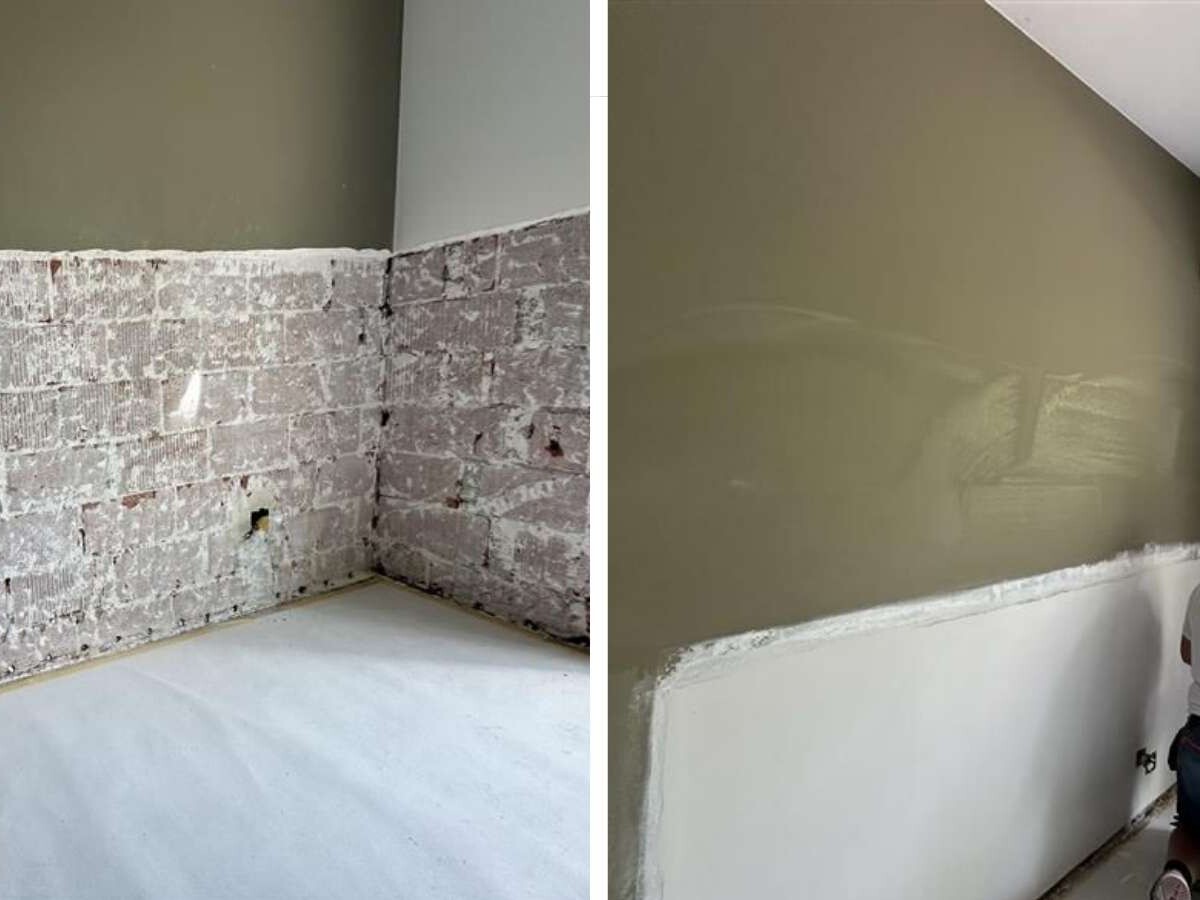
A heatwave doesn’t have to turn your home into an uncomfortable, sticky rainforest. By actively reducing humidity and ventilating in a controlled manner, you can continue to breathe, sleep and live comfortably at home, even on the hottest summer days. Do you feel that the humidity in your home is currently too high? Does your home sometimes smell musty, or would you like to know how good your indoor air quality is? So don’t leave it to chance. Enquire today your free expertise Our experts will visit you, with no obligation, to measure the relative humidity in your home and advise you on the perfect solution tailored to your property.
More information and brochure request
Answer the questions below and get more information and our brochure based on them. Would you like the cost price calculated? Then indicate this clearly in the text field below and we will do the necessary.