Peeling paint on walls or ceilings: causes, mistakes and solutions
You’ve scraped the loose flakes of paint off your wall or ceiling, touched it up neatly and repainted it. Yet, after a while, you notice bumps or flaking paint appearing again in exactly the same spot. At AquaConsult We notice that, at precisely that moment, many homeowners furrow their brows: why is the paint peeling off a wall that, at first glance, looked perfectly fine? Peeling paint is often not a problem in its own right, but a visible warning sign from the wall or ceiling itself. If you only look at the layer of paint, you’ll miss what’s happening underneath – and that’s precisely where the key to a lasting solution lies.

Why you shouldn’t ignore peeling paint
Peeling paint is rarely an aesthetic problem. In many homes, it is the first visible sign that damp is building up behind the plaster, in the brickwork or near a ceiling or joint. Anyone who leaves this peeling paint as it is or simply paints over it is exposing themselves to several risks at once.
In short: Peeling paint is not something to be taken lightly, but it is a clear warning sign that you need to find out what is happening beneath the layer of paint on your walls.
Why is my paint flaking off?
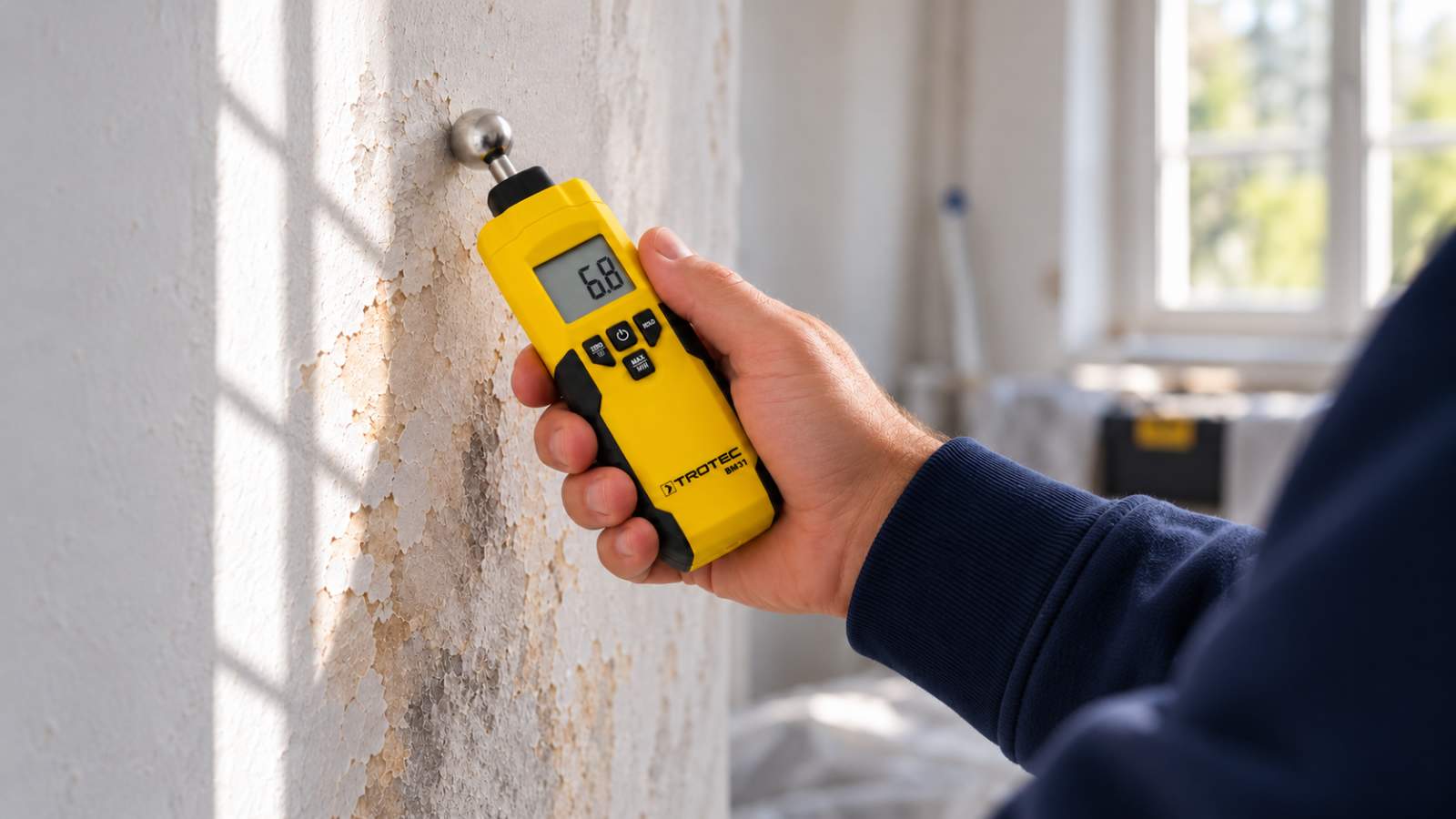
If paint is peeling, blistering or flaking, there is an underlying moisture problem In most cases, this is the main culprit. Moisture simply disrupts the bond between the paint layer and the substrate or physically causes the paint layer to peel away. The exact cause depends on the location in your home, when it was built and the weather.
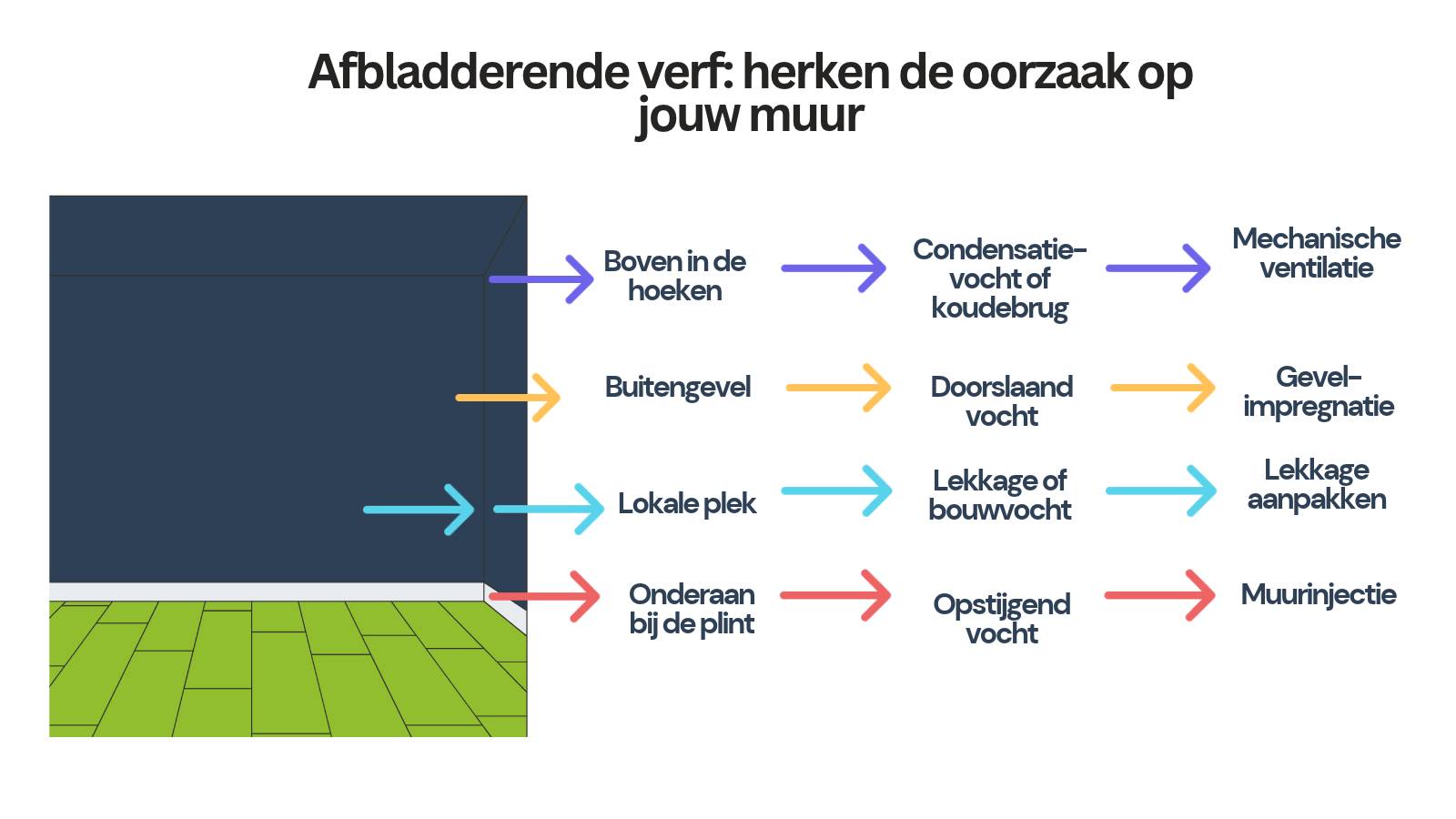
- Rising damp: Ground moisture rises through porous walls by capillary action, particularly in homes where the damp-proof course is missing, is positioned too low or is damaged. This is usually evident from peeling paint at the bottom of the wall or around the skirting boards, sometimes accompanied by salt rash or plaster coming away.
- Penetrating moisture: Rainwater penetrates the façade from the outside through porous facing bricks, weathered or cracked pointing, hairline cracks in the external render, or poor sealing around windows, sills or the roof edge. Damage to your paintwork is often more noticeable after driving rain or on façades that are exposed to a lot of wind and rain.
- Condensation moisture: Warm, damp indoor air – for example, whilst or after showering, cooking, washing or drying clothes indoors – condenses when it comes into contact with cooler surfaces such as walls, corners, windows or ceilings. Persistent or recurring condensation often leads to damp patches and black mold.
- Leaks: a leak in a water pipe, heating pipe, drain, shower or window joint, or roof structure causes localised damp walls, floors or ceilings. Unlike condensation, this involves a direct source of damp which causes localised rings, discolouration or flaking plaster on the wall or ceiling.
- Thermal bridges: a structurally weaker or colder point in a wall or structure, such as an uninsulated concrete beam, lintel or corner, cools down more quickly than the rest of the room. Moisture from the indoor air then condenses precisely at that cold spot, causing the paint there to peel and flake off more quickly.
- Construction moisture and residual moisture: In new-build homes, or where plasterwork or other work has recently been carried out, there is still residual moisture in the brickwork, screed or plaster. If painting or sealing is carried out too soon, this moisture cannot evaporate freely and will cause the new coat of paint to peel away.
- Salt load and crystallisation: moisture moving through a wall can carry soluble salts to the surface. When the moisture at the surface evaporates, the salts remain salt crystals which expand and exert pressure on the substrate and the paint layer.
- Moisture ingress via the cellar or ground contact: in the case of walls that lie partly below ground level, ground moisture can penetrate the structure and, through rising damp or moisture transport, also become visible on adjacent walls and in areas within the rooms above.
What if it isn’t damp?
As well as damp problems, paint can sometimes flake off for reasons unrelated to damp, such as poor surface preparation due to grease, dust or old, loose layers, an aged coat of paint, or a coat of paint that does not adhere properly to the substrate. If the paint keeps coming away time and again, if you see salt efflorescence and mould, or if the problem gets worse after rain or a shower, then all the signs point to an underlying damp problem that must first be assessed and professionally addressed.
What you must definitely not do if the paint is flaking
When paint starts to flake, it’s tempting to take immediate action with a brush or paint roller. However, at that point, many homeowners make choices that either make the problem worse or merely put it off. That’s why there are a number of things you’re better off avoiding if you’re dealing with peeling paint on your walls or ceiling.
In short: As soon as flaking paint keeps reappearing, applying a new coat of paint is never the right instinctive response; instead, you should first seek professional advice to understand exactly what is causing the problem within the wall.
How AquaConsult professionally tackles and resolves the problem of peeling paint
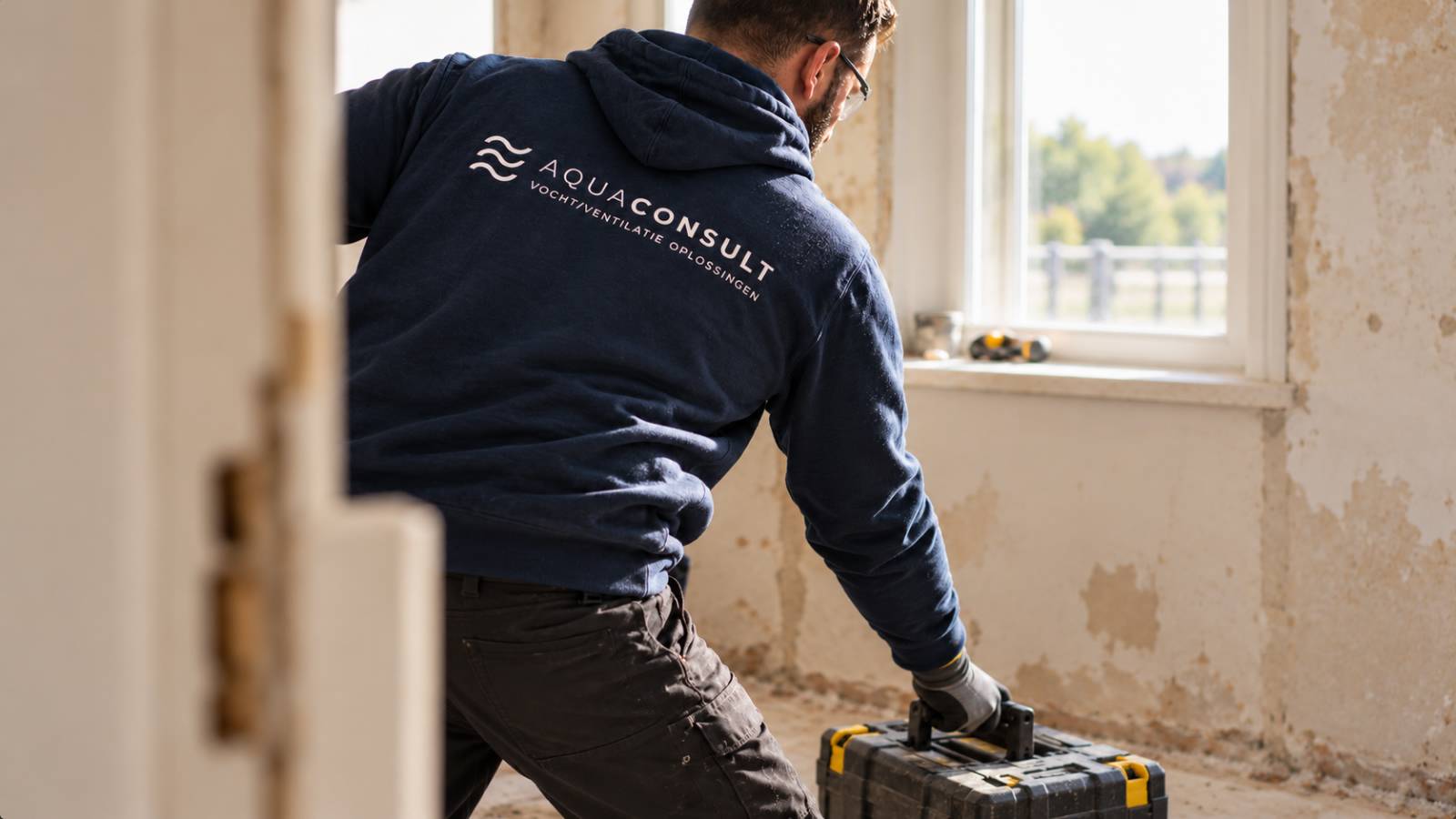
The right solution for peeling paint starts with assessing and understanding what is happening inside the wall, façade or room. Here at AquaConsult, we tackle the underlying moisture problems a structured approach, tailored to the specific cause in your home.
- Thorough damp survey and diagnosis: we carry out during our free expertise objectively identify where the damp is coming from, how deep it is and what condition the brickwork, plasterwork or the room is in. This way, you can avoid guesswork and unnecessary work.
- Suitable moisture solution per moisture problem: Based on our experts’ findings during their site visit, we will select the most suitable approach, tailored to your situation.
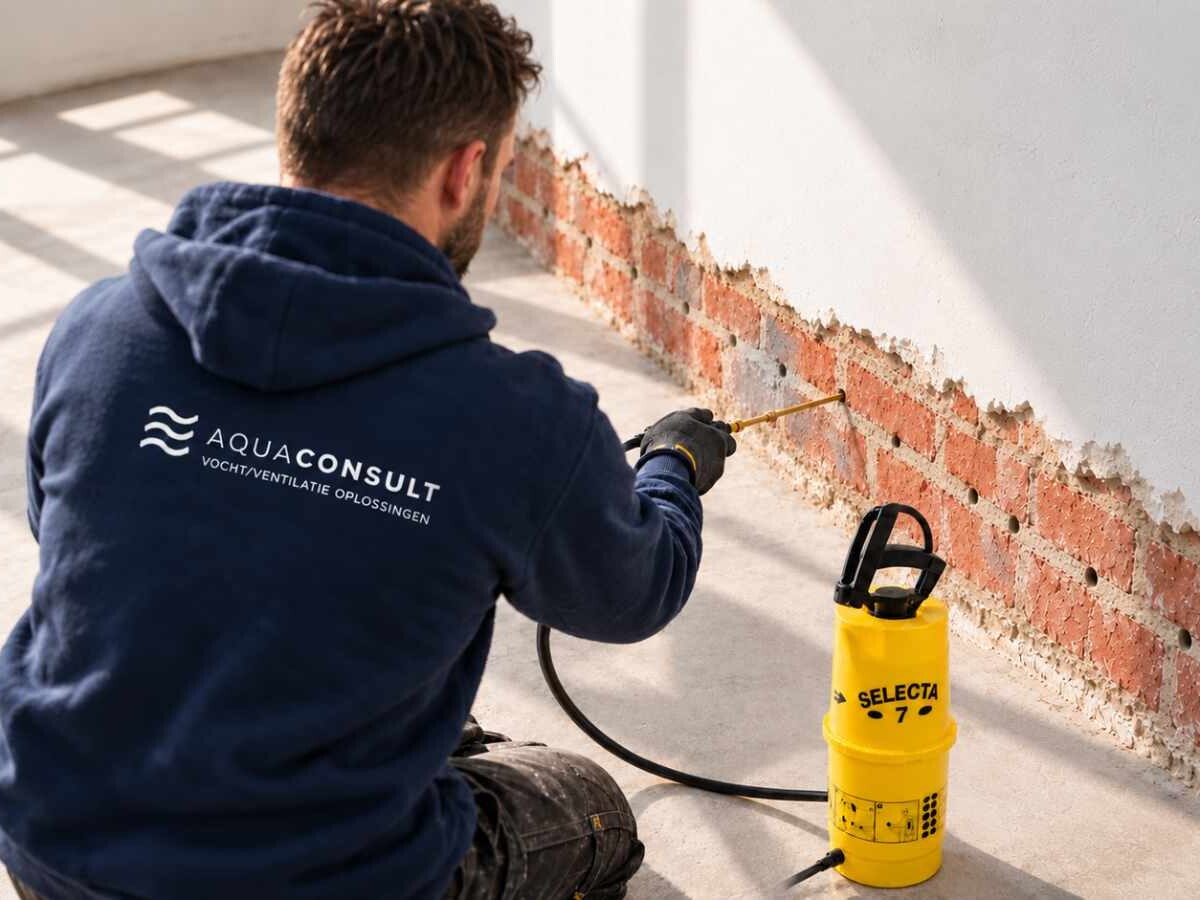
- Rising damp Treatment: here we opt for a structural solution to rising damp, namely professional wall injections combined with appropriate restoration and allowing for the necessary drying time.
- Penetrating moisture Repair: first, we tackle the exterior – the façade – where water is getting in through the joints, by repairing the weak connections and a facade impregnation. Only then do we tackle the interior walls and finish them off once they have dried sufficiently.
- Condensation moisture and tackling a damp indoor environment: we look at the balance between moisture production, temperature and air exchange in the home. To address these issues, we take targeted measures such as mechanical ventilation and effectively tackling mould before we finish off again with plastering.
- In the event of leaks or thermal bridges: tackle the immediate source of damp or the thermal bridge directly, and only repair and finish the affected areas once the situation is under control.
- A transparent approach and a suitable finish: when we quote prices, we provide clear figures tailored to your specific situation. Once the surface has dried properly, it can be finished neatly and appropriately.
The result
- The root cause of the damp problem has been tackled: the damp is no longer simply concealed behind a fresh coat of paint, but the source is being professionally addressed and permanently treated.
- Paint and finishes last longer: as the substrate is able to recover and is finished at the right time, you reduce the risk of recurring blisters, peeling paint or salt damage.
- A healthier and more comfortable indoor climate: less moisture build-up, lower risk of fungi and a home that looks well-maintained and reliable once again.
- Peace of mind and long-term security: you make a one-off investment in a well-thought-out and permanent moisture solution instead of having to sand and repaint it over and over again.
Why it’s worth taking measurements first before you start painting again
Peeling paint is not a minor issue that can simply be resolved with an extra coat of paint. In many homes, it is the first – and most obvious – sign that damp, salts or poor adhesion are putting pressure on the paint layer on the wall or ceiling. By first finding out what is happening behind the wall, façade or ceiling, avoiding the common pitfalls and choosing a solution that tackles the root cause, you can prevent recurring damage and unnecessary repair work. Is the paint keep coming back, or do you want to be sure what’s going on behind your wall or ceiling? Take contact Join us for a free expertise with a solution for moisture tailored to your home.

More information and brochure request
Answer the questions below and get more information and our brochure based on them. Would you like the cost price calculated? Then indicate this clearly in the text field below and we will do the necessary.