Why does my house smell musty? The link between humidity and air quality
You probably know it: you've been away for the weekend and you come home and open the door where you are immediately greeted with a musty, pungent smell. Whether you clean, leave scented candles burning or open the windows, that typical musty smell doesn't go away. It seems as if the smell has migrated into the walls of your home. At AquaConsult we know that this is not a hygiene issue, but an alarm signal from your home. After all, a musty smell is now a sign of disturbed air quality and underlying moisture problems in your home. In this blog, we explain where that smell can come from, how it affects residents and how to get rid of it once and for all.


The science behind fragrance: what exactly do you smell?
This typical musty smell, which we often describe as ‘wet dog’ or ‘an old cellar’, does not happen by accident.
So when we talk about this odour, we are actually talking about a complex biological and chemical process that takes place invisibly in the walls and air of your home. To understand how to permanently remove the odour, you need to know what the source of the problem is. This is why science breaks down this characteristic into three crucial factors.
1. Microbial Volatile Organic Compounds (mVOCs)
The smell we describe as musty is referred to in science as mVOCs. These are actually gaseous by-products released during the formation of fungi and bacteria.
From the moment a material such as plaster, wood or insulation becomes damp, it becomes a breeding ground for fungi and bacteria. Microorganisms then literally start eating or digesting the materials. During this digestion process, they emit gases. So what you smell in your home is not the moisture itself, but the chemical emissions from the active moulds that are deep in the pores of your home. Even if you can't see the mould yet, you can already smell it.
2. The role of relative humidity (RH)
The air in your home works like a sponge. Warm air retains more water vapour than cold air. When the relative humidity rises above 60%, the air in the house becomes saturated.
In this saturated state, two things happen:
- Odour retention: Moist air particles or water molecules bind to odour molecules from, for example, cooking, pets or smoke. As a result, these odours linger longer and feel heavier.
- Surface absorption: Excess water vapour in the air finds a way out and condenses on cold surfaces such as the walls or windows. This keeps the process of mould and associated gas emissions (mVOCs) continuously.
3. The ‘chimney effect’ and diffusion
Why do you often smell the musty smell throughout the house, even if the problem is located in the basement? This is because of the laws of thermodynamics. Warm air simply rises. As this air migrates to the upper floors, it creates negative pressure in the lower parts of the house.
This causes moist and mould spore-laden air from the basement to be sucked upwards through cracks, holes in pipes and stairwells. We also call this the chimney effect. This directly affects the air quality in your living room or bedroom by a moisture problem which is located metres below.
So why does my house smell musty? The possible causes at a glance
A musty smell in your home is rarely the result of a single problem. It is often a combination of environmental factors and the construction of your home.
When structural moisture problems are the source: What species cause the odour?
If the musty smell lingers in the house, chances are it is due to a structural moisture problem that negatively affects air quality day and night. At AquaConsult, we often see our clients smelling the odour but unable to place the source. Therefore, we list the possible culprits.
Rising damp: The constant evaporation
Rising damp occurs when groundwater soaks into the walls through the foundation. This often happens in older houses that have no or damaged flood defences.
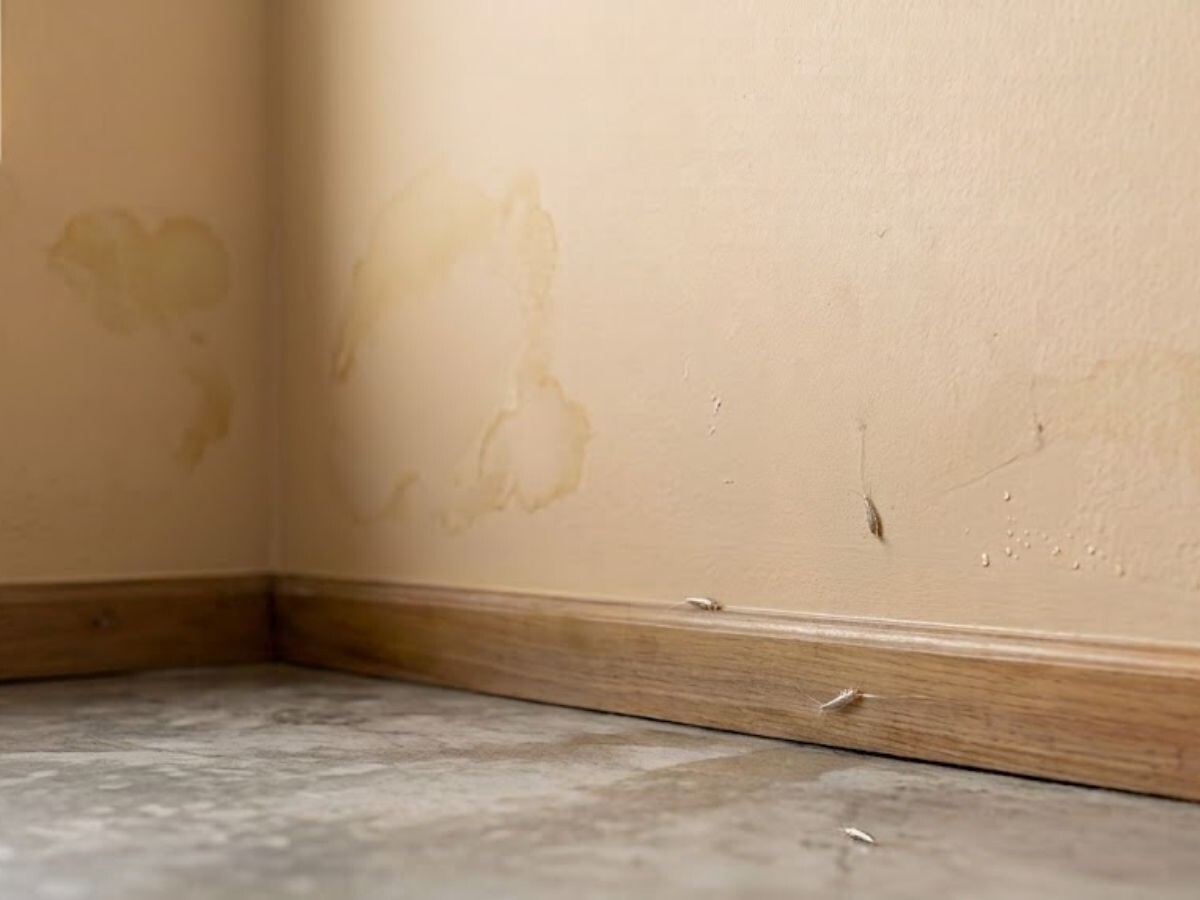
- How do you recognise it? Due to wallpaper coming loose, peeling paint or plaster powdering at the bottom of the wall. Sometimes you can also see white salt efflorescence on the wall.
- Impact on air quality: The wall behaves like a large radiator that constantly evaporates clammy moisture into the room. This creates structurally excessive humidity (often above 70%), making the air feel heavy and stuffy.
- The musty smell: The smell is often earthy and clammy, similar to the smell of wet earth or a forest walk after a rain.
Moist basement: The smell factory under your feet
The basement is below ground level and under constant pressure from groundwater. In the absence of a watertight basement forces moisture out and creates a damp cellar.
- How do you recognise it? Puddles of water on the basement floor, clammy walls, a musty smell as soon as the basement door opens or mould on cardboard boxes and wooden shelves.
- Impact on air quality: Through the ‘chimney effect’, cold, humid basement air rises into the rest of the house. As a result, the air quality in your living room or bedroom is directly affected by the polluted air from downstairs.
- The musty smell: The classic, pungent cellar smell. A pungent, mouldy smell that clings to textiles and clothing.
Penetrating moisture or damp walls: The porous barrier
Rainwater penetrates deep into interior walls through a porous façade, cracks in masonry or damaged pointing. When this is the case, we speak of penetrating moisture or damp walls.
- How do you recognise it? Due to moisture spots on the interior wall that get bigger after a heavy rain or an exterior wall that stays dark and wet for an extremely long time after precipitation.
- Impact on air quality: Wet walls lose their insulation value, lowering the indoor temperature and increasing humidity. This creates a cold and unpleasant indoor climate.
- The musty smell: A smell of wet masonry and lime. It is an odour that often comes and goes, depending on weather conditions.
Condensation moisture: The saturated atmosphere
Condensation moisture occurs when warm, moist air cools on cold surfaces due to a lack of ventilation.
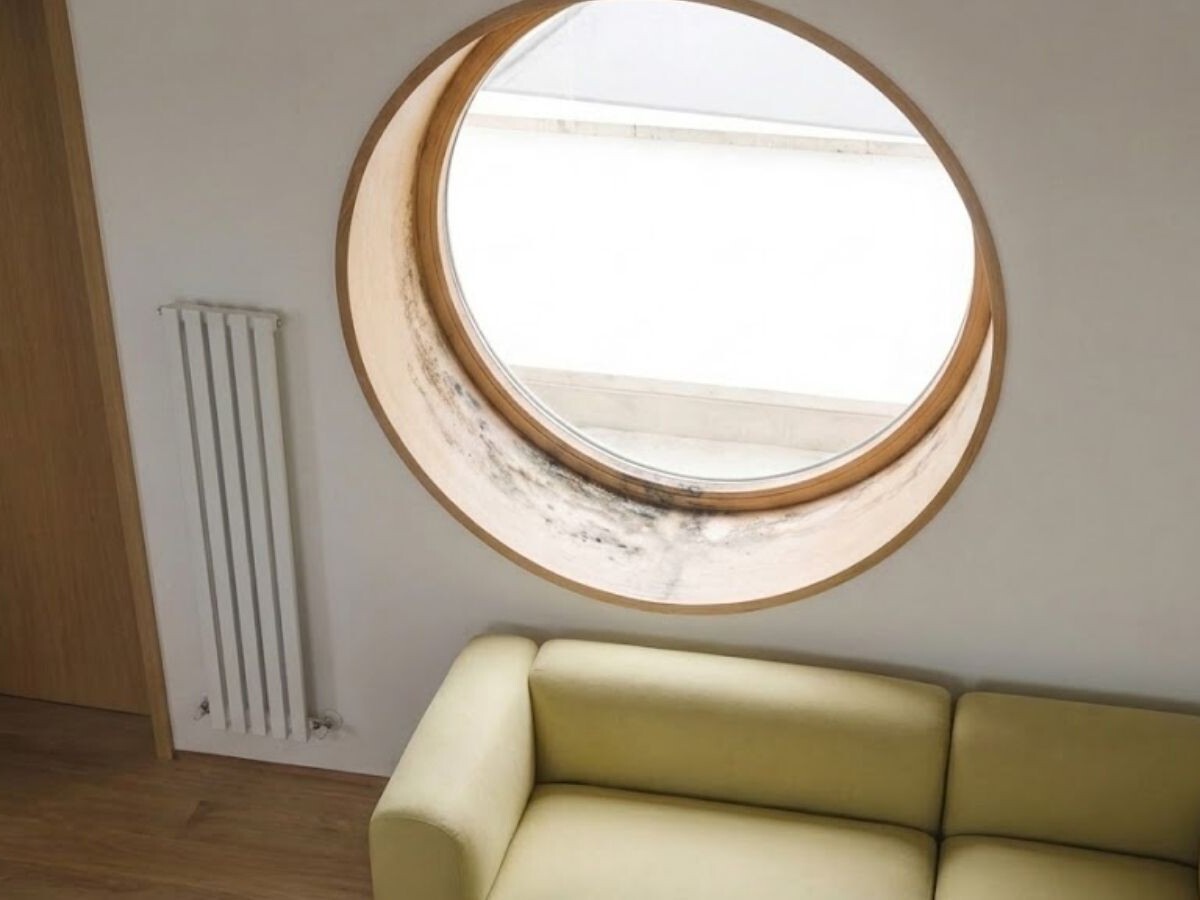
- How do you recognise it? The water droplets on the windows, black mould dots in the corners of the ceiling or mirrors that stay fogged up for a long time.
- Impact on air quality: The air becomes saturated and consumed. As the air is not refreshed, mould spores and bacteria accumulate. You literally breathe polluted air.
- The musty smell: The smell is often musty and slightly sour, typical of active fungal growth on organic material such as wallpaper or paint.
Mould on the walls: The active air pollutant
Mold is the direct result of long-term moisture problems. It is a living organism that feeds on your home.
- How do you recognise it? To black, green or white spots and fluffy textures on the walls, ceilings or behind furniture.
- Impact on air quality: Mould continuously emits spores into the air. This drastically lowers air quality and is the biggest culprit for occupants' health.
- The musty smell: A very strong and suffocating odour. It smells like spoiled material and is often the most disturbing smell in the house.
Moisture in new-build homes: The trapped building moisture
Thousands of litres of water are used during the construction process. If this is not allowed to dry out sufficiently before you move in, it will remain the building moisture caught in the construction.
- How do you recognise it? Due to constant clammy air, windows that fog up even with light heating and the house never really feeling warm despite insulation.
- Impact on air quality: It prevents the natural drying of the house and causes excessive humidity from day one, which prevents the growth of the first fungi can encourage.
- The musty smell: A subtle but noticeable smell of damp concrete and stucco that becomes unfresh over time.
What are the consequences of poor air quality?
Ignoring a musty smell is not without risk. Poor air quality, caused by a structural moisture problem, has a chain reaction of negative consequences. When your home can no longer breathe, it affects everything you love.
1. Impact on your health
The air you breathe in a damp home is full of mould spores, bacteria and dust mites. This can lead to:
- Airway problems: Develop or worsen asthma, chronic bronchitis and a constant ‘tickling cough’.
- Allergic reactions: Tearing eyes, a runny nose and skin irritations like eczema that just won't go away.
- Poor sleep: In a clammy room, you sleep less deeply, leading to chronic fatigue and difficulty concentrating during the day.
- Weakened immune system: Vulnerable groups such as children and the elderly are especially at increased risk of infection.
2. Financial implications
Moisture in the home literally costs money every day:
- Higher energy bills: Humid air is much heavier and harder to heat than dry air. Your heating has to run harder for the same comfort feeling.
- Decline in value of your property: A house with a moisture history or musty smell is worth less in the real estate market. Potential buyers drop out at the first memory of smell.
- Unnecessary replacement costs: Furniture, electronics and clothes becoming stale or damaged by mould, should be replaced early.
3. Structural damage to your home
Moisture does not stop at the smell, it also affects the foundations of your home:
- Degradation of materials: Wooden support beams can rot and plaster loses its adhesion and falls off the walls.
- Corrosion and salts: Rising damp brings hygroscopic salts that compress the bricks from within.
- Insulation loss: Once insulation material gets wet, it loses its effect completely, cooling your home even faster.
4. Social and mental well-being
Your home should be a place you are proud of:
- Social threshold: People in a musty house are often embarrassed by the smell, making them less likely to invite friends or family over.
- Odour in clothing: The smell soaks into your fibres. You no longer notice it yourself, but at work or with friends, you constantly carry the musty smell with you.
- Residential stress: The constant feeling that there is something wrong with your home, which creates anxiety and takes away the enjoyment of living.
The solution to the musty smell in the house
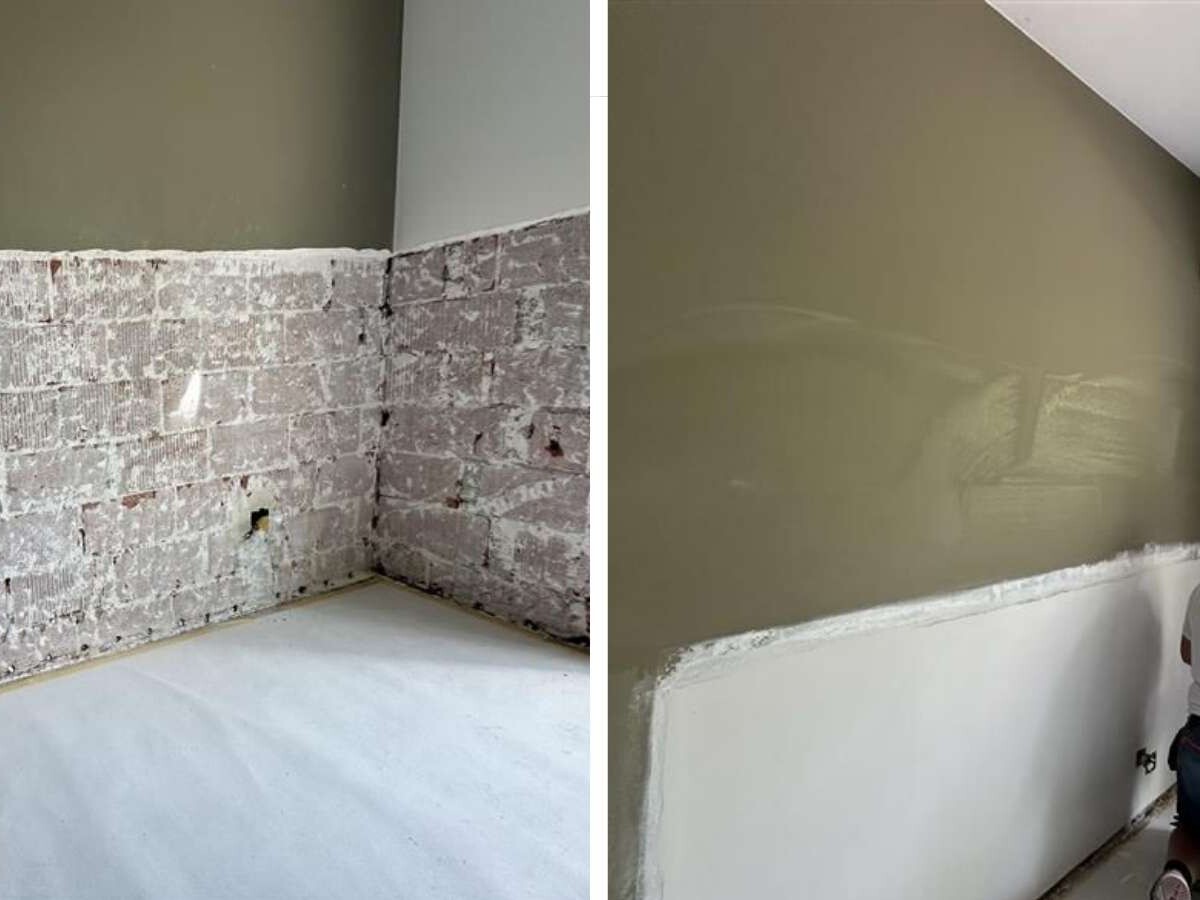
Many people try to mask the smell with candles or sprays. But here at AquaConsult, we go for the definitive approach to the source.
Breathe again in a healthy home
A musty smell is a signal from your home that help is needed. By tackling the source of moisture, you not only improve the unpleasant smell, but also your health and the value of your home. A fresh home starts with dry walls.Want to get rid of that musty smell for good? Ask your free expertise and find out how we can restore your air quality.
More information and brochure request
Answer the questions below and get more information and our brochure based on them. Would you like the cost price calculated? Then indicate this clearly in the text field below and we will do the necessary.