Damp problems in the home during the summer? The 5 hidden signs
Is the sun beating down on the roof of your home and is the fan running at full speed, yet does your home still feel uncomfortably damp and stuffy? If so, you’re certainly not alone. During a heatwave in Belgium, we often assume that damp problems won’t be too bad, because it’s so dry outside and there’s no mould there is more to see. But nothing could be further from the truth. Heat and high humidity In fact, they act as a magnifying glass for damp problems in the home. They expose the underlying issues or hidden culprits, such as summer condensation, reverse vapour flows or hidden air conditioning leaks. If you ignore these signs, they may go unnoticed your health and the value of your home on the property market affect. So, are you planning to carry out any renovation or painting work soon? Or do you simply want to breathe easy again in a damp-free home? Then find out quickly with this checklist from AquaConsult where the moisture problems what they are and how to have them treated professionally.


1. The damp wall: Summer condensation or a structural damp problem?
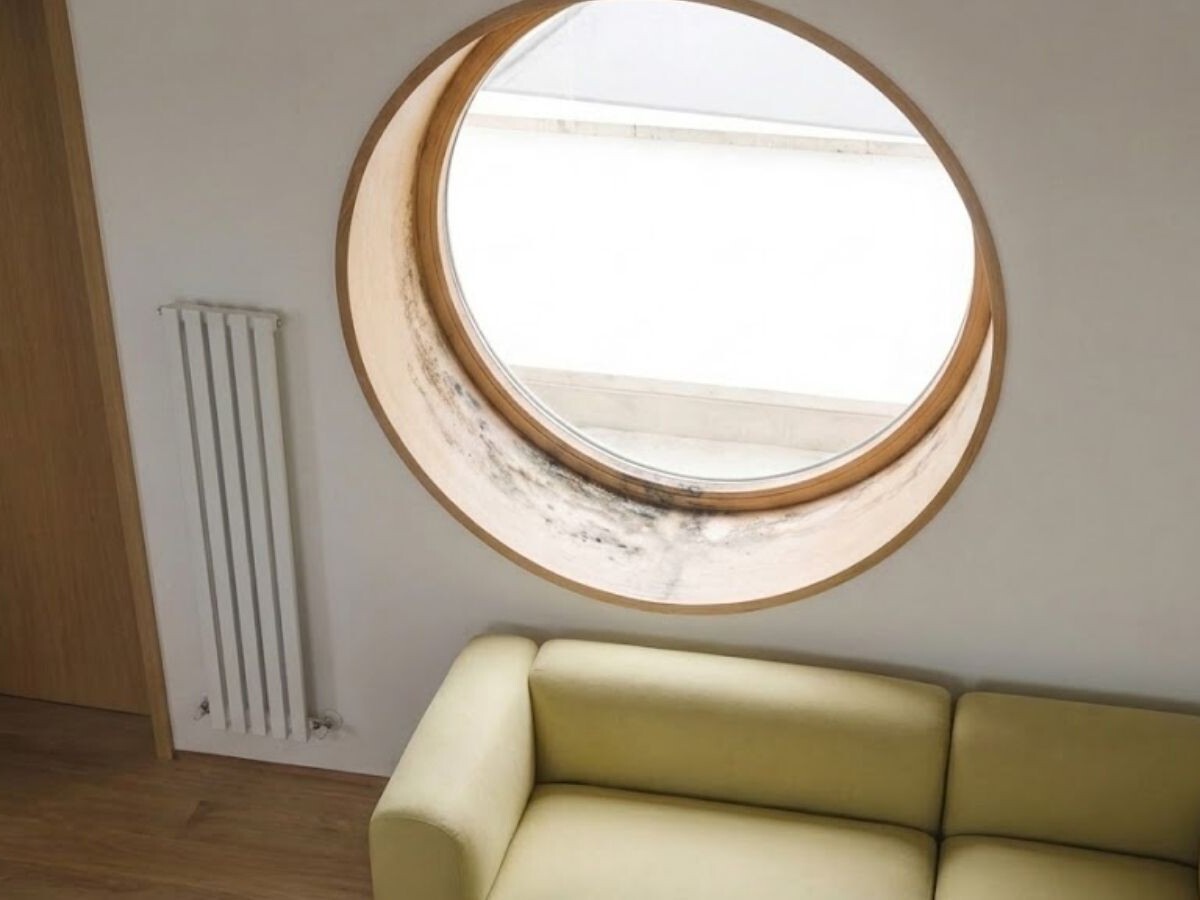
Does your wall feel damp in the corners, on the external walls or behind your furniture as soon as it gets sweltering outside? If so, there’s a good chance you’re dealing with summer condensation. Warm air contains a huge amount of moisture and cools down suddenly when it comes into contact with cooler surfaces, such as thick external walls or cellar walls. As cold air can hold less moisture, water droplets form immediately.
You’ll recognise the phenomenon of damp walls against a wall that feels warm to clammy on hot summer days, with a relative humidity that remains stuck above 60% on a digital hygrometer for long periods.
But does the wall remain damp even on cool, dry days, or can you see paint flaking off at the bottom of the wall? If so, you’re dealing with a deeper-seated structural damp problem such as rising damp or penetrating moisture.
- Rising damp: Ground moisture that rises through the foundations and, due to rapid evaporation in the summer, white salt crystals or saltpetre leaves a mark on the underside of the wall.
- Penetrating moisture: Rainwater that seeps through a porous, damaged façade and saturates the wall from the outside in.
- Structural condensation moisture: A lack of continuous ventilation in the home, meaning that the moisture produced every day by cooking, showering or breathing has nowhere to go.
AquaConsult’s professional damp-proofing solution
Treating the symptoms – such as using a standalone dehumidifier – won’t help if the cause of the damp problem lies in the wall structure or the foundations. AquaConsult carries out a thorough damp survey to determine the exact nature of the damp problem.
- Is it summer- or condensation moisture? In that case, we’ll install a certified mechanical ventilation system, such as the Type D balanced ventilation system with heat recovery, for optimum air circulation.
- Is this about rising damp? Then we’ll carry out a professional wall injection Finish with a water-repellent gel.
- At penetrating moisture we protect the façade using a breathable water-repellent treatment or facade impregnation.
2. Musty odours in the home: The smell that appears even before mould
No matter how thoroughly you clean, that typical, musty cellar smell keeps coming back into the hallway, the storage room or the utility room on hot summer days. Moisture problems are often heard and smelled first, before there is black mould spores or at all mould on the wall appear.
The cause of this is the combination of heat and stagnant, damp air, which leads to micro-condensation forming in hidden places. This creates the ideal breeding ground for bacteria and mould. Even before mould patches appear, these spores are already emitting gases that cause the familiar musty smell in the home. You’ll notice this particularly in classic blind spots such as behind large pieces of furniture against an external wall, in dark corners behind curtains or in a poorly ventilated laundry room.
AquaConsult’s professional damp-proofing solution
AquaConsult carries out an in-depth assessment of humidity and air quality based on a damp survey to pinpoint the source of the musty smell. If the smell is caused by penetrating moisture or poor ventilation, we combine targeted wall treatments, such as facade impregnation, with active ventilation. Is the odour coming from underground? If so, we’ll tackle the problem at its source once and for all by making the cellar walls or floor completely watertight using basement waterproofing or basement drainage.
3. Damp cellar walls: Why ventilating the cellar on a hot summer’s day is counterproductive
On a hot summer’s day, you throw the cellar windows wide open to let the air in, but afterwards the walls feel even damp. This may sound counterintuitive, but it’s pure physics. It’s one of the most common mistakes made when moisture problems in the summer.
A cellar maintains a constant, low temperature thanks to the surrounding soil. As soon as the humid summer air flows in and cools down, condensation immediately forms on the cold surfaces. The walls will then literally start to ‘sweat’. Do you still want to ventilate the cellar? If so, do this in the early morning or at night, when the outside temperature is lower. This ensures the walls dry out effectively and provides fresh air.
You recognise a damp cellar After natural ventilation, water droplets will form on the ceiling and walls, and this happens immediately after you’ve opened the windows. You should therefore only ventilate at night or in the early morning, when it’s cooler outside.
AquaConsult’s professional damp-proofing solution
Remains the damp cellar Does it feel damp, even if you adjust the natural ventilation? If so, this is due to groundwater seeping in under high pressure. AquaConsult offers two permanent solutions to this problem.
- Basement sealing: Applying a high-quality, waterproof cement coating to the cellar walls and floor.
- Basement drainage: A studded membrane and pump system are installed, which collect any infiltrating groundwater and drain it away automatically.
4. Hidden damage caused by air conditioning: Condensation and damp in pipework
The air conditioning is a lifesaver during a heatwave, but it can cause a damp problem without you realising it. An air-conditioning unit removes moisture the air, producing litres of condensation per day in the process.
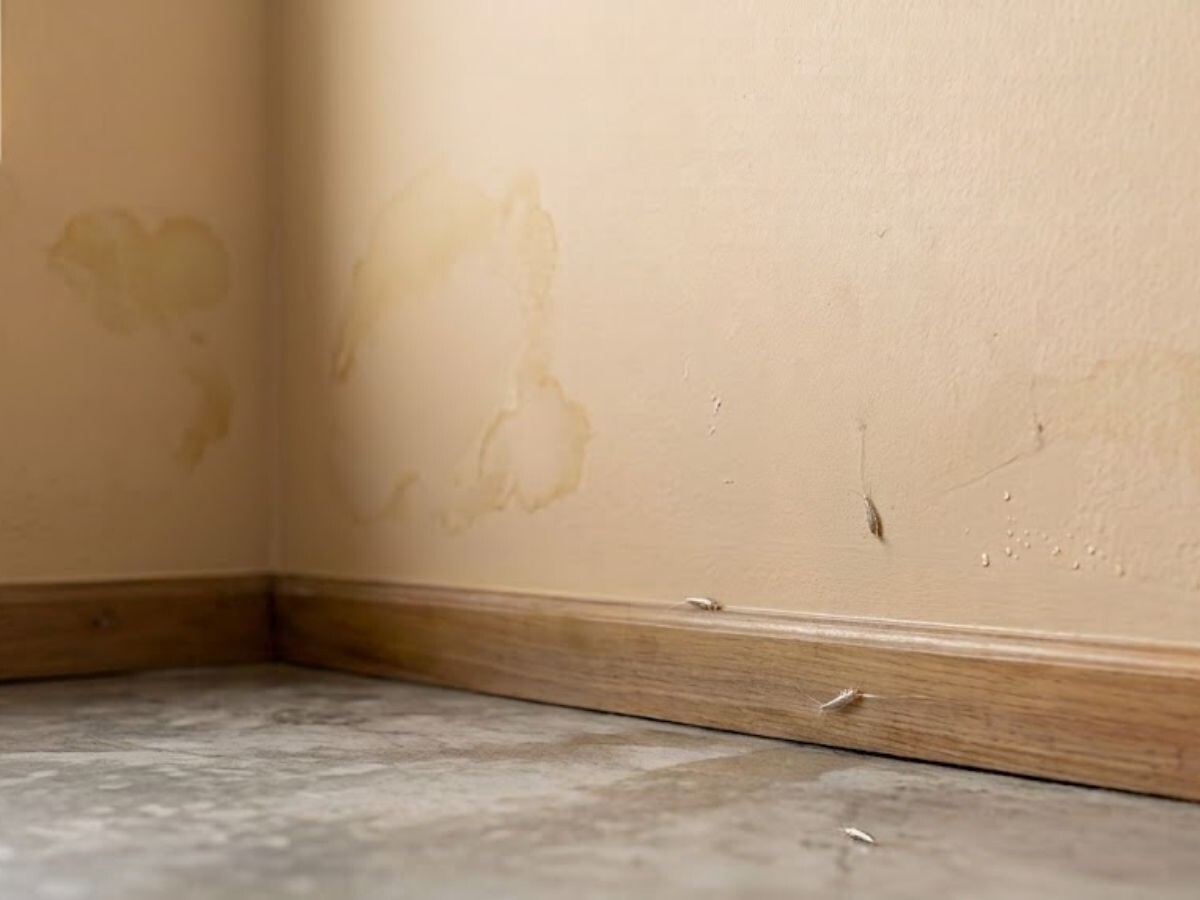
If the condensate drain becomes blocked, the pump seizes up or the pipes in the wall are inadequately insulated, the water will find its way into your internal or cavity wall. As this only happens when the unit is cooling, you often don’t discover the damage until weeks later. You can recognise this by faint discolouration, yellow or brown rings, peeling paint or loose wallpaper around and beneath the air-conditioner’s indoor unit.
AquaConsult’s professional damp-proofing solution
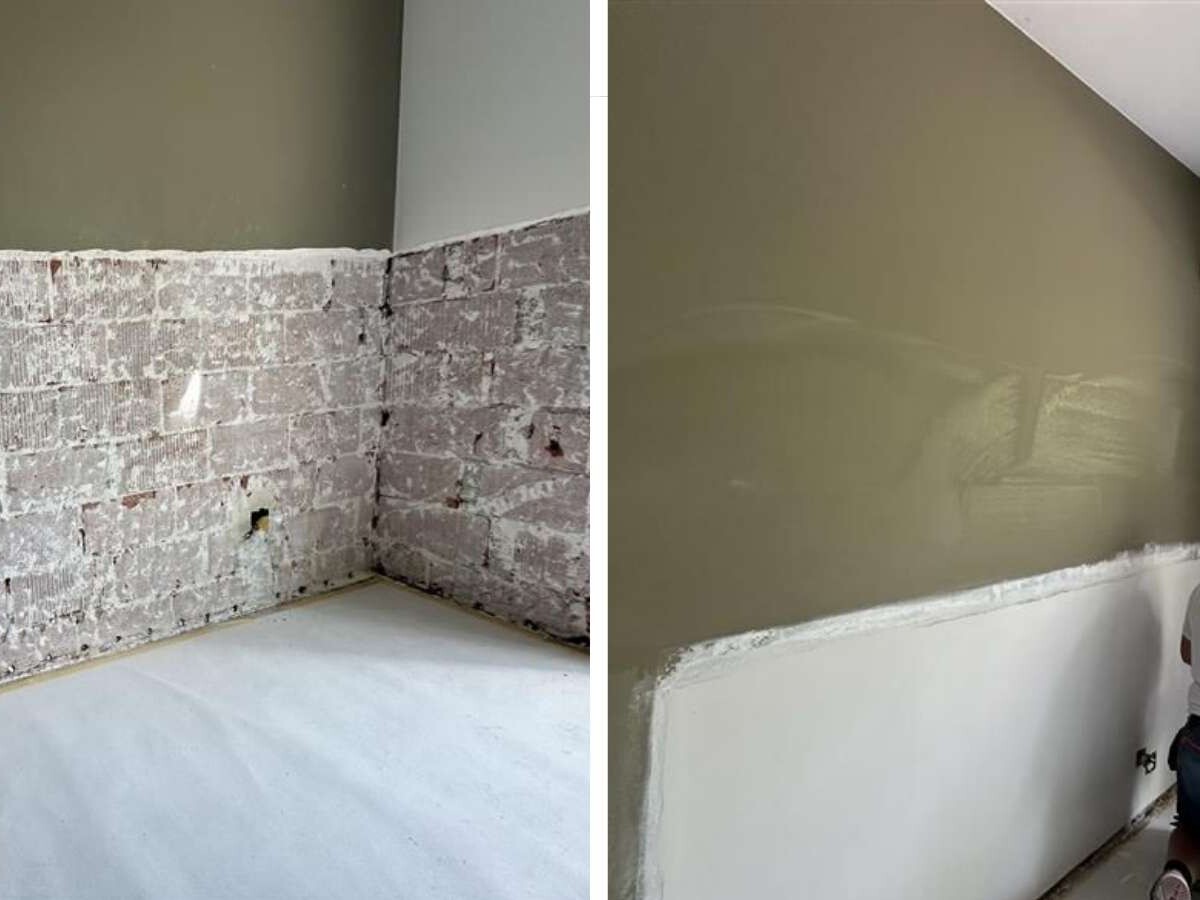
Stop trying to mask the symptoms – such as painting over the stains – straight away, as moisture trapped beneath a new coat of paint will cause even greater damage to the walls. AquaConsult therefore carries out a damp survey onto the wall. We then use professional drying equipment to dry out the cavity and the brickwork in a controlled manner. This prevents permanent mould on the wall and structural damage on the inside.
5. The summer storm: A heavy downpour on dry ground
A fierce thunderstorm after weeks of drought feels like a relief to us. Yet afterwards, you suddenly notice damp patches at the bottom of the walls and skirting boards coming loose.
This is the effect of heavy rainfall on parched ground. The ground behaves like concrete and absorbs rainwater extremely poorly, causing the water to run off and accumulate against your foundations. Combined with wind or driving rain, this leads directly to resounding or rising damp.
You can tell by the damp patches on the bottom of the walls, about 30 centimetres above the ground, immediately after a storm, or by a white, powdery salt deposit, saltpetre, which appears a few days later because the heat causes the moisture to evaporate quickly.
AquaConsult’s professional damp-proofing solution
Saltpetre on your walls or the underlying structural damp problem requires a professional approach.
- Wall injection at rising damp: We inject a high-quality, moisture-resistant gel into the base of the wall, which forms a permanent barrier against ground moisture.
- Facade impregnation at penetrating moisture: We make the external wall hydrophobic, or water-repellent, so that driving rain can no longer penetrate the brickwork of your façade.
Want to recognise damp problems yourself in the summer? The 72-hour protocol
Fluid retention is a symptom, not a diagnosis. Use this step-by-step guide to avoid incorrect diagnoses and moisture solutions to prevent.
Don’t ignore the hidden signs of damp this summer
Damp problems don’t just disappear as soon as the sun comes out. In fact, the combination of summer heat, high humidity and heavy downpours actually brings hidden damp problems in the home to light. Whether it’s summer condensation, a leaking air-con or rising damp after a summer storm, ignoring these signs leads to damage to your health and the value of your home on the property market. Testing it yourself with a hygrometer gives an initial indication, but only a targeted, professional approach will resolve the problem once and for all. Do you suspect a damp problem in your home, or do you want to start your renovation or painting work with peace of mind? Don’t just guess at the cause. The experts at AquaConsult will visit you to a thorough, no-obligation damp survey. We’ll identify the exact source and provide a permanent damp-proofing solution tailored to your home. Enquire now your free expertise to.
More information and brochure request
Answer the questions below and get more information and our brochure based on them. Would you like the cost price calculated? Then indicate this clearly in the text field below and we will do the necessary.