Does the dehumidification setting on an air-conditioning unit help to combat damp in the home?
It’s warm outside; the air feels sultry As you walk in, you notice a musty smell or misted-up windows. Time to reach for the remote control for the air conditioning to sort out. Set the air conditioning to the familiar droplet symbol, also known as the dehumidification setting or ‘Dry’ mode. In no time at all, the air in the room will feel much more pleasant. The problem seems to have been sorted. But unfortunately. Although your air-conditioner’s dehumidifying function provides temporary relief on a hot summer’s day, many homeowners are misled by this. An air-conditioner that dehumidifies does remove some moisture from the air inside your home, but it does not tackle the underlying cause of the moisture problem I never wear it at home. In this blog, we at AquaConsult explains exactly how an air conditioner’s dehumidification mode works, and why it not a permanent solution to damp is and which sustainable solutions what our experts can do for your home to ensure it is truly dry and healthy.

What is the dehumidification mode on an air conditioner, and how does it work?
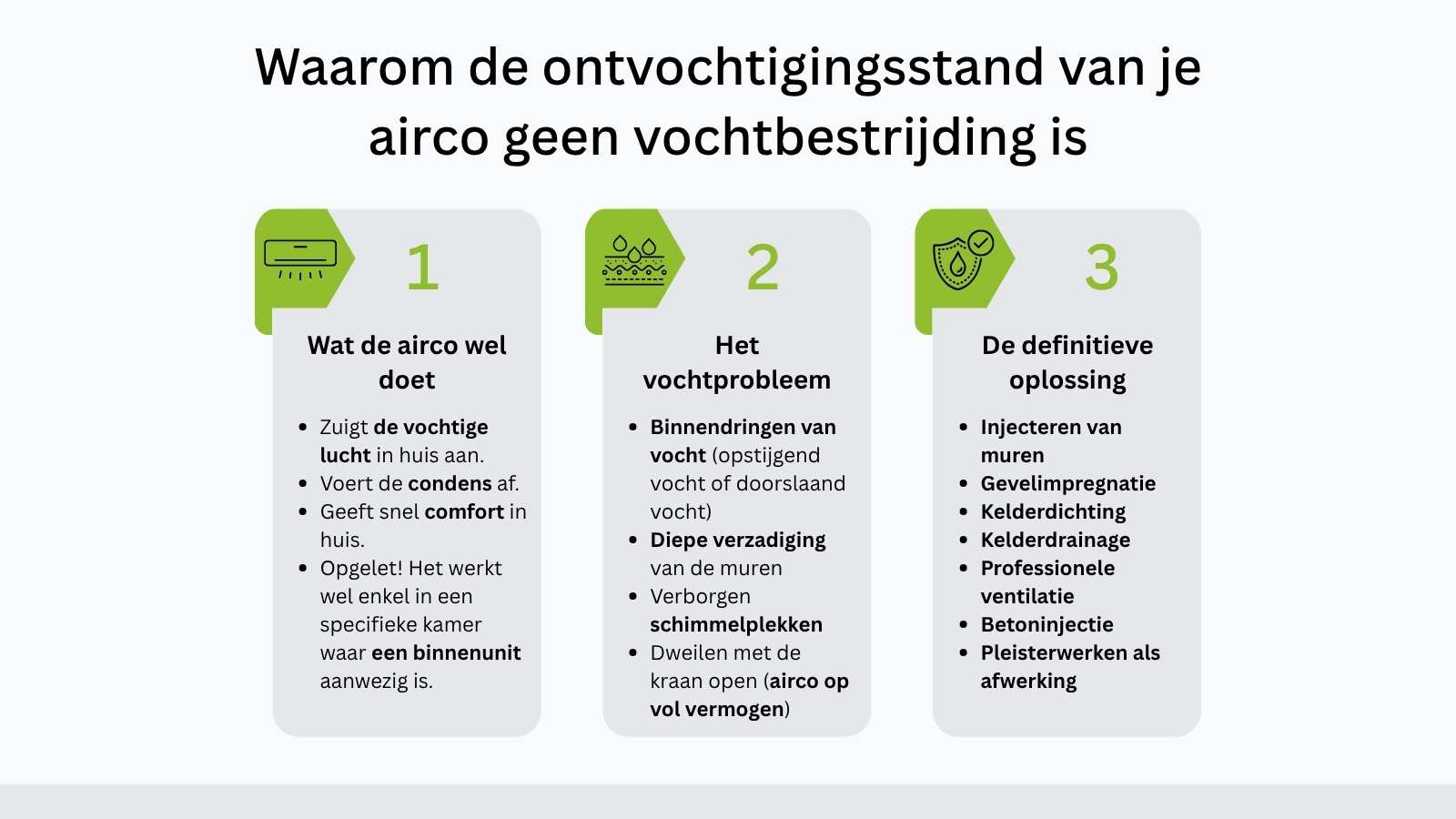
The dehumidification mode, often indicated by a water droplet icon or the word ‘Dry’, is a built-in function of most modern air conditioners and heat pumps. But what exactly does this mode do in your home?When you switch on the dehumidification function, it works the air conditioning as a light dehumidifier.
The crucial difference: This function is designed solely to relative humidity to reduce the temperature of the ambient air on hot summer days. It is a by-product of the cooling process, not a treatment of damp walls or other damp problems.
Hot summer days and damp problems: Why air conditioning doesn’t help
In the summer, many people find that moisture problems worsen or suddenly become apparent. Warm outdoor air can hold more moisture than cold air. As soon as this warm, humid summer air enters your home and comes into contact with colder surfaces such as cellar walls, external walls or uninsulated floors, it immediately causes condensation moisture.
It would therefore seem to be a clever solution to the air conditioning to set it to the dehumidification mode. But don’t be misled, because there is a key difference between temporary dehumidification via the air conditioning and actual moisture control.
What the dehumidification mode on your air conditioning actually does
The dehumidification setting on your air conditioning does exactly one thing: it temporarily reduces relative humidity from the air present in the room at that moment. It extracts water vapour from the ambient air and discharges it as condensation. This makes the room feel less stifling and immediately provides a sense of comfort on a hot summer’s day.
Why air conditioning is definitely not a solution for tackling damp
Although the air in the room feels drier, an air-conditioner does absolutely nothing to tackle the cause of the damp in your home.
- The physical source of the fluid remains untreated: An air-conditioning unit dries the ambient air, but does not dry damp walls, floors or foundations. Groundwater seepage, rising damp or rainwater that seeps in through a porous façade will continue to enter your home unabated. The flow of water isn’t stopped by pressing a button on an air-conditioning remote control.
- Moisture deeper within the structure is not reached: Moisture penetrates deep into the bricks, concrete, plaster and wooden structures. An air-conditioning system only tackles the surface moisture in the air. The core of your walls and the foundations remain damp, causing the structural condition of your house to deteriorate.
- A false sense of security and hidden damage: Because the musty smell in the room disappears and condensation on the windows When the weather clears up, you think the problem is sorted. Meanwhile, moisture builds up unnoticed behind skirting boards, kitchen cupboards, cupboard walls and under the floor.
- Mould continues to grow behind the scenes: Mold They need damp building materials and stagnant air to grow. As the walls themselves remain damp, the back of the wallpaper, the plasterboard and the timber still provide an ideal breeding ground for harmful black moulds, even if the air in the room feels dry.
- No effect on hygroscopic salts: In the case of persistent damp problems such as rising damp draw salts from the ground or the brickwork up to the surface. These salts continuously attract new moisture from the surrounding environment. An air-conditioning system can salt efflorescence not neutralise or stop.
- A local approach rather than a comprehensive one: An air-conditioning unit only dehumidifies the specific room in which the indoor unit is installed. The damp problem simply shifts to other rooms, corridors, the loft or the cellar, where the air-conditioning unit cannot reach.
- Like trying to mop up with the tap running: An extreme high energy bill. As the source of moisture has not been sealed off, new moisture flows continuously into the room from the building structure or the outside air. As a result, the air conditioning has to run continuously at full power to keep the air dry. This leads to a high energy bill without your home becoming any drier as a result, even for a single day.
In short: The dehumidification mode on an air-conditioning unit is a feature designed to climate comfort during hot summer days, but it is not a method for tackling damp in the building structure. It removes moisture from the air, but it does not eliminate the damp problem in your home.
Tackling structural damp problems: Why you need more than just an air-conditioning unit
At AquaConsult, we see every day how homeowners try to tackle damp in their homes using the dehumidification setting on their air conditioning. Although an air-conditioner the relative humidity in the home Although it temporarily reduces the damp, it does not offer any long-term solution to the damp problems in the house.
That is why we are doing everything we can moisture problems a summary of what air conditioning can and cannot do to address this problem, and how we at AquaConsult can help you with this resolve once and for all.
1. Rising damp
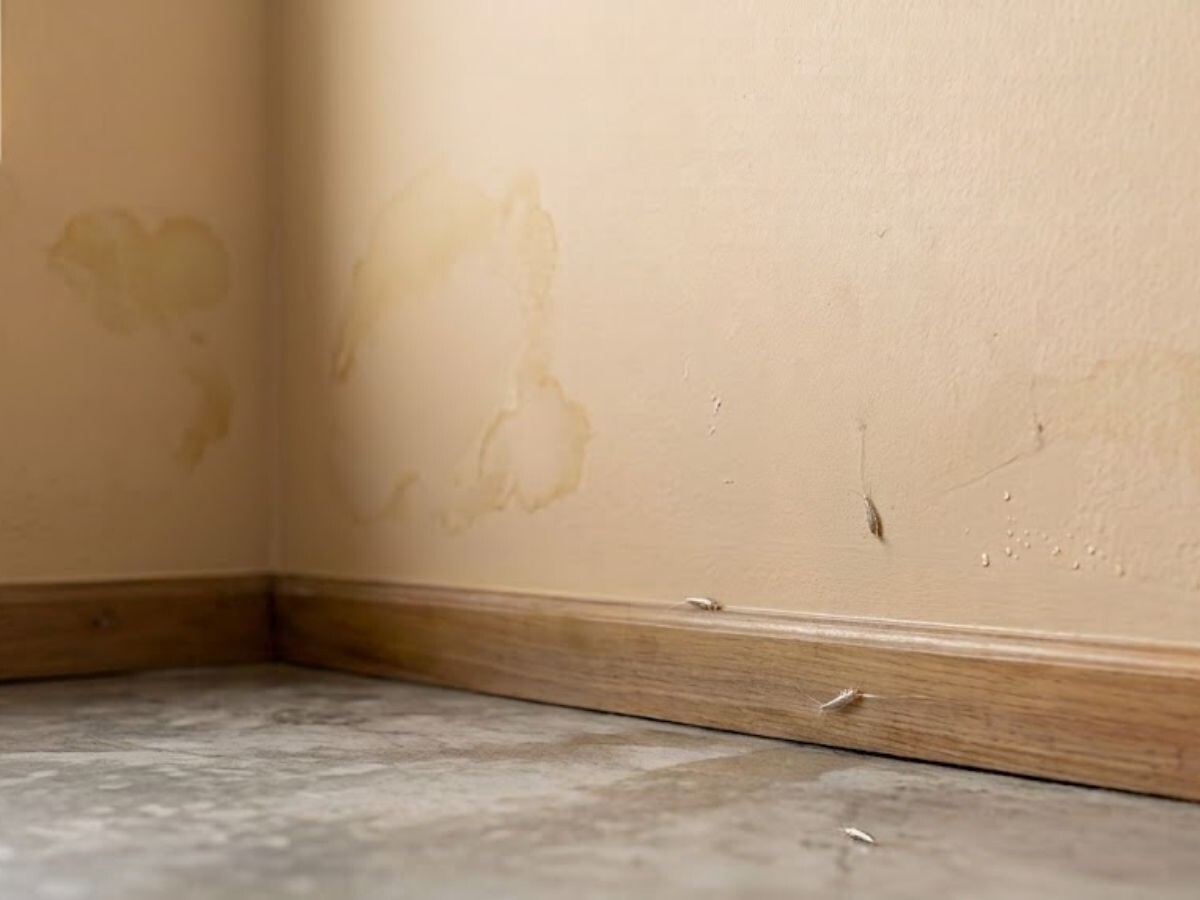
- The problem: At rising damp Groundwater is drawn up into the masonry due to the absence of, or the presence of a damaged damp-proof course. This causes paint to flake, wallpaper to come away, salt efflorescence and damp walls at the base of the ground floor.
- What the air conditioning does: The air conditioning only dries the surface of the wall and the moisture in the air in this particular room. Groundwater continues to rise unabated due to the capillary action of the bricks.
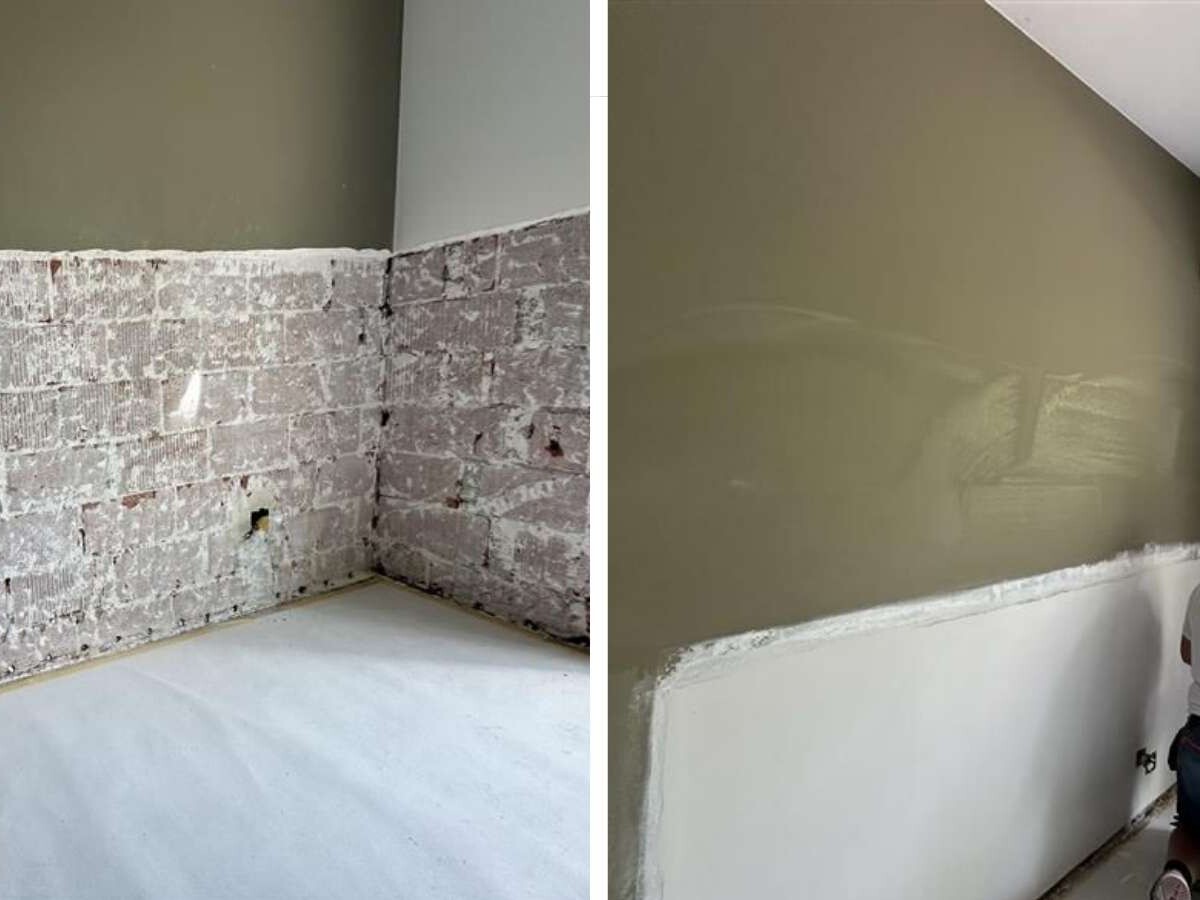
- AquaConsult’s definitive solution: Wall injection. We drill holes just above floor level and inject a high-quality moisture-resistant gel. This expands, sets and forms a permanent waterproof barrier that blocks rising damp for good. Once the area has dried out, we carry out the necessary repair and plastering work using a salt-resistant membrane.
2. Penetrating moisture
- The problem: At penetrating moisture During heavy rainfall or strong winds, rainwater seeps deep into the façade through a porous, ageing or damaged external wall. This eventually causes damp patches on the internal walls.
- What the air conditioning does: The air conditioning can temporarily dehumidify the air inside, but it does not stop rainwater seeping in from the outside. The external wall remains like a sponge that soaks up water all over again with every downpour.
- AquaConsult’s definitive solution: Facade impregnation. After repairing the cracks and the damaged pointing, we spray the façade with a transparent, water-repellent liquid. This causes rainwater to bead up and roll off immediately, whilst still allowing the façade to breathe.
3. Damp basement
- The problem: The cellar is underground and is constantly under high pressure from the surrounding groundwater. Moisture seeps through the cellar walls or the joint between the floor and the wall. This leads to a damp cellarr. It is a damp, unusable space that spreads a musty smell throughout the house.
- What the air conditioning does: An air-conditioning unit can drain condensation, but it is by no means capable of withstanding the continuous hydrostatic pressure of the groundwater.
- AquaConsult’s definitive solution: Basement sealing or basement drainage. Cellar waterproofing involves applying several waterproof cementing and bonding layers to the walls to seal the cellar completely airtight. We carry out basement drainage in cases of extremely high groundwater pressure. In such cases, we install a dimpled membrane on the walls and/or floor to collect any water seeping in and automatically pump it away to the sewer system. If required, we can also ensure a neat and hygienic finish.
4. Damp walls
- The problem: Damp walls caused by water entering through pour holes, gravel pockets, formwork holes or cracks in the concrete structures.
- What the air conditioning does: The air conditioning does not affect the physical openings or cracks in the concrete. Water will continue to seep in as soon as the water pressure rises.
- AquaConsult’s definitive solution: Concrete injection. We inject a two-component polyurethane or epoxy resin directly into the cracks in the concrete under very high pressure. The resin reacts immediately with the water present, expands and seals the crack watertight right down to its core 100%.
5. Condensation moisture
- The problem: Condensation moisture is caused by everyday human activities such as cooking, showering, drying laundry and even breathing, which causes condensation to form on cold surfaces due to insufficient ventilation in the home.
- What the air conditioning does: Whilst in cooling and dehumidification modes, the air conditioning system filters some moisture out of the ambient air, but mainly recirculates recycled indoor air throughout the house. It does not extract polluted air, nor does it bring in fresh, oxygen-rich outdoor air.
- AquaConsult’s definitive solution: Professional ventilation system. We install a controlled mechanical ventilation system that continuously and energy-efficiently maintains the relative humidity by extracting stale, damp air and supplying fresh air.
6. Mould on the walls
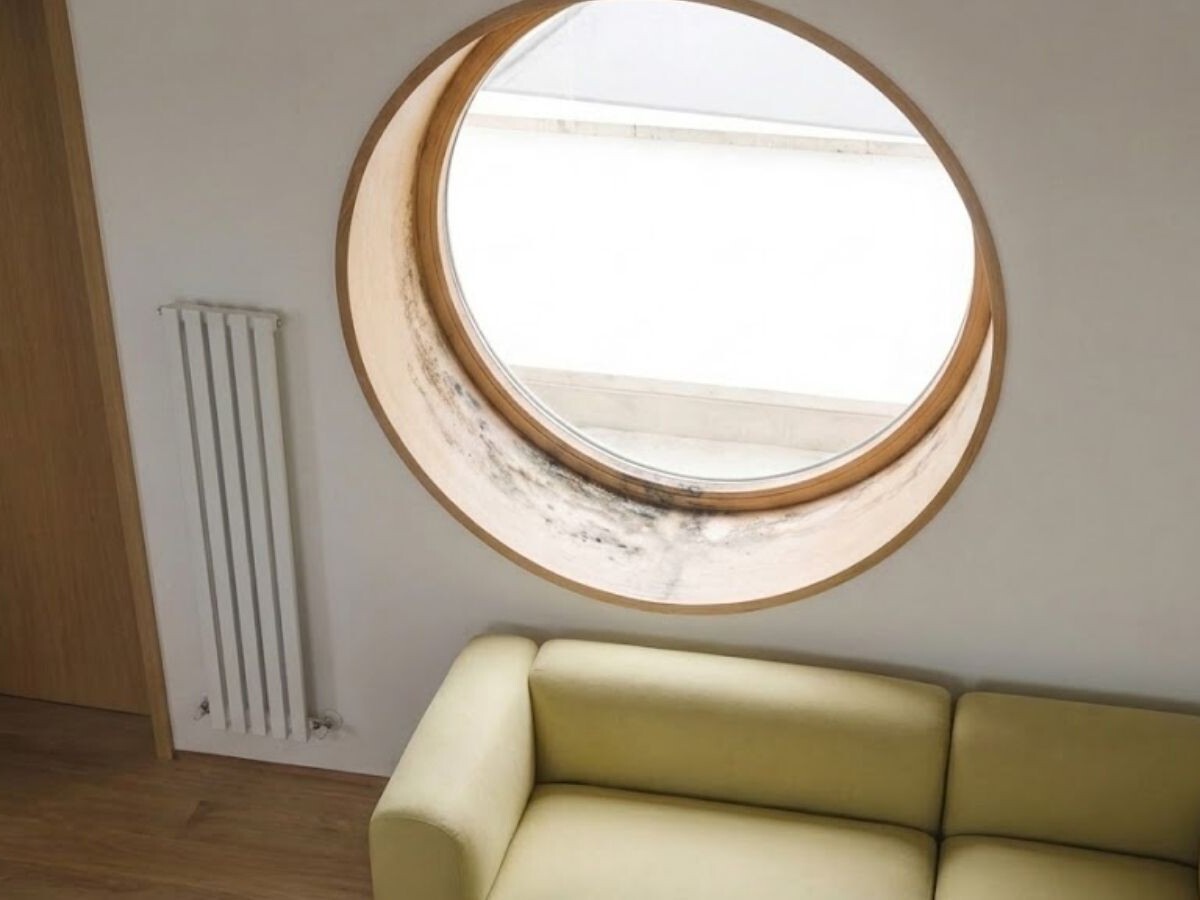
- The problem: Mold on the walls These are unsightly and, above all, unhealthy damp patches, usually found in the corners, behind cupboards or on the ceilings of the bathroom and bedroom.
- What the air conditioning does: Air conditioning can temporarily make the air drier, but it does not remove the mould spores. What’s more, the plaster and the wall remain damp, which means the mould simply continues to grow. In fact, a poorly maintained air conditioning system can fungal spores blow it right through the whole house.
- AquaConsult’s definitive solution: We tackle the underlying damp problem – such as rising damp, condensation or water seepage – once and for all using the right moisture control. Only once the wall is structurally dry and the ventilation is in order will the conditions that allow mould to grow be eliminated. We then carry out professional repair and plastering out.
7. Damp in a new-build home
- The problem: Building moisture Thousands of litres of water are used during construction in screed, quick-setting bricks, concrete and plasterwork. It can take one to two years for this construction moisture to disappear completely from the structure.
- What the air conditioning does: An air-conditioning system is not designed to continuously remove large amounts of building moisture. It merely reduces surface humidity, but does little to speed up the drying process of the building materials deep within the structure.
- AquaConsult’s definitive solution: A combination of a well-thought-out mechanical ventilation system to remove the constant moisture emissions, supplemented where necessary by structural measures moisture diagnosis to rule out the possibility of thermal bridges or construction faults.
Don’t be misled by your air-con’s dehumidification setting – opt for a permanent solution
The dehumidification setting on your air conditioning is a handy extra feature on a hot summer’s afternoon, but it is no substitute for professional moisture control. As long as the source of the damp is not dealt with, your home remains at risk of structural damage, impairment and health problems due to mould growth. Do you suspect there’s more to it than just warm, humid summer air in your home? With over 20 years’ experience, AquaConsult is your specialist in damp control. Our experts will visit you to a thorough damp survey. Enquire now your free expertise to.
More information and brochure request
Answer the questions below and get more information and our brochure based on them. Would you like the cost price calculated? Then indicate this clearly in the text field below and we will do the necessary.