Condensation on the windows in summer? Causes, risks and solutions
Do you expect to see condensation on your windows during the summer months? Probably not, as this tends to bring to mind freezing cold winter days. Yet more and more Flemish households are experiencing condensation on their windows during the summer. And do you think this is a natural phenomenon? If so, you’re unfortunately mistaken. Condensation moisture In the summer, a serious damp problem which, if left unchecked, can lead to mould growth, damage to window frames and health problems. As a specialist in moisture control sees AquaConsult This damp problem tends to get much worse during the summer months. That’s why we’d like to explain why condensation occurs at higher temperatures, what the risks are, and how AquaConsult can solve this damp problem for you once and for all.


Condensation in the summer
So when we think of damp problems, we automatically think of winter. Yet condensation in summer is a persistent problem. But what exactly is it, and how can you tell the difference between it and other moisture problems And why is it that it surfaces during the hottest months of all?
Condensation moisture This simply occurs when water vapour in the air turns into liquid water. Air always contains a certain amount of invisible water vapour. As soon as that warm, humid air comes into contact with a cold surface, such as a window cooled by air conditioning, the air cools down so much in that specific spot that the moisture can no longer be retained. At that exact moment, the moisture condenses as water droplets on the glass.
How can you recognise this damp problem?
You can recognise summer condensation by a number of clear signs.
- Drops on the inside of your windows: You can see a haze of tiny water droplets or misted-up glass on the inside of the window. Not on the outside or between the panes.
- Wet window frames and window sills: Moisture collects in the corners of the window, causing it to run down and leave the window sill or silicone joints soaking wet.
- Typical damp patches: Condensation mainly occurs in rooms where the air conditioning is on, in wet and damp rooms such as the bathroom and kitchen, or on the windows on the shaded and north-facing sides of your home.
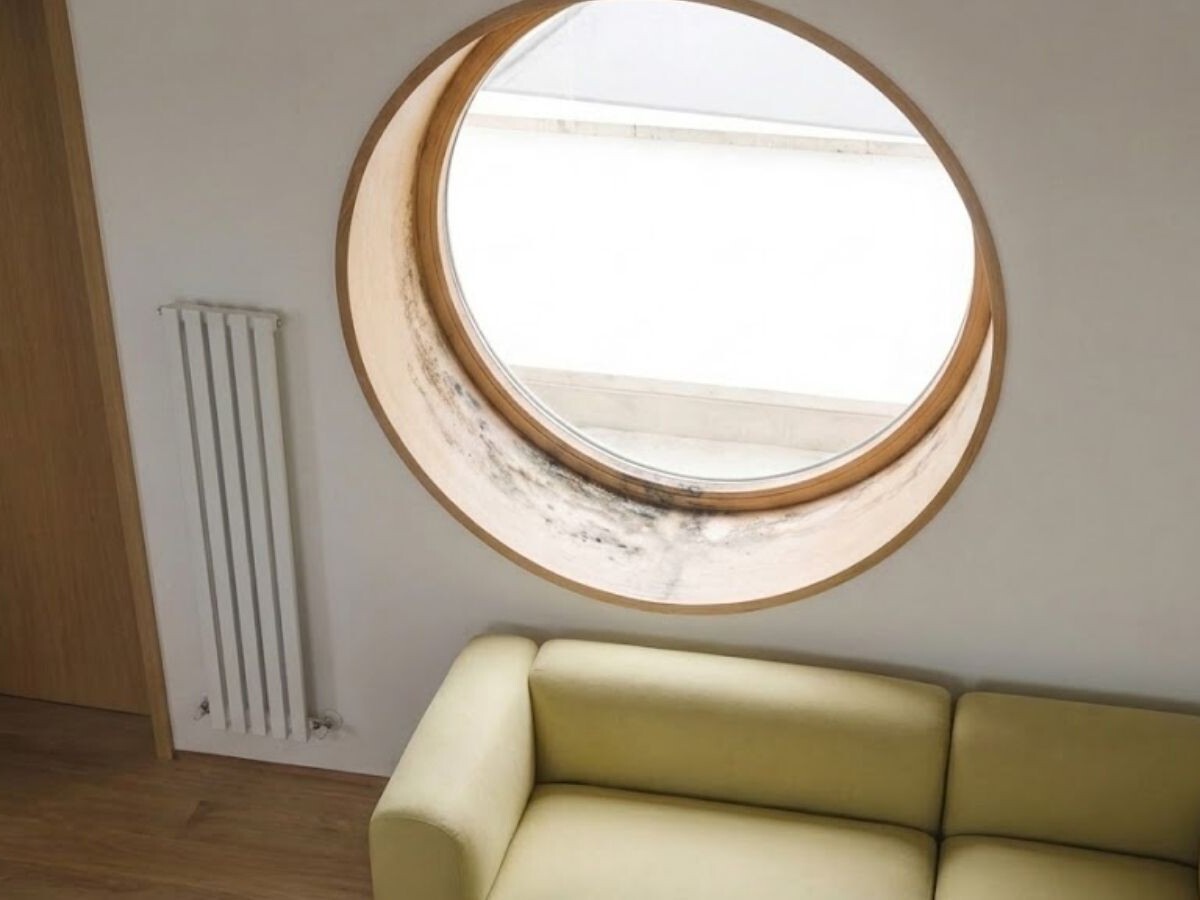
- Early-stage fungal infection: Small, black specks on the sealant edges around the window or on the adjacent plasterwork.
- A musty indoor environment: Despite the air conditioning, the room feels heavy, clammy and stifling.
Why does condensation form during the summer?
The fact that your windows fog up with condensation at exactly 30°C or 35°C is down to three specific summer factors.
- Warm air contains much more moisture: The warmer the outside air, the more water vapour it can hold. Summer in the open air In Flanders, the weather is often extremely muggy and damp.
- The air-conditioning effect: We’re using the air conditioning more and more often. The air conditioning cools the glass and the window frames significantly. This creates a huge temperature difference between the air inside the house and the cooled window surface.
- The dew point is reached quickly: As soon as the warm, humid air comes into contact with the ice-cold window, the local air temperature drops immediately below the dew point. As a result, the air loses its moisture and your windows fog up straight away.
In short: Condensation in the summer is no coincidence, but the direct result of humid outside air coming into contact with a heavily air-conditioned indoor environment. Does this moisture linger every day? If so, that is proof of an imbalance in fluid levels and a lack of controlled ventilation in the house.
The hidden dangers of untreated condensation in summer
Condensation on your windows may seem like a harmless occurrence in summer, something you can simply wipe away with a cloth. But nothing could be further from the truth. Summer condensation is not a temporary moisture problem This will disappear as soon as the temperatures drop again. Sultry summer weather, combined with damp in the home, actually creates the perfect environment for a negative impact on your health, your home and your energy bill.
1. Rapid mould growth
Mold need two things to grow: moisture and heat. In winter, it is often too cold for mould to grow rapidly, but in summer, damp rooms turn into a breeding ground for mould.
- Toxic black mould on window frames: Water dripping from the windows collects on the windowsill and in the silicone joints. Due to the high summer temperatures, stubborn stains form here within a few days black mold.
- Invisible mould spores in the airflow: If mould starts to grow in damp areas around the window, Does your air conditioning system suck in these mould spores? and continues to circulate throughout the room.
- Musty summer odour in fabrics: The damp seeps into your curtains, upholstered chairs and clothes. Combined with the heat, this creates a heavy, clammy and musty atmosphere in the house.
2. Acute health problems
Many people think that their summer health problems are caused by hay fever, but often it is condensation moisture the real culprit at home.
- Respiratory and allergy attacks: The combination of summer mould spores and a surge in the house dust mite population – both of which thrive in warm, damp air – leads to constant sneezing, a feeling of breathlessness and itchy eyes.
- Poor sleep: Do you sleep in a room with high relative humidity And condensation on the windows? Then your body finds it difficult to release its own heat through sweating. You sleep restlessly, wake up feeling clammy and are more likely to suffer from headaches.
- Risk to vulnerable groups: Summer temperatures, and heatwaves in particular, are already hard on babies and the elderly. A damp and mould-contaminated indoor environment increases the risk of acute respiratory infections.
3. Rapid deterioration of your windows and interior
Summer condensation doesn’t just stay neatly on the window. The warm moisture can cause damage to your home surprisingly quickly.
- Damaged window frames and sealant edges: Condensation builds up in the bottom corners of the windows. The warm, damp air causes wooden window frames to rot and warp at an accelerated rate, whilst elastic silicone seals lose their adhesive strength and start to leak.
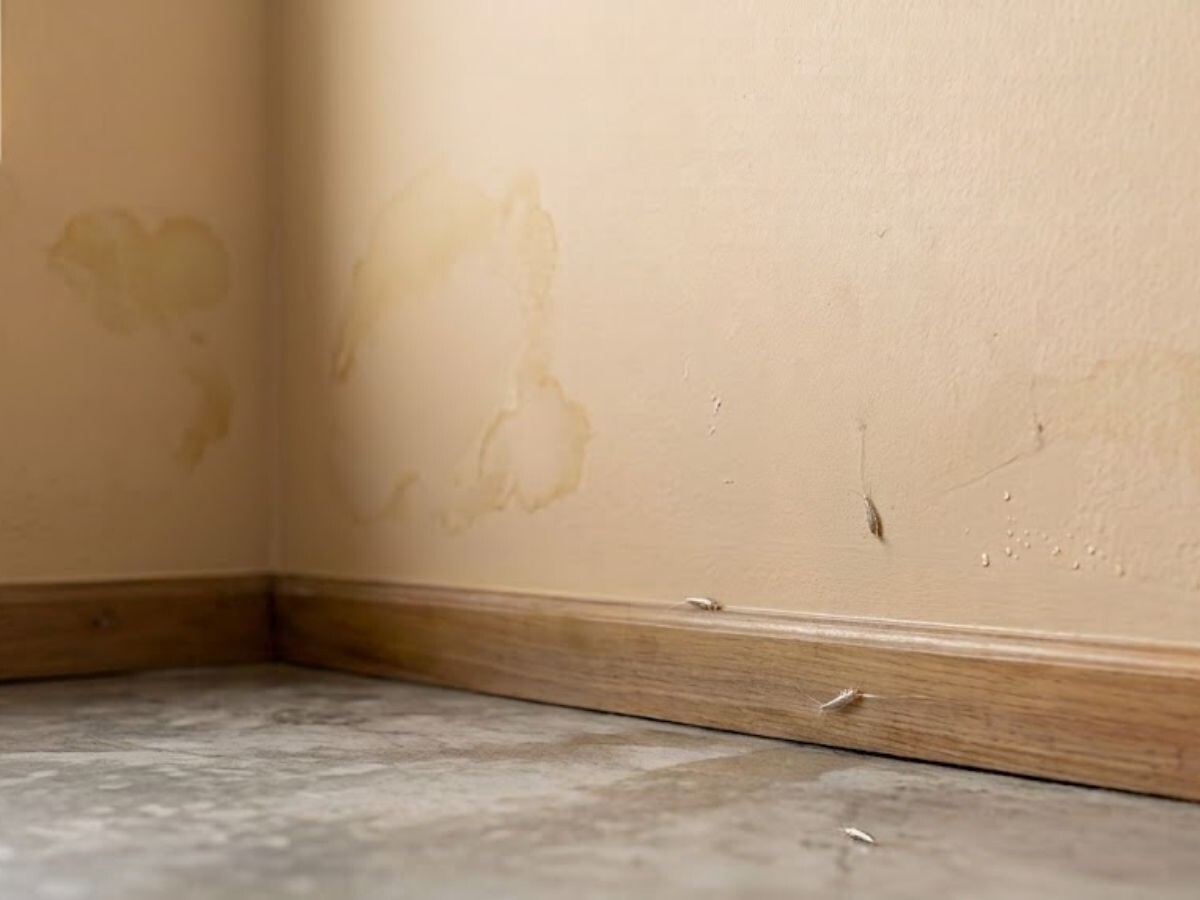
- Peeling plaster: Moisture seeping from the window into the surrounding wall causes paint, wallpaper and plaster start to flake or crumble around your windows within a single summer season.
4. Your air conditioning is working overtime
This is a huge pitfall in the summer. Humid air is simply extremely difficult to cool down.
- Loss of efficiency in your air conditioning: Your air conditioning It has to use an enormous amount of energy to first condense the excess moisture from the air before it can actually start to cool the room.
- High energy costs: Because humidity If the temperature remains structurally too high due to condensation, the air conditioning will continue to run at maximum power. You’ll hardly feel any cooling, but you’ll notice this immediately on a high energy bill.
5. Irreparable damage to thermal bridges
When the humid summer air condenses daily on the coldest spots around your window frames, the insulation material around the profiles becomes saturated. These areas turn into permanent thermal bridges. As a result, you’ll continue to struggle with persistent moisture problems.
In short: Condensation moisture laughing it off in the summer as a harmless side-effect of air conditioning is a costly mistake. It is a clear warning that the moisture balance in your home is severely disrupted. Anyone who fails to take action now will soon be faced with structural fungi and high repair costs.
The biggest mistake in treatment and what you can do yourself
When there’s condensation on the windows, the first instinct is to quickly open all the windows. In winter, it’s a good idea to let in dry outside air, but in summer this actually makes the damp problem much worse.
When you open the windows during the day in warm weather, you’re letting the heavy, muggy outside air straight in. As soon as this warm air comes into contact with the rooms cooled by the air conditioning, it cools down abruptly and the water vapour condenses even more quickly on your windows and walls.
What’s the right way to limit fluid intake in the summer?
Would you like to the condensation moisture Keep it under control straight away without making the problem worse? With these practical measures, you can take the first step towards a targeted solution.
- Smart ventilation: Keep all windows and doors on the side facing the sun closed during the day. Only open the windows at night or in the early morning, as the outside air is much drier once it has cooled down.
- Wipe the windows dry straight away: Wipe away any condensation that has formed on the inside of the windows straight away using a clean microfibre cloth. This will prevent the moisture from seeping into your wooden frames, window sills and sealant edges.
- Tackle the internal sources of moisture: Hang your wet washing outside. If you do have to dry it indoors, close the laundry room door and use a dehumidifier. Always use the extractor fan when cooking and cook with lids on the pans. Also, wipe the shower walls and tiles dry straight after showering and leave ventilation Leave to stand for at least 15 minutes.
- Use your air conditioning sensibly: Don’t set the air conditioning to an extremely low setting. The greater the temperature difference between the outside air and your windows, the quicker the dew point is reached and condensation forms.
- Take a reading with a hygrometer: Keep relative humidity Keep an eye on it. In a healthy indoor environment, this figure ranges between 40% and 60%. Does it consistently peak above 60% in the summer? If so, these DIY tips won’t be enough and you’re dealing with a structural moisture problem.
AquaConsult’s definitive solution to moisture problems
Tackling the symptoms with dehumidifiers or opening the windows from time to time does not solve the underlying problem of condensation in the summer. To condensation moisture To put a definitive stop to this in the summer, the problem of fluctuating humidity must be addressed continuously and in a controlled manner.
At AquaConsult, we offer the following for this purpose a bespoke all-round package depending on your situation and home. From installing a high-quality mechanical ventilation system to fully repairing the damaged walls.
1. Controlled mechanical ventilation
A professional ventilation system AquaConsult tackles the problem of condensation right at the source. It automatically extracts the damp, polluted indoor air before it has a chance to settle on your chilled windows.
- Balanced ventilation (System D): This advanced ventilation system perfectly balances the air intake and exhaust in your home. Thanks to a built-in heat exchanger and smart filters, the incoming air is purified of moisture, dust and pollen, without compromising on energy efficiency.
The result? Relative humidity always remains at a healthy level between 40% and 60%, thereby reducing the risk of condensation moisture and black mold disappears completely.
2. Has your wall or plasterwork already been damaged?
Has condensation been dripping down your windows for some time, causing the paint to flake, the plaster to come away or black mould to spread into the wall? If so, ventilation alone is no longer enough to repair the damage.
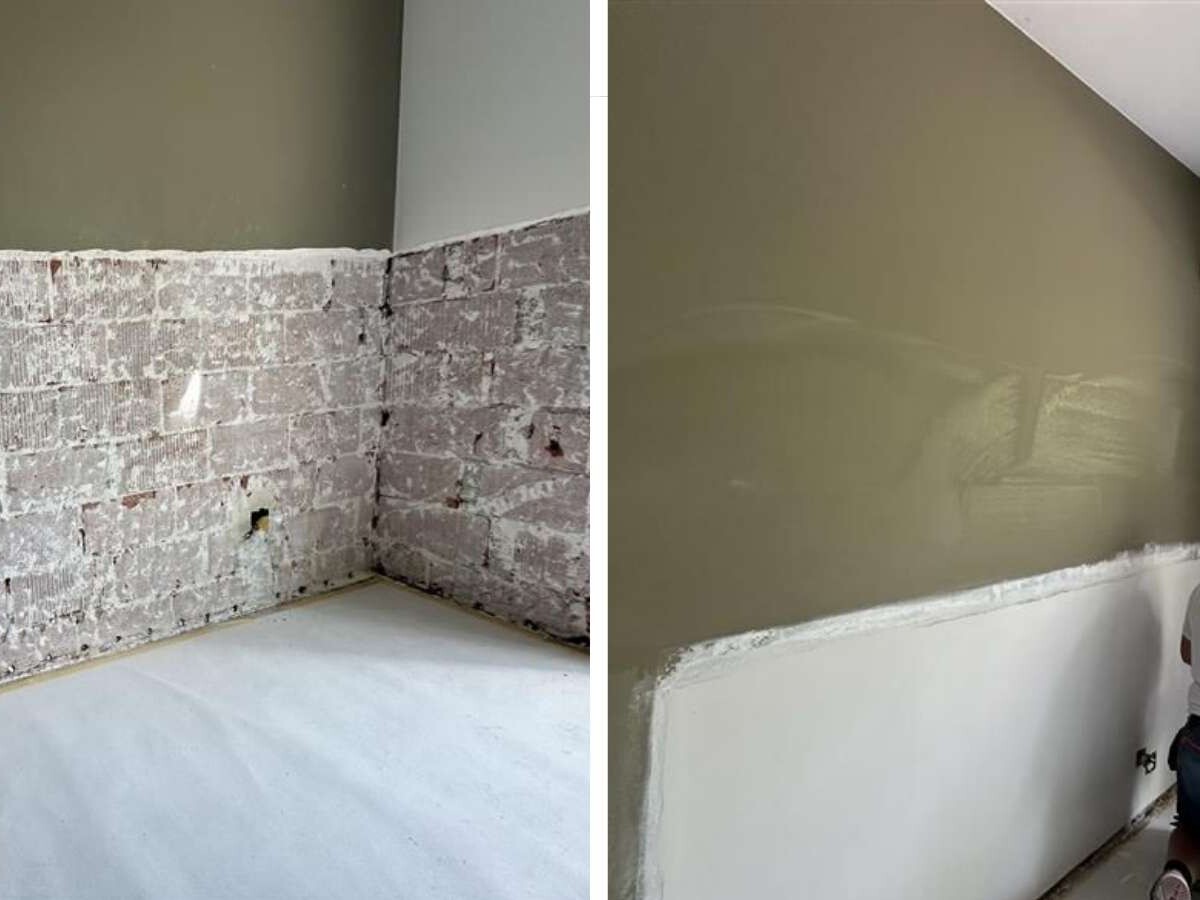
AquaConsult also carries out professional plastering work to make your home look as good as new again.
- Thorough decontamination: The damaged plasterwork, which has been affected by damp and mould, is carefully stripped and removed.
- Salt- and moisture-resistant protective coating: Where necessary, our experts apply a special protective film or salt barrier to protect the underlying wall.
- A sleek, high-quality finish: The walls will be professionally replastered. Once the plaster is dry, you’ll have a smooth, sound wall that’s ready for painting or wallpapering.
With AquaConsult, you not only resolve the root cause once and for all, but the consequences are also expertly dealt with.
Take effective action against condensation on your windows today
Condensation on the windows in summer is a clear sign that the humidity balance in your home is out of kilter. Ignoring misted-up windows can lead to mould growth, damage to your home’s interior and health problems. Trying to sort it out yourself with cloths, dehumidifier pads or by opening windows does not tackle the root cause. Do you want to tackle condensation and the condensation on your windows effectively and once and for all? Then AquaConsult’s free expert advice The first and most important step. The experts at AquaConsult carry out a thorough, objective assessment of your home. We identify the exact cause of the condensation problem, measure the humidity levels and install a suitable ventilation system to eliminate condensation on windows for good. Enquire today your free expertise Contact AquaConsult and tackle the condensation on your windows once and for all.
More information and brochure request
Answer the questions below and get more information and our brochure based on them. Would you like the cost price calculated? Then indicate this clearly in the text field below and we will do the necessary.