Saltpetre on your wall during a heatwave? Here’s how to get rid of white patches on your wall in summer
Temperatures soar to tropical levels during the summer and suddenly you notice a strange, white, powdery film at the bottom or halfway up your interior wall. This means that there is saltpetre efflorescence on your wall. You may start to experience saltpetre on your wall In summer, this is a common problem during a spell of hot weather or a heatwave. Although it may seem as though the extreme heat has caused this problem, the truth lies in another issue, namely a long-standing moisture problem. So the stubborn salt efflorescence on the wall has actually been there for much longer than you think, but the heatwave or the higher temperatures have simply accelerated the process. Unfortunately, simply wiping it away or painting over it is like trying to bail out a sinking ship. We at AquaConsult So we’d be happy to explain how the salt deposits on your wall form, why a heatwave is the perfect trigger for this, and how you can solve the underlying damp problem once and for all.

Why a heatwave causes your walls to ‘sweat’ with salt efflorescence
To understand why these white, powdery patches suddenly appear during this hot weather, we must first look at how saltpetre itself is formed.
The basics: What causes salt rash?
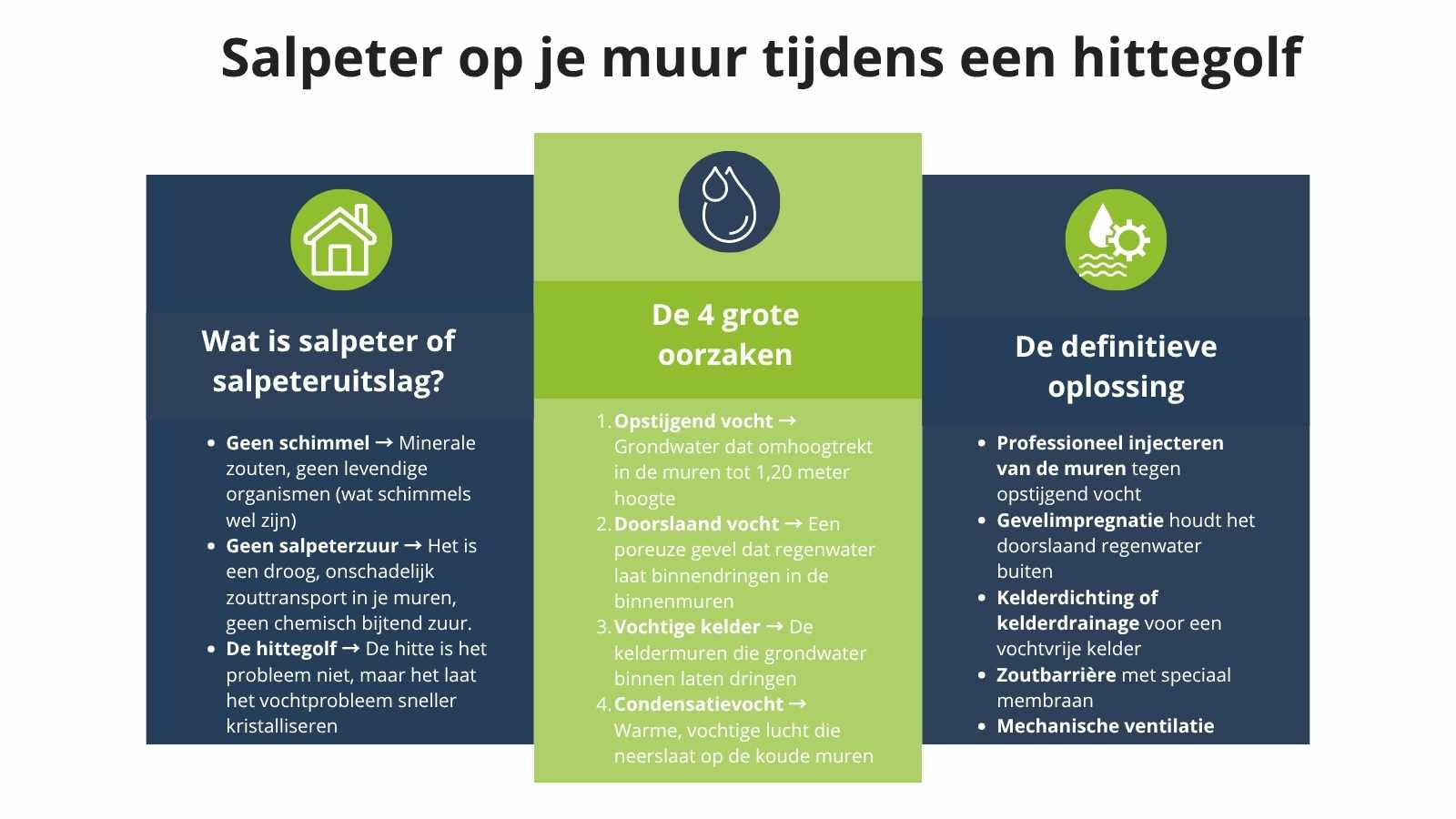
Saltpetre is not a living organism such as mould on the walls, but it is a chemical process. It is caused by an unhealthy interaction between damp, the masonry of your wall and oxygen.
- The absorption of salts: Groundwater or rainwater seeping in finds its way through your walls. This water is naturally rich in dissolved salts and minerals, such as nitrates, sulphates and chlorides, which originate from the soil or the building materials themselves.
- The chemical reaction: As soon as these salts in the wall come into contact with oxygen and the lime present in the cement or mortar, a chemical reaction takes place. New, hard salt compounds are formed.
- Transport: As long as the wall is damp, these salts remain dissolved in the wall moisture in a liquid and invisible state. They travel, as it were, along with the flow of moisture towards the surface of your wall. This is why you see the white, powdery stains on your interior walls.
The acceleration: How does a heatwave affect this process?
If the salts have remained hidden within the wall all this time, why does the saltpetre only become visible during a heatwave? This is entirely down to the extreme rate of evaporation.
- The wall as a vacuum pump: During a heatwave, the sun beats down on your external walls and the temperature inside rises. Humidity Indoor temperatures then often rise, making the air humid.
- Lightning-fast evaporation: The moisture trapped deep within the walls is rapidly drawn to the surface by the heat, where it evaporates and dries out.
- The crystallisation shock: The heat causes the water or moisture to evaporate so quickly from the wall’s surface that the dissolved salts are left behind in a state of shock. They are unable to evaporate and change from a liquid to a solid state in a fraction of a second.
That sudden, widespread crystallisation is what you see on your walls – the infamous white saltpetre stains. The heatwave does not create the moisture itself, but it does act as a trigger that sets off the dormant moisture problem accelerates and displays on your wall.
Do the test: Is it really saltpetre, or is it just mould on the wall?
Before you start using brushes or cleaning products, it is crucial to make the correct diagnosis. Saltpetre and mould on the wall At first glance, they look very similar; both can appear as a white, fluffy film on the wall. Yet they are completely different, persistent moisture-related problems, each requiring a very different approach.
How can you tell the difference?
To avoid choosing the wrong one moisture solution To get started, this checklist will help you spot the difference between saltpetre and mould straight away.
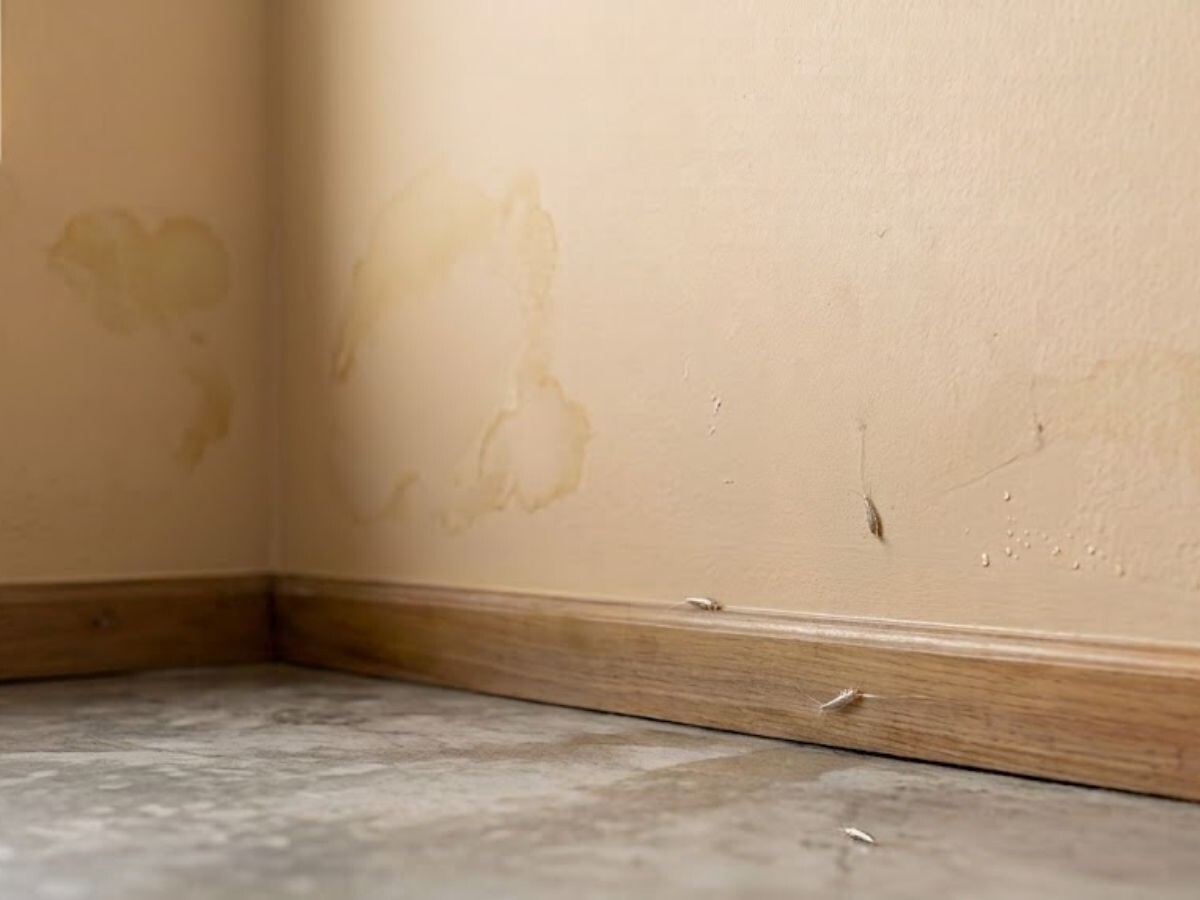
- Saltpetre rash: It is dry and powdery, with a crystalline texture, or it forms hard crusts. It also crumbles immediately when you rub it. The colour is always pure white or light grey. And it has no odour. During a heatwave, you’ll spot this problem straight away because it crystallises and dries out on a massive scale. To test whether it is indeed saltpetre efflorescence, take a few flakes and hold a lighter close to them. If the salt crystals melt or crackle softly without catching fire, then you are definitely dealing with saltpetre on your walls.
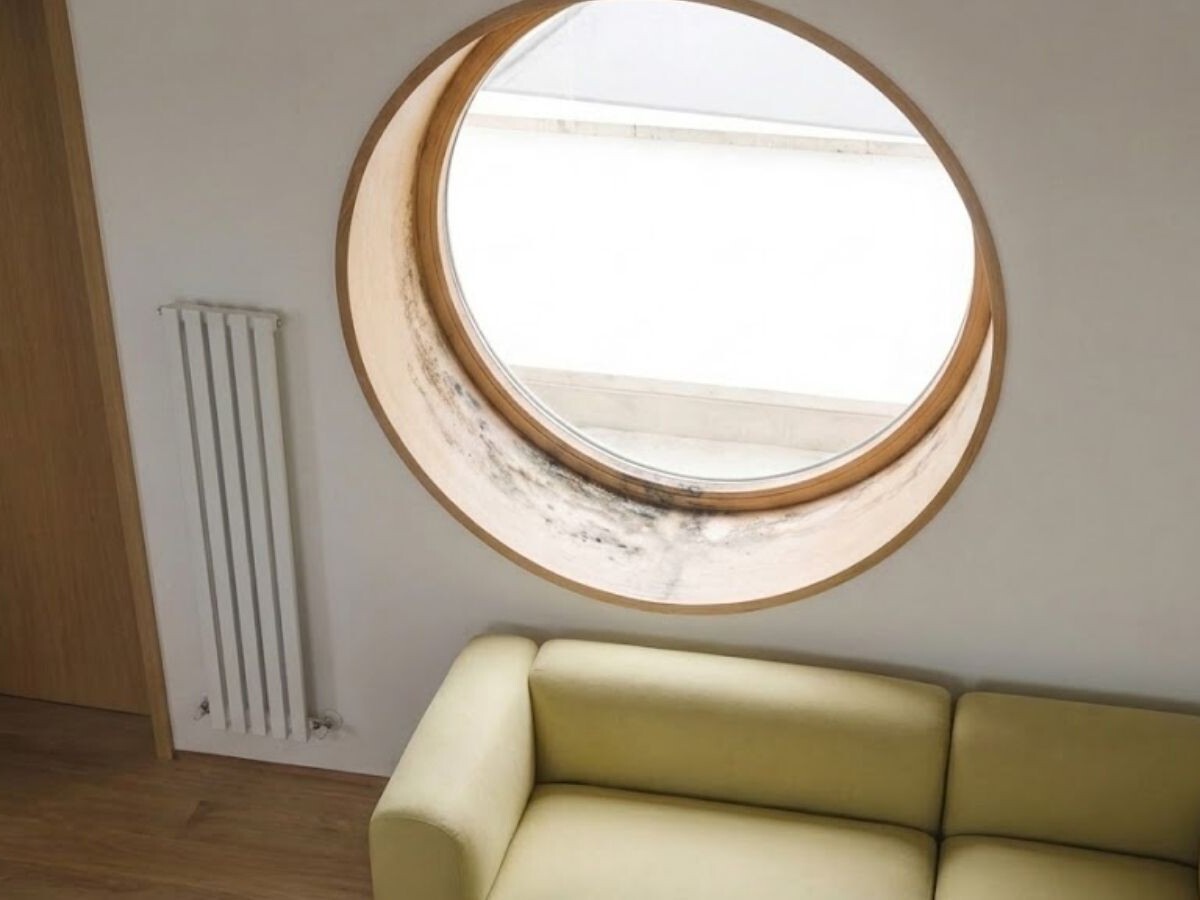
- Mould on the walls: It is soft, fluffy, stringy or slimy, making it feel rather damp to the touch. It may start out white, but it quickly turns grey, green, yellow or black. It also has a characteristic pungent, musty smell. In warm and, above all, damp conditions, the mould grows rapidly. You can test for it by smouldering the mould fibres. If you then smell burnt organic material, you can be sure there is mould on your walls.
The impact of a heatwave: Nitrate vs. mould
- What effect does heat have on saltpetre? As you may have read earlier, the heat causes the underlying damp problem to become much more pronounced. Saltpetre is a mineral process that actually causes the dry heat to cause it to form crystals. The heatwave therefore makes the saltpetre efflorescence immediately visible.
- How does heat affect mould: Mold are living organisms that thrive in still, warm and humid air. During a heatwave, we often cool our homes by an air-conditioning system Or let’s leave the cellar doors open. When the warm, damp outside air cools against a cold inside wall, this creates condensation. This is the ideal breeding ground for mould. The heat accelerates its growth, provided there is moisture present.
Why treating fluid retention without proper diagnosis is dangerous
If you mistake the white mould on your wall for saltpetre and brush it with a dry brush, you’ll be brushing millions of invisible mould spores into the air. You’ll then breathe these in, or they’ll settle elsewhere in the house to form new colonies. On the other hand, an anti-mould spray has absolutely no effect on chemical salt crystals or saltpetre. So you must first be sure of what you’re dealing with before you start treating it effectively for saltpetre – or vice versa.
Salt efflorescence on the wall: Which underlying damp problem is to blame?
Now that you’re sure you’re dealing with salt efflorescence on the wall, you still need to find out what the underlying cause is moisture problem This is what causes it. This is crucial in order to administer the correct treatment for the salt rash and the moisture problem.
Do you simply paint over the saltpetre stains? If so, the moisture present will continue to damage your walls, plasterwork and insulation. To tackle saltpetre once and for all, we need to take targeted moisture control eliminate the specific source of moisture.
1. Rising damp
- The pattern on the wall: You can see the white salt crystals, flaking paint and crumbling plaster in a distinct, horizontal band at the bottom of the wall, usually up to a height of 1.20 metres.
- The cause: Rising damp is the main cause of salt efflorescence in older homes. There is either no water barrier in the foundations, or the existing one is worn out. The brickwork acts like a sponge and draws the salty groundwater upwards.
- The ultimate solution to damp: Professional wall injection work using a water-repellent gel. This gel forms an impermeable barrier, preventing groundwater – and therefore the salts – from rising any further.
2. Penetrating moisture
- The pattern on the wall: Saltpetre efflorescence is found higher up on the wall, often on the external walls that are heavily exposed to driving rain and wind on the west or south-west side of the house.
- The cause: Penetrating moisture makes your façade porous, damages the joints or causes fine cracks in the external wall. Rainwater then penetrates deep into the façade and carries the salts into the internal walls.
- The ultimate solution to damp: A thorough façade renovation to repair the joints, followed by facade impregnation. We apply a transparent, breathable protective coating that immediately repels rainwater.
3. Damp basement
- The pattern on the wall: Fluffy, white patches of salt on the cellar walls or in semi-underground areas, which are often accompanied by a constantly damp atmosphere.
- The cause: Cellars are constantly under high pressure from the surrounding groundwater. If the cellar walls are not 100% watertight, moisture and soil salts will seep in, causing you to suffer from a damp cellar.
- The ultimate solution to damp: Depending on the severity, we opt for a professional basement waterproofing system, cementing and waterproofing the walls, or a basement drainage to drain off the excess water in a controlled manner.
4. Condensation and inadequate ventilation
- The pattern on the wall: White patches in the corners of the rooms, behind large cupboards or around the windows.
- The cause: Warm, humid indoor air – caused by cooking, showering or breathing – condenses on the cold parts of the wall, known as thermal bridges. Although the condensation moisture Although it does not contain any mineral salts of its own, it can activate salts that were already present in the bricks of the internal wall.
- The ultimate solution to damp: Installing a controlled mechanical ventilation system to maintain a healthy level of humidity at all times and to eliminate thermal bridges.
AquaConsult’s golden rule
Removing saltpetre without tackling the underlying source of damp is a complete waste of time and money. Only when the water supply is cut off by professional moisture control Once it has been completely sealed, the wall can begin to dry out and the salt build-up will stop for good.
First aid for saltpetre on your walls: What you must absolutely not do
If you spot white saltpetre stains on a hot summer’s day or during a heatwave, it’s very tempting to wipe them off straight away. But be careful, because the wrong approach will only make the saltpetre problem worse.
One thing you could do as a temporary damage control measure is to brush the salts off whilst dry using a stiff brush. Do make sure to wear a face mask and gloves when doing this. That way, the visible saltpetre problem will be temporarily resolved, whilst you wait for a structural moisture solution by one of our experts.
AquaConsult’s definitive solution
At AquaConsult, we don’t believe in temporary stopgap measures or quick-fix coatings. We solve the moisture problem at source, so you only have to renovate and pay once. Our experts will visit you on site to a free expertise with an objective moisture measurement.
Step 1: Have the source of the damp professionally rectified
- At rising damp: We inject the walls using a high-quality, environmentally friendly gel that forms an impermeable barrier against groundwater.
- At penetrating moisture: We are restoring the façade and impregnate the external wall with a breathable, water-repellent coating.
- At a damp cellar: We are sailing professional cellar waterproofing or basement drainage to keep the groundwater out for good.
- At condensation moisture: We install a mechanical ventilation system so that the humid indoor air is effectively vented outside.
Step 2: Salt treatment and restoration
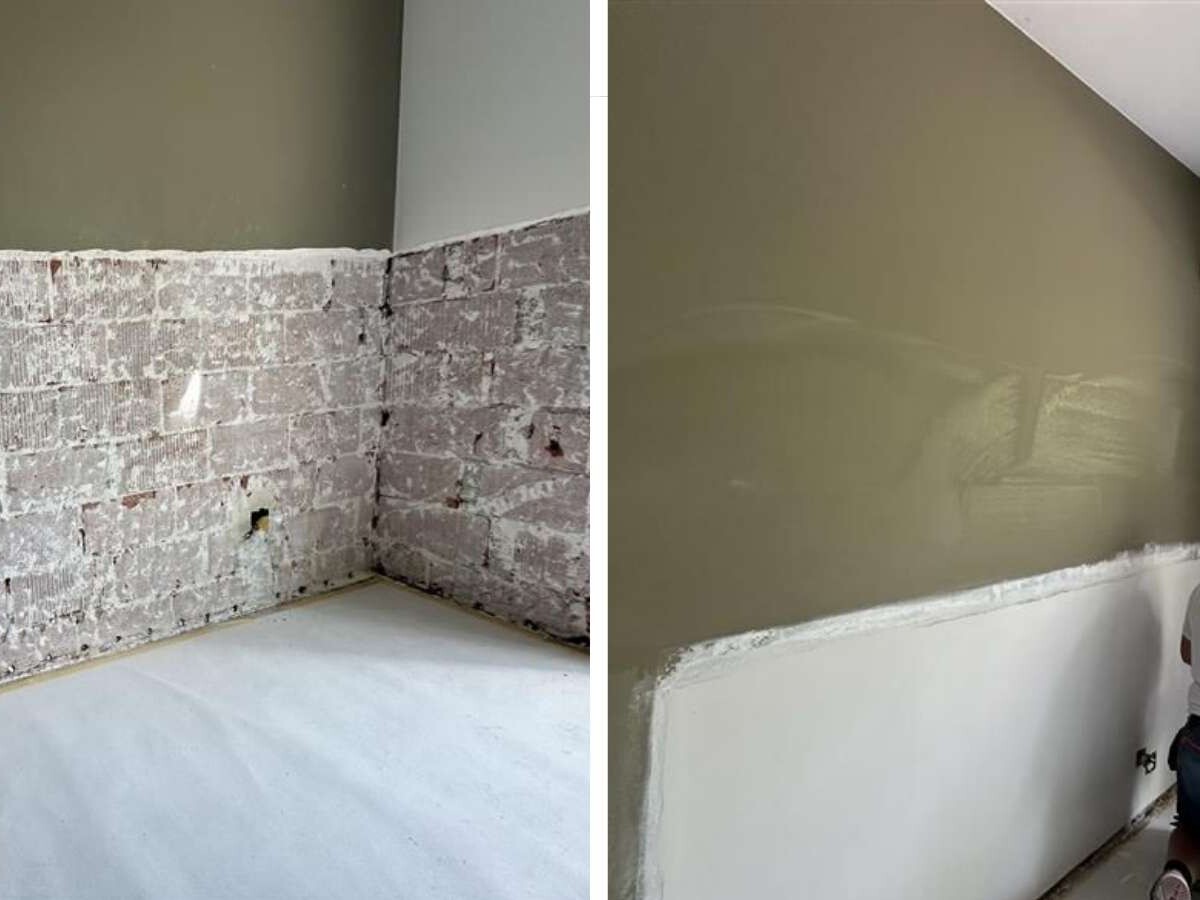
Once the source of moisture has been resolved or sealed, salts will still be trapped within the wall. During the drying phase, we use a special salt barrier or a salt-blocking repair plaster. This ensures that the remaining salts no longer migrate to the new plaster can be removed, so that you can then repaint or re-wallpaper the wall perfectly and permanently.
Get rid of those white, summery salt-encrusted walls
Let the heatwave serve as a useful warning sign. Have you noticed white patches appearing on your walls this summer? Don’t wait until the autumn rains, as these could make the damp problem worse and start to damage the structure of your home. Take action today contact Get in touch with us. Our experts will visit you, with no obligation, to a free expertise to identify the exact cause of your salt-affected walls and devise a clear solution to the damp problem.
More information and brochure request
Answer the questions below and get more information and our brochure based on them. Would you like the cost price calculated? Then indicate this clearly in the text field below and we will do the necessary.