Why moisture control is the first step towards a higher EPC label
Are you making plans to make your home more energy efficient? You're certainly right about that. With current energy prices and strict Flemish renovation obligation an energy-efficient home is worth its weight in gold. But before you invest headlong in a new heat pump, solar panels or quality insulation, there's a crucial question to ask yourself: How dry are my walls really? At AquaConsult unfortunately, we still too often see enthusiastic renovators spending thousands of euros on insulation works, only to find out afterwards that the returns are disappointing and there is no way back. mould on the walls arises. The harsh reality is that an energy-efficient home starts with a dry foundation. Moisture control is therefore not just a matter of home comfort, but it is the first step towards a higher EPC label.

What is an EPC label and why is it so important?
The Energy Performance Certificate (EPC) indicates how energy-efficient a home is. The score is expressed in a label ranging from A+ (very energy efficient) to F (an absolute energy guzzler). This label is based on the calculated energy consumption per square metre of floor area (kWh/m² per year). The lower your score is, the less energy your home theoretically consumes and therefore the better it is for your wallet. The EPC label looks at several factors, namely the efficiency of your heating system, the presence of renewable energy, and the most important factor, heat loss through the outer walls, roof and floor. And that's exactly where the problem lies if you're struggling with moisture problems, because moisture and insulation don't mix at all. Moisture is simply the enemy of thermal insulation. So the connection is simple: The EPC label measures how hard you have to heat to compensate for your home's heat loss. If your walls or basement suffer from moisture problems, your home loses its natural insulating shell. Building materials that are saturated with water lose their insulation value completely, so heat literally leaks out. An EPC expert looks at the theoretical state of your walls, but in practice, moisture causes your actual energy performance to plummet. You cannot lift a house to a higher EPC label if the foundation on which you build further is not bone dry.
The impact of moisture problems on your EPC score
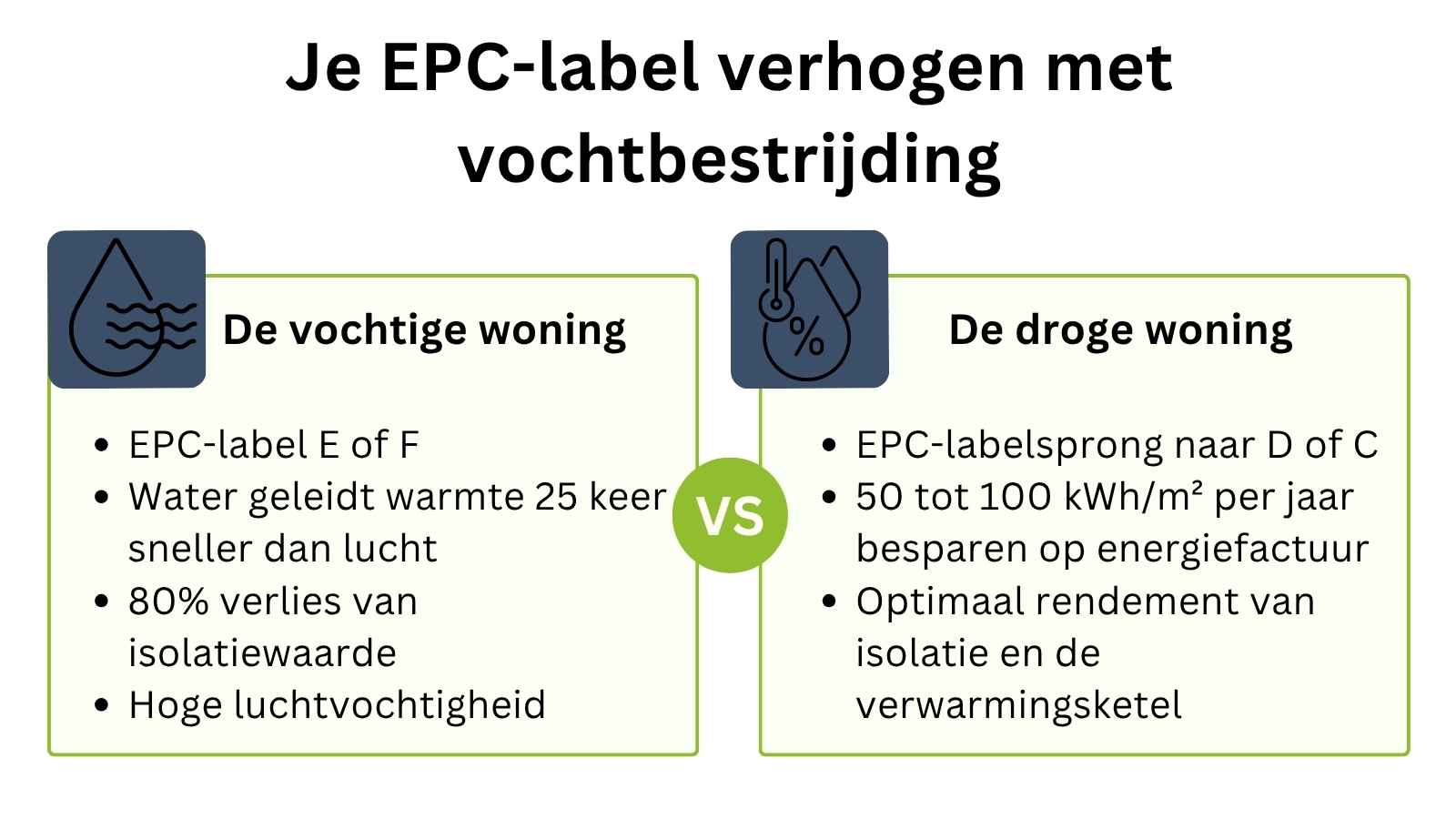
When is an EPC label really bad and what does it mean for your wallet? In Flanders, EPC labels E and F are seen as the most negative scores. Since the introduction of the renovation obligation a label E or F means that your home is officially categorised as an energy sieve. That is, the house uses more than 400 kWh per square metre for label E or even more than 500 kWh for label F of energy per year. In practice, this translates to high energy bills, a chilly indoor climate and a home that literally loses heat.
Many people think that a lack of insulation is the only reason for a poor EPC label. But, of course, this is not true. Untreated moisture problems are often the invisible driving force behind these poor scores. Now, moisture has a negative impact on your EPC label on three crucial levels:
1. Thermal conductivity: damp walls do not insulate
The EPC software calculates the insulation value of your walls based on stagnant air. Air insulates, but water conducts. Water conducts heat up to 25 times faster than air. If you are dealing with damp walls, then the bricks and cavity fill up like a sponge.
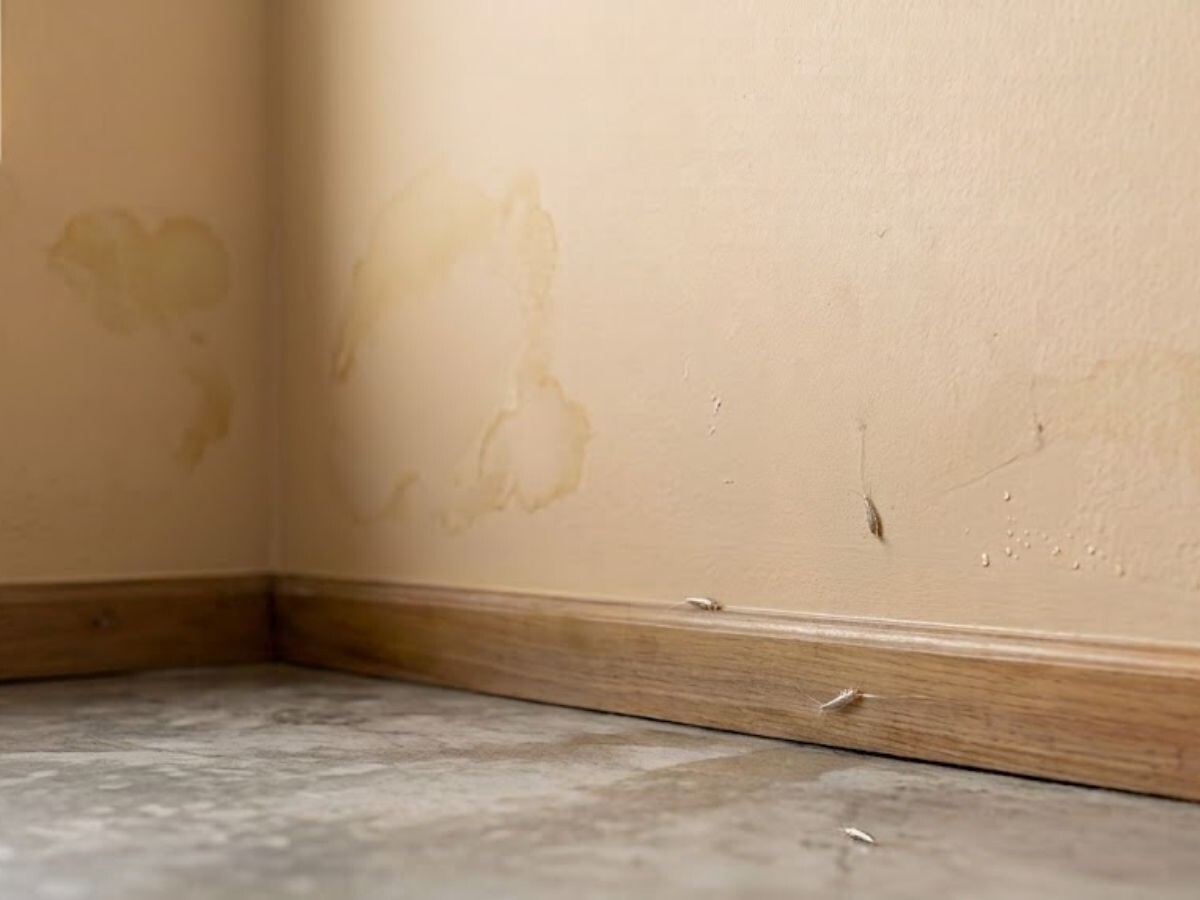
Whether it is rising damp that pulls up from the ground or penetrating moisture where driving rain penetrates a porous façade, the result remains the same. The cold from outside is drawn in via the moisture at lightning speed, while the heat from your central heating system flies out via the same route. A wet or damp wall loses up to 80% of its original insulation value.
2. The impact on indoor air: Heating humid air is costly
The EPC label looks at the efficiency with which a home can be heated. If there is heating by a damp cellar continuously evaporates water in the living spaces, relative humidity rises to 70% or 80%.
Physically, water has a much greater heat capacity than dry air. This means that your boiler has to consume much more energy to heat humid air one degree than dry air. As long as the humidity does not decrease by addressing the source of the moisture, your energy consumption and thus your EPC score will remain artificially high.
3. Moisture creates building knots and stubborn mould
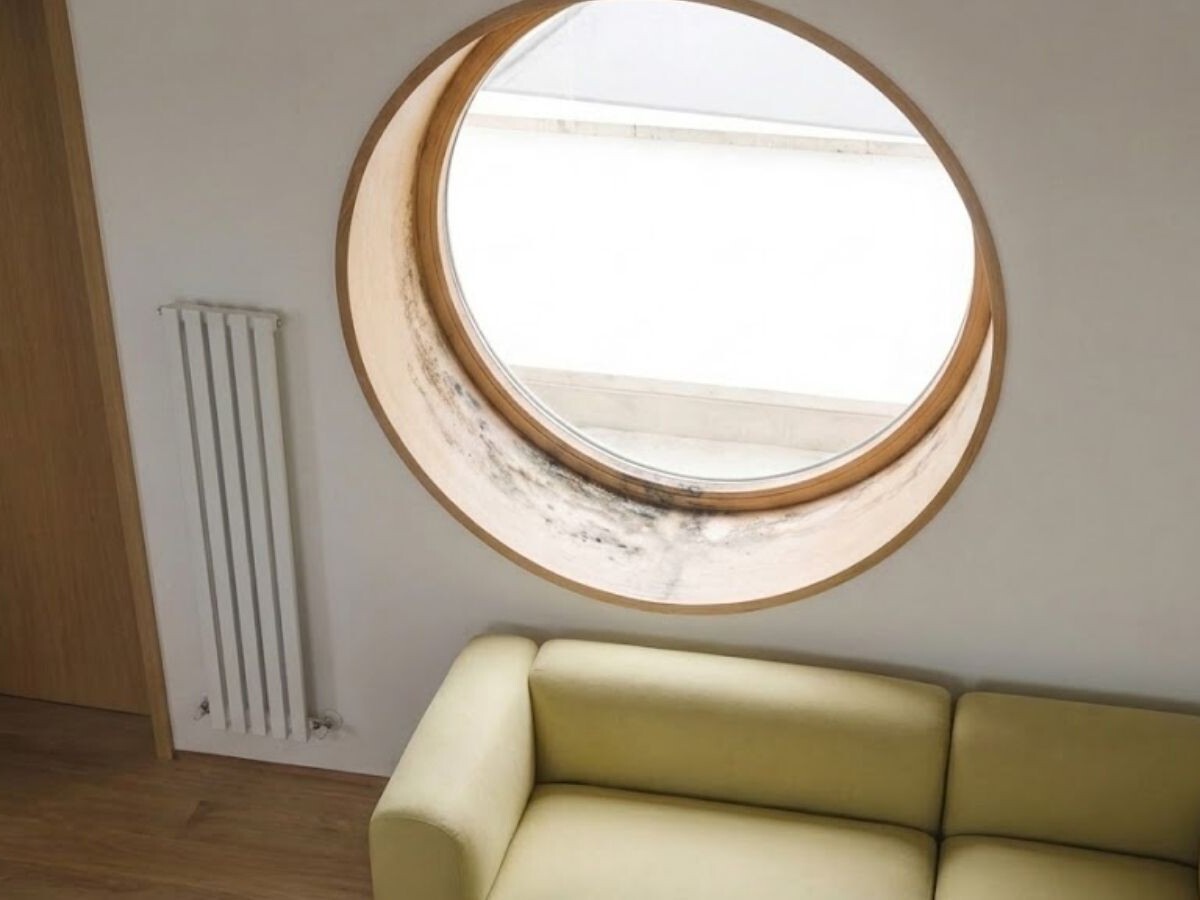
Building nodes or thermal bridges play a huge role in the calculation of a modern EPC label. These are simply the places where insulation is interrupted and therefore heat leaks out. This is the ideal breeding ground for condensation moisture, because warm and humid indoor air settles on the cold walls, resulting in mould on the walls. Mould not only affects health, but it is the visual evidence of a structure that is severely underperforming energetically.
Moreover, moisture penetrating deep into the structure can structurally attack materials, causing micro-cracks and destroying the airtightness of the house. Even in new projects, we see this danger. Moisture in new-build homes, namely building moisture, which is not drained in time and correctly, can drastically reduce the insulation values of thick layers of insulation within the first year. The result is an unexpectedly poor EPC label for a brand new house.
Why do you need to raise that EPC label?
The impact of a poor EPC score now directly affects your home on several levels. Therefore, ignoring a bad EPC label has long since ceased to be an option.
In short, addressing your EPC score is not an unnecessary luxury, but a necessary investment that pays for itself immediately. By strategically raising your energy label, you protect yourself from fines, increase the market value of your property and put the brakes on high monthly energy costs. It is the only way to turn your house back into a financially sound, future-proof and comfortable home. But to achieve that label leap, you have to start at the root of the problem and thus permanently fix the moisture problem.
How do we solve this once and for all? AquaConsult's moisture solutions
Before you start seeking quotes for cavity wall insulation or a heat pump, the basics of your home 100% need to be in order. AquaConsult offers targeted, definitive moisture solutions to make your home EPC-ready. Our experts tackle every type of moisture problem at the source using specialised techniques.
Injecting walls against rising damp
Is groundwater rising through the foundation into the interior and exterior walls? By professionally injecting your walls using a high-quality, eco-friendly gel, we create an impenetrable barrier just above ground level. The rising moisture is permanently blocked, after which the walls can dry out completely and regain their natural, insulating properties.
Basement sealing or caulking
A damp cellar is often the invisible source behind high humidity throughout the house. At basement waterproofing or cellar waterproofing we fix and seal the basement walls with various waterproof mortar layers and coatings. As a result, groundwater seeping in will no longer have a chance and your basement will transform from a chilly energy hole into a dry and usable space.
Basement drainage
When the hydrostatic pressure of the groundwater is too high for a traditional casing, it offers basement drainage the solution. Here, we provide the basement floor and/or basement walls with a special studded membrane. The water seeping in is controlled and continuously drained through this membrane to a sump, which then pumps the water to the sewerage system. Your basement stays dry.
Concrete injection
Are you struggling with leaking cracks or gravel nests in a concrete basement basin or foundation? Then concrete injection the right technique. Under high pressure, we inject an expanding resin directly into the cracks. As soon as the resin comes into contact with water, it expands and instantly seals the crack within seconds. This is ideal for stopping acute water infiltration immediately.
Facade impregnation against penetrating moisture
Is your exterior facade porous and the driving rain soaks deep into the bricks? With facade impregnation we apply an invisible and breathable protective layer to your exterior wall. Rainwater then beads off your facade, so that penetrating moisture does not stand a chance and the cavity stays dry. This is the essential basis before you have facade or cavity wall insulation installed.
Professional plastering
Stopping the moisture problem is step one, but after that, the loose plasterwork and salt efflorescence in the wall need to be addressed. AquaConsult provides the necessary plastering with a special salt-resistant membrane or a sanitising plaster system. This prevents residual salts from attracting moisture from the air again. In this way, we ensure a tight, dry finish that is ready to be painted.
Mechanical ventilation against condensation
To condensation moisture and mould effectively, constant air exchange is essential. AquaConsult also installs advanced ventilation systems which remove moist, polluted indoor air and supply dry, healthy outdoor air.
How do these moisture solutions affect your EPC label?
Moisture control may not get you an immediate label A certificate, but it is the start that makes all subsequent energy-saving measures possible and profitable.
When your home is completely dry thanks to AquaConsult, only positive things happen to your EPC score.
- Direct drop in theoretical consumption: Dry walls simply retain heat instead of conducting it. Your actual energy consumption drops immediately because you don't have to heat as much.
- Optimal performance of insulation: Do you want to have your interior walls insulated or facade insulation installed after moisture control? Then you can do so safely from now on. The insulation will stay dry, retain its maximum insulation value and provide the jump to the desired EPC label.
- Synergy with your boiler: Many people wonder how much an EPC label drops with a condensing boiler. The answer to this question is that it often drops by 15% to 25%, but you only achieve this gain if the boiler does not have to work continuously to heat excess moisture from the air.
The concrete impact on your certificate
So what does this mean specifically for the numbers on your energy performance certificate? As long as a property is struggling with heavy moisture problems, the effective insulation value of the walls is so poor that the house retains the same label E or F. By finally solving these moisture problems and drying out your home's structure, the exterior of your home regains its natural thermal resistance. This can instantly reduce the energy score by 50 to as much as 100 kWh/m² per year, simply because there is no more heat leaking out through the wet building materials and the humidity in the house drops. In many cases, this is the extra push you need to make the leap from a red label F or E to an acceptable label D or even C, even before you start installing extra insulation. By doing so, you immediately lift the legal obligation to renovate on.
The inseparable duo for a top EPC: Insulation and ventilation
When we talk about increasing your EPC label and fighting moisture, mainly condensation moisture, then we cannot ignore the golden combination of insulation and ventilation around. When you insulate a home to prevent heat loss, you thermally seal the home, so to speak. The moisture we produce daily in the house by cooking, showering and breathing has nowhere to go. Without ventilation, you transform your renovated home into a plastic bag, resulting in condensation and harmful black mould. This also applies to the removal of building moisture at moisture in newly built houses. Did you know: A modern, mechanical ventilation system not only prevents condensation and mould in the future, but also gives a huge positive boost to your EPC label? The EPC expert's software rewards controlled ventilation because it prevents unnecessary heat loss through open windows.
First heal, then renovate
Raising your EPC label is a smart and necessary investment in the future of your home. Don't make the mistake of going over existing moisture problems isolate across. A successful renovation always follows a logical sequence: cure the defects first, then isolate and optimise. Moisture control forms the dry foundation on which your entire renovation project rests. Wondering if moisture in your home is currently bringing down your EPC score? Ask today a free expertise to AquaConsult and avoid unnecessary costs.

More information and brochure request
Answer the questions below and get more information and our brochure based on them. Would you like the cost price calculated? Then indicate this clearly in the text field below and we will do the necessary.