Get rid of mould in your home for good: tackle the source of the damp
Anyone in Flanders Anyone who owns or is renovating a property often comes up against the same frustrating problem: dark patches on the ceiling, a fluffy build-up behind the wardrobe or crumbling plaster in the living room. The first instinct is to reach for a chlorine spray or give it a good scrub to get the stains out of sight. But a few weeks later, the problem is back in full force – and often even worse than before. Mold Domestic violence is not a problem in its own right; it is always the visible consequence of an underlying moisture problem. As long as you don’t tackle the source of the damp problem, the mould will continue to grow unchecked in your home. In this blog, you’ll find out how mould develops in your home, what types there are, what the risks are and how AquaConsult solves this problem for you once and for all.

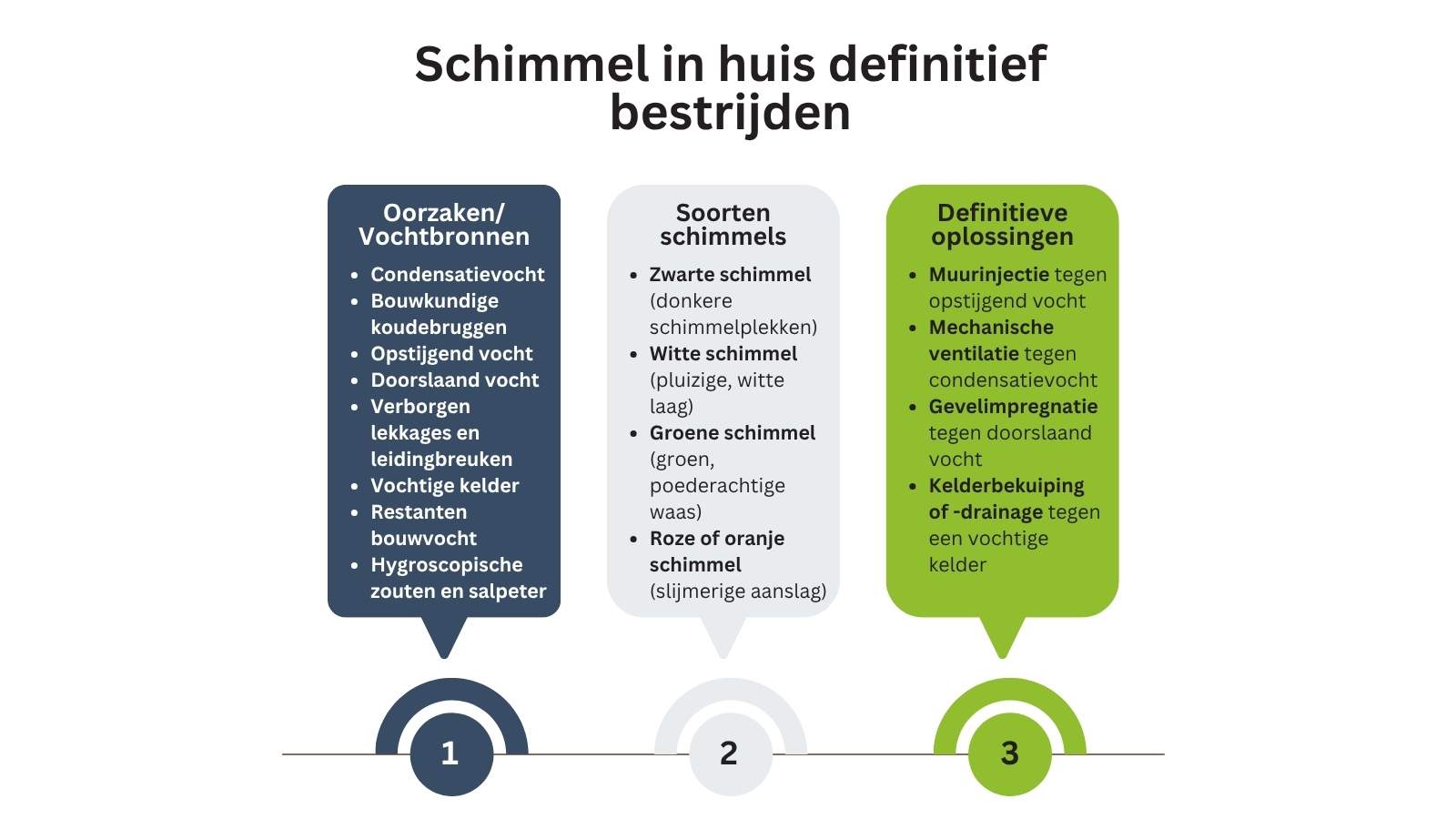
How does mould develop in the home? All the causes and damp problems
Mold have a substrate such as plaster, plasterboard, wood, wallpaper or paint, a comfortable temperature and, above all, moisture in the house necessary. As soon as a building material in your home gets wet or relative humidity If the temperature remains well above 60%, mould spores will start to grow within 24 to 48 hours.
To tackle mould in your home effectively, you need to know what is causing the damp that feeds the mould.
1. Condensation moisture
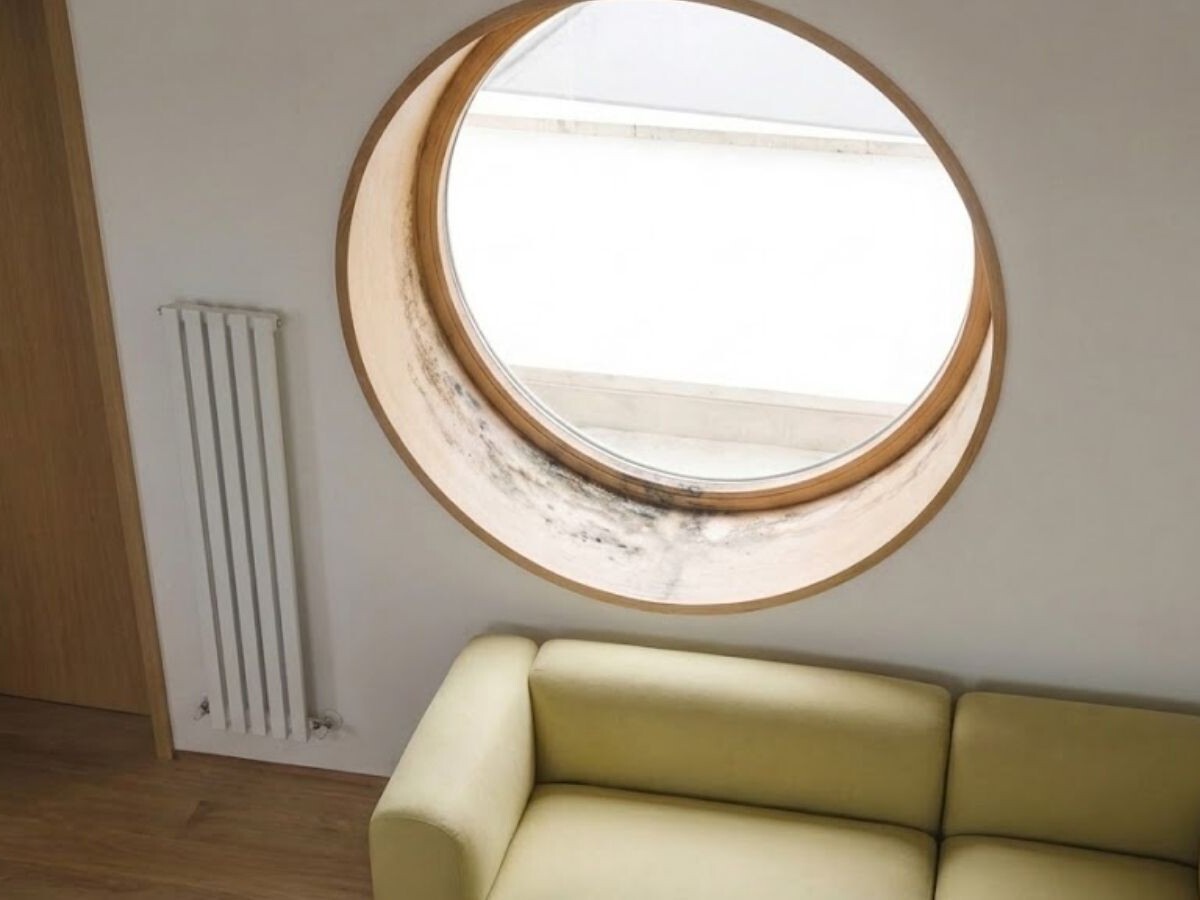
Condensation moisture is condensation or water vapour that builds up in the home as a result of everyday activities such as cooking, showering, washing and breathing. In well-insulated homes without a mechanical ventilation system, this moist air becomes saturated. As a result, the humidity in the home rises above the desired level, leading to mould growth. The water vapour condenses onto the colder surfaces in the home. That persistent damp film on your walls or windows activates mould spores, which appear as black spots on the walls and the bathroom ceiling.
2. Structural thermal bridges
These are localised gaps in your home’s insulation layer where heat escapes more quickly than elsewhere in the structure. Typical examples include uninsulated concrete lintels above windows, uninsulated floor junctions or outdated window frames. These thermal bridges cool down significantly due to the temperature difference between inside and outside. When warm indoor air comes into contact with a cold area, the temperature at that point drops below the dew point and moisture immediately condenses on the wall. This creates a damp patch where mould can quickly take hold, even at average humidity levels.
3. Rising damp
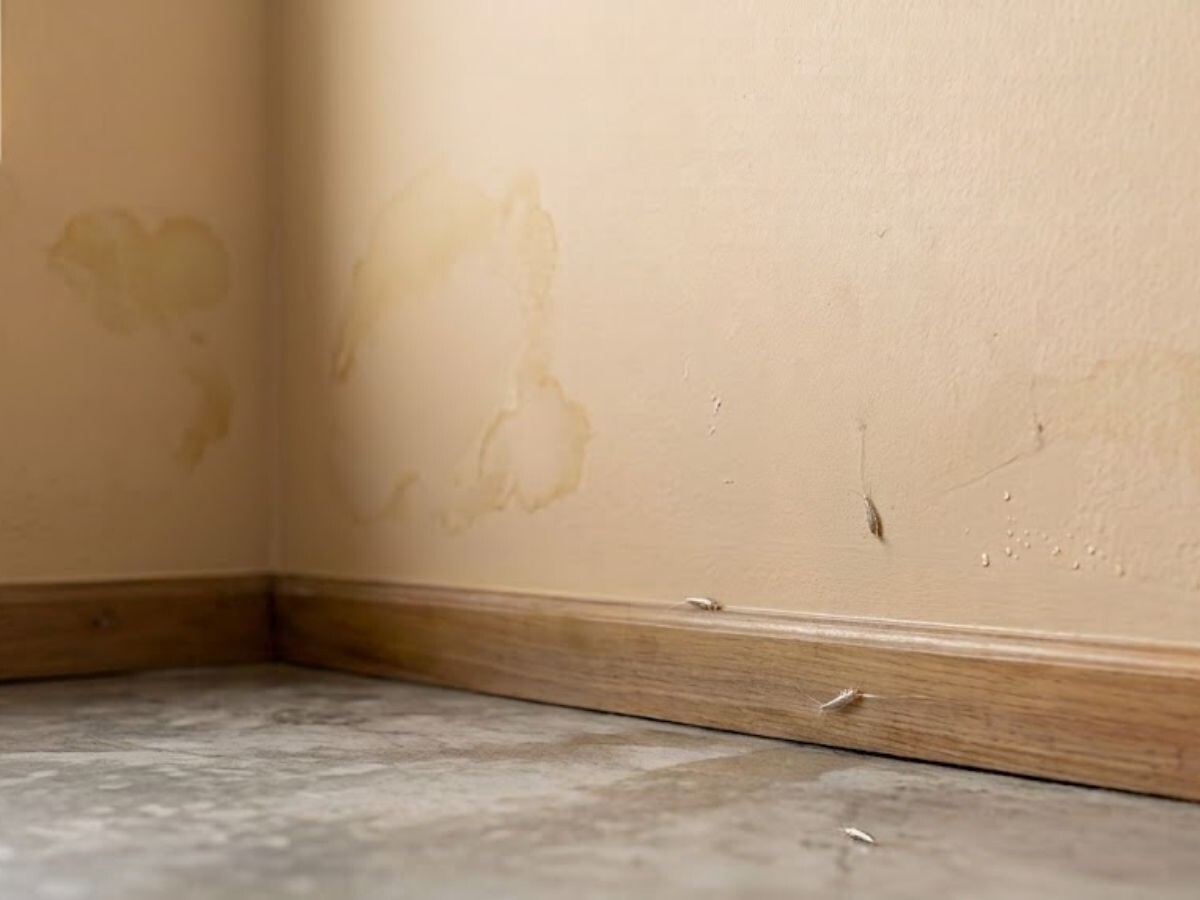
Rising damp This is groundwater that is drawn upwards into the brickwork of your walls by capillary action through porous bricks and mortar. This occurs when a property lacks a water barrier at ground level or when this water barrier is damaged. The masonry of your walls then becomes permanently saturated with groundwater up to a height of 1 to 1.20 metres. The plaster, wooden skirting boards and wallpaper continuously absorb this water. This constant supply of moisture and organic nutrients creates an ideal breeding ground for mould.
4. Penetrating moisture
Penetrating moisture is rainwater that penetrates your home via the external wall or façade. This occurs due to ageing and porous facing bricks, worn-out pointing or cracks in the plasterwork of the external façade. During prolonged rain, the external wall becomes saturated with water. The damp then penetrates through the cavity or the solid wall to the internal brickwork. Because the inside of the wall cannot dry out quickly enough, the plaster or paintwork remains damp for a long time, resulting in large damp patches and mould on the interior walls.
5. Hidden leaks and burst pipes
A hidden leak or burst pipe is a structural or technical fault in the supply or drainage pipes in your home. Think of a hairline crack in a drainpipe, a leaking pipe from the underfloor heating or central heating system, a loose trap or worn silicone joints around a walk-in shower. And because this type of leak is often hidden behind plasterboard walls, beneath tiled floors or between suspended ceilings, water drips unnoticed into the structure of your home for days or weeks on end. The insulation material and plasterboard gradually become saturated with water and no longer dry out. In these dark and damp cavities, invisible mould then develops, which is often only noticed when a musty smell arises or the plasterwork discolours.
6. Damp cellar
A damp cellar is caused by groundwater that is constantly under hydrostatic pressure and seeps into the cellar through porous cellar walls, cracks in the concrete floor or a leaking joint. Even without visible puddles on the cellar floor, the groundwater that has seeped in evaporates within the cellar. As cellars are cool and receive very little natural ventilation, the relative humidity rises to between 80% and 100%. This damp air rises through stairwells and permeable intermediate floors to the ground floor, where it causes mould to form under parquet, laminate flooring or behind low cupboards.
7. Residual construction moisture in new-build homes and renovation projects
Remaining building moisture consists of the thousands of litres of water that have entered the structure of your home during construction or renovation work as a result of pouring concrete, laying screeds and applying wet plaster. However, if a property is finished, painted or occupied too soon after the structural work phase, without sufficient building dryers or drying time, the construction moisture becomes trapped in the walls and floors. The moisture tries to evaporate outwards but is blocked by vapour barriers or layers of paint. This constant release of moisture leads to mould forming behind new skirting boards, in kitchens and inside fitted wardrobes.
8. Hygroscopic moisture and saltpetre
Hygroscopic moisture and saltpetre These are mineral salts that have been drawn up from the groundwater into the brickwork of your home, often as a result of a damp problem such as rising damp. Furthermore, these salts have the stubborn property of being hygroscopic. This means that they actively draw water vapour from the indoor air and trap it within the plasterwork. Even if a wall has already been treated and no groundwater is rising up through it, the walls will still feel damp due to the salt crystals. The moisture present then ensures that mould spores are constantly given the opportunity to grow into visible colonies.
What types of mould are found in the home, and how can you recognise them?
There are thousands of types of fungal spores floating in the air, but indoors we usually see just a few specific types turning up.
The effects of mould in the home
Mold are often initially seen as an aesthetic problem that can be concealed with a bit of paint or a cleaning product. But once mould has taken hold in your home, the network of mould hyphae spreads. The harmful effects affect not only your health, but it also affects your interior, the value of your home and your legal status as the owner.
1. Serious health problems and breathing difficulties
- Chronic respiratory irritation: inhaling mould spores irritates the mucous membranes. This causes persistent coughing, a sore throat, wheezing and chronic nasal congestion.
- Asthma and allergic reactions: mould spores are one of the most potent allergens in the home. They trigger asthma attacks and cause allergic symptoms such as watery eyes, sneezing fits, hives and eczema. In children, prolonged exposure to mould increases the risk of developing chronic asthma.
- Increased risk for vulnerable groups: babies, the elderly and people with weakened immune systems are at risk of developing lung infections. Pets also react strongly to mould, which can be recognised by lethargy, persistent itching or breathing difficulties.
- Insidious symptoms caused by mycotoxins: certain toxic mould species release substances that put a strain on residents’ nervous systems and immune systems. This results in unexplained chronic fatigue, loss of concentration and persistent headaches.
2. Deterioration and degradation of building materials
- Deterioration of plasterwork and plasterboard: mould eats its way through the binder in the plasterwork and the cardboard layer of plasterboard. The material loses its rigidity, crumbles and, in cases of severe damage, must be cut away completely.
- Irreparable damage to paint and wallpaper: mould takes hold behind the wallpaper and beneath the paint. This leads to blistering, discolouration and the seams coming apart.
- Damage to timber structures: if mould on timber is not dealt with, it can lead to wood rot and aggressive fungi. This damages timber beams, floor joists and roof trusses, posing a risk to the stability of your home.
- Deterioration of silicone sealant: in bathrooms and kitchens, mould penetrates deep into the pores of the elastic joints. Once the sealant layer has been compromised, the joint loses its watertight seal, leading to hidden water seepage behind tiled walls and bathtubs.
3. Damage to furniture, textiles and household contents
- Mould in wardrobes and on clothes: behind closed wardrobe doors, where air does not circulate, mould quickly takes hold. It settles on clothes, shoes and coats in the form of black specks and fibre damage that does not disappear even after repeated washing.
- Damage to furniture: wooden furniture, upholstered sofas and MDF cupboards placed directly against a cold or damp wall are often covered with a layer of mould on the back. In many cases, the mould penetrates so deeply into the furniture that throwing it away is the only option.
- Contamination of mattresses and bed linen: due to the combination of body heat, perspiration and the environment, mould can start to grow on the underside of mattresses, leading to an unhealthy sleeping environment.
4. Persistent odour problems and a loss of living comfort
- The characteristic musty smell: during their decomposition process, moulds produce microbial volatile organic compounds. This creates a pungent, musty smell that lingers in the home.
- Odour transfer to personal belongings: the smell seeps unnoticed into textiles, curtains and clothing. Residents often carry this musty smell with them when they leave the house, without realising it themselves.
- Social embarrassment and shame: visible black patches and a persistent mouldy smell often cause discomfort, making residents reluctant to welcome guests, friends or family into their homes.
5. Decline in the value of the property
- More difficult sales: prospective buyers linking mould directly to hidden defects and structural faults. This puts off potential buyers and prolongs the selling process.
- Price reductions: buyers who do make an offer use the presence of mould as leverage to negotiate the asking price.
- Risk of claims for hidden defects: simply painting over mould patches in a hurry before a sale does not solve the problem. If the buyer subsequently discovers that the mould has returned, this can be challenged in court as a hidden defect, resulting in legal costs and claims for damages.
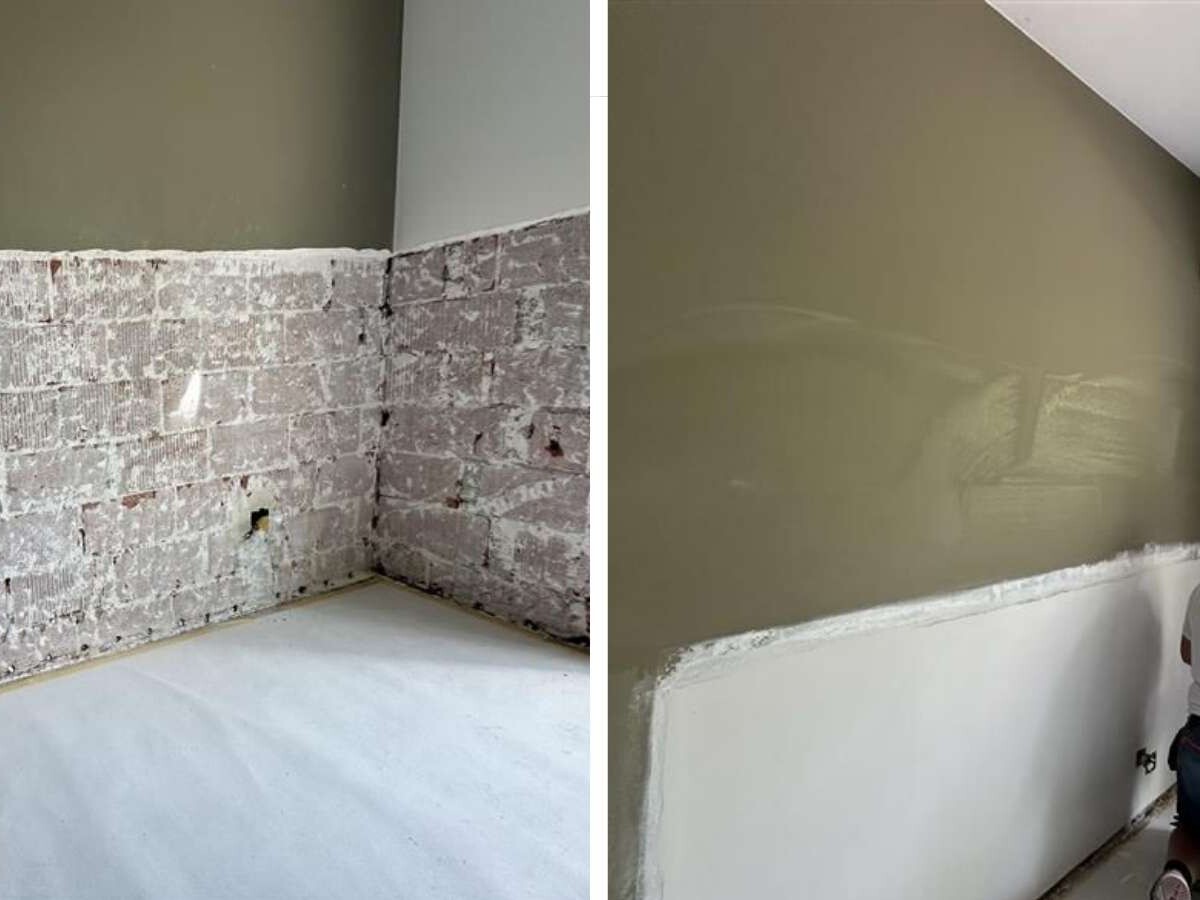
Permanent mould control: AquaConsult’s solutions
Mold Cleaning with bleach or vinegar is like mopping whilst the tap is running. It masks the colour and the stains, but the moisture feeds the invisible mould in your wall, causing the damp problem to return even worse than before. To get rid of mould in your home for good, you need to stop the source of damp. Depending on the exact moisture diagnosis At AquaConsult, we carry out a structural, architectural moisture solution too.
Conclusion: Don’t wait until the mould damage gets worse
Mould in the home never goes away on its own. It is a clear sign from your home that something is wrong with the moisture balance inside. Whether it’s a lack of ventilation or invisible rising damp, temporary solutions will only cost you more money in the long run and put your health at risk. The only proper way to achieve a dry, fresh and safe living environment is through professional and targeted moisture control. Do you want to be rid of fungi, musty odours and damp walls? Don’t be caught off guard – call in one of our experts straight away. They’ll visit you anywhere in Flanders to carry out a thorough, scientific damp assessment. We’ll pinpoint the exact cause of the mould in your home and draw up a bespoke plan. Request your free expertise Contact AquaConsult and take the step towards a permanently dry home.
More information and brochure request
Answer the questions below and get more information and our brochure based on them. Would you like the cost price calculated? Then indicate this clearly in the text field below and we will do the necessary.