Step 1 of the renovation process: diagnosing the moisture problem
Before investing in expensive renovation materials, check the foundations of your home. A moisture problem is not always immediately visible on the walls, but there are clear signs you can look out for during your renovation to identify the problem:
Note: Sometimes a wall may appear dry on the surface, but the moisture may also be deep within the structure of your renovation project. At AquaConsult, we recommend that when renovating, you should always a free expertise to be carried out where the damp is diagnosed. Our experts measure the walls with professional equipment, so you can be sure you can start renovating or already decorating with confidence.
The different moisture problems at a glance
During a renovation, you can use different types of moisture problems face. Each problem is unique and requires a specific recognition and approach.
Moisture in the walls
Moisture in the walls is a wider problem for walls saturated with moisture, often due to the combination of factors such as leaking pipes or old construction defects.
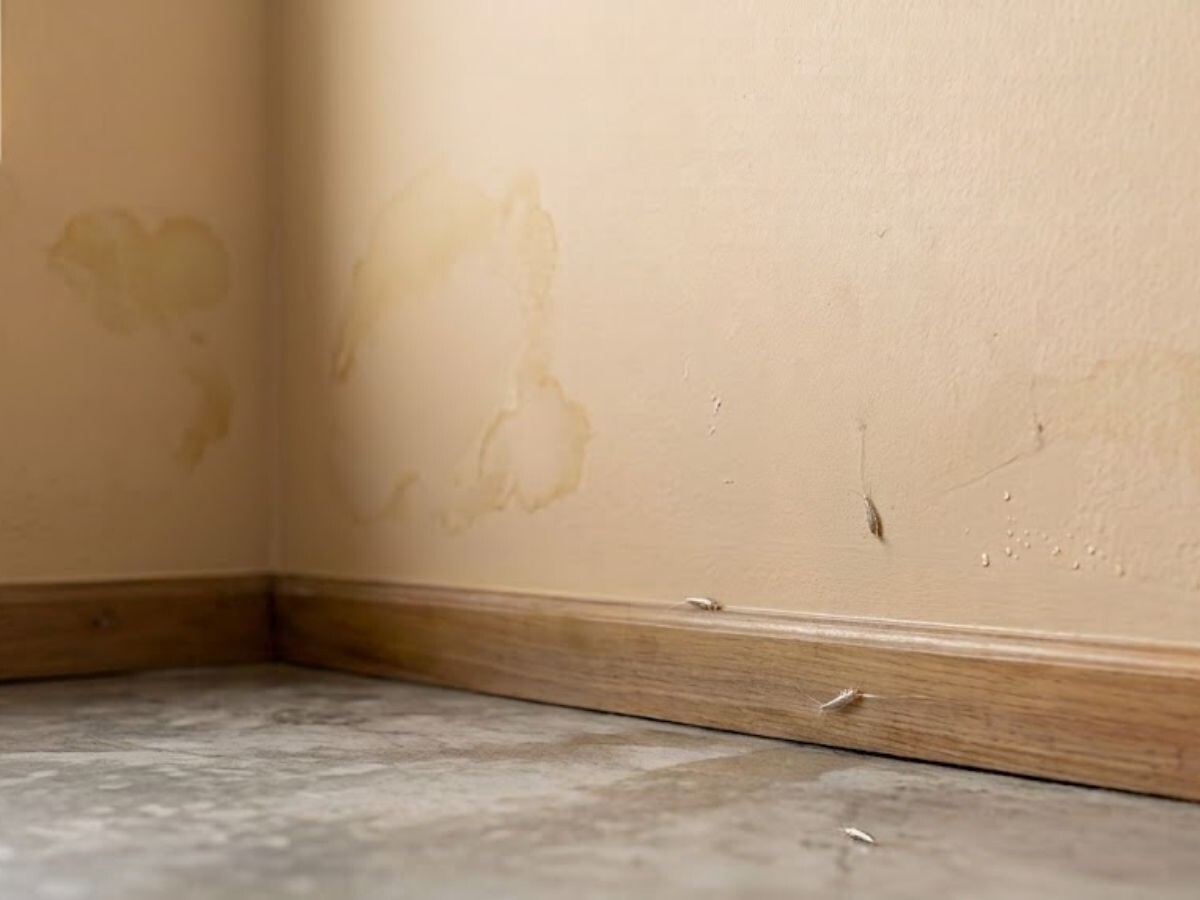
How do you recognise it? Due to dark, clammy stains present on the walls that do not seem to dry up, regardless of the weather. Sometimes the stucco feels soft or powdery when you push against it.
Damp basement
The basement is under constant pressure from the surrounding groundwater. During renovation, it is therefore the ideal time to make this space usable again and from the damp cellar make a valuable repository.
How do you recognise it? There are puddles of water present on the basement floor after a rainstorm, the walls shining with moisture or salt standing as a white haze on the basement walls.
Rising damp
Rising damp is one of the most persistent moisture problems, especially in older houses where a water barrier is missing. Groundwater then soaks up inside walls like a sponge.
How do you recognise it? Damp patches, loosening plaster or flaking paint limited to the bottom of the walls (up to 1.20 metres high). You often see a clear horizontal flood line on the walls.
Penetrating moisture
At penetrating moisture rain and wind penetrate through the external wall, often because the façade has become porous or cracks are present in the pointing.
How do you recognise it? The presence of moisture stains that are higher up on the wall and often get bigger after a heavy rain indicate the presence of penetrating moisture. The spots are usually on the rain-side of your home.
Condensation moisture
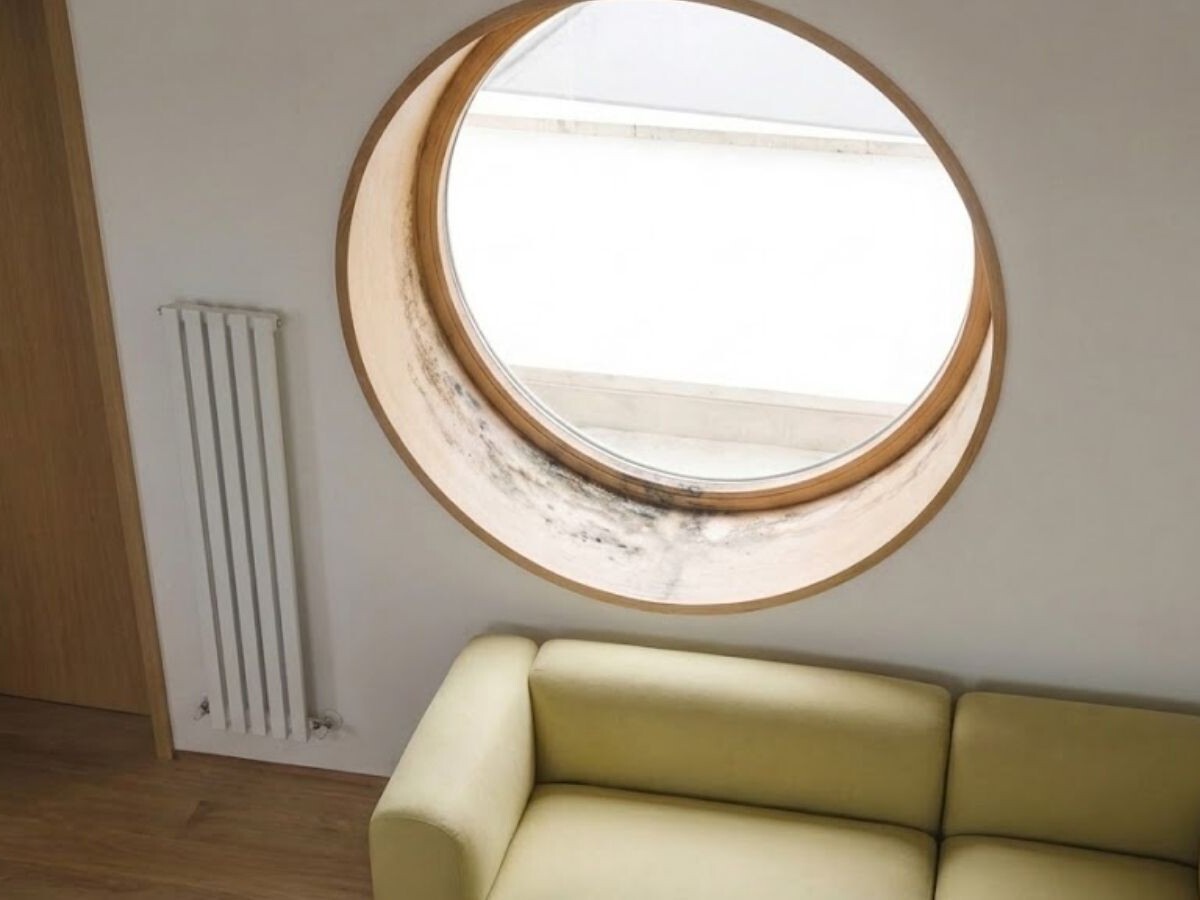
Condensation moisture occurs when warm, moist air precipitates on cold surfaces in the house. In renovations, we often see this after installing new windows and insulation, as natural ventilation is then lost.
How do you recognise it? Drops on the inside of windows, moisture spots in the upper corners of rooms or on ceilings and a typical musty smell in the house.
Mould on the walls
Mould on the walls is not itself a moisture problem, but it is the direct result of an untreated moisture problem or lack of ventilation in the house. It is not only aesthetically disturbing, but more importantly, it is unhealthy for the inhabitants.
How do you recognise it? You see black, grey or green speckles on the walls. Usually in the corners, behind cupboards or around window mouldings. It is almost always accompanied by a recognisable mouldy smell.
Moisture in new-build homes
No, moisture is not only a problem when renovating an older home. Even in recent renovated homes, moisture can be a killjoy. During construction, a huge amount of water is used for concrete and plastering. The excess water is then trapped in the foundations and construction of the house.
How do you recognise it? Windows that constantly fog up and plaster that still shows dark spots after months or that won't budge. If you start painting too soon, the paint will not adhere and will therefore peel off.
How do you tackle moisture problems? AquaConsult's definitive moisture solutions
At AquaConsult, we don't believe in a temporary patch-up. A renovation deserves a structural moisture solution.
Wall injection: an impenetrable barrier
At wall injection we drill small holes in the affected walls at regular intervals, just above the floor pass. Into these holes, we inject a high-quality, moisture-resistant gel or liquid under controlled pressure. This product spreads into the masonry and, once cured, forms a horizontal barrier that no longer allows a drop of water to pass through. This is used for rising damp to efficiently get the walls cork dry so that they no longer soak up groundwater.
Basement sealing: a waterproof tub
At basement waterproofing we make the basement walls completely waterproof again by applying several layers of cementitious fixing mortars and synthetic resin. We create a new, waterproof shell on the inside of your basement. The critical connection between the floor and the wall is also additionally strengthened in the process. This is used for damp cellars and moisture in the walls. It is ideal for turning a damp storage room into a full-fledged hobby room or wine cellar.
Basement drainage: controlled water drainage
Sometimes the pressure of groundwater is so great that casing is not sufficient. In that case, we place a drainage system on the floor or against the walls. A special studded membrane catches the water seeping in and directs it through channels to a collection point, where a pump automatically drains the water to the sewerage system. The walls are then finished tightly. This is used for stubborn damp cellars with very high groundwater pressure, where pressure must be removed.
Facade impregnation: Giving your property a mackintosh
At facade impregnation we spray a colourless, water-repellent liquid over your facade. This liquid soaks deep into the pores of the brick. The result? Rainwater beads off the façade, while the wall itself can still breathe. This way, any internal moisture can still evaporate to the outside. This is used for leaking moisture. It protects the facade not only from moisture, but also from frost damage and pollution.
Mechanical ventilation: The lungs of your home
We install smart ventilation systems which constantly monitors the humidity in the house. As soon as the air becomes too humid, the system drains the polluted air and brings in fresh, dry air. This is used for condensation moisture and mould on the walls. Ventilation systems are indispensable in any renovation where insulation levels are increased.
Concrete injection: sealing active leaks
Sometimes water seeps in through shrinkage cracks or gravel nests in concrete structures. At concrete injection we drill holes at a 45-degree angle across the crack and insert special injection packers. Under high pressure, we inject a polyurethane resin that immediately expands as soon as it comes into contact with water. The crack is thus completely and permanently sealed from the inside out. This is used for damp cellars or moisture in the walls, where there is active water seepage through cracks in the concrete walls or floor slabs.
Plastering: The salt-resistant finish
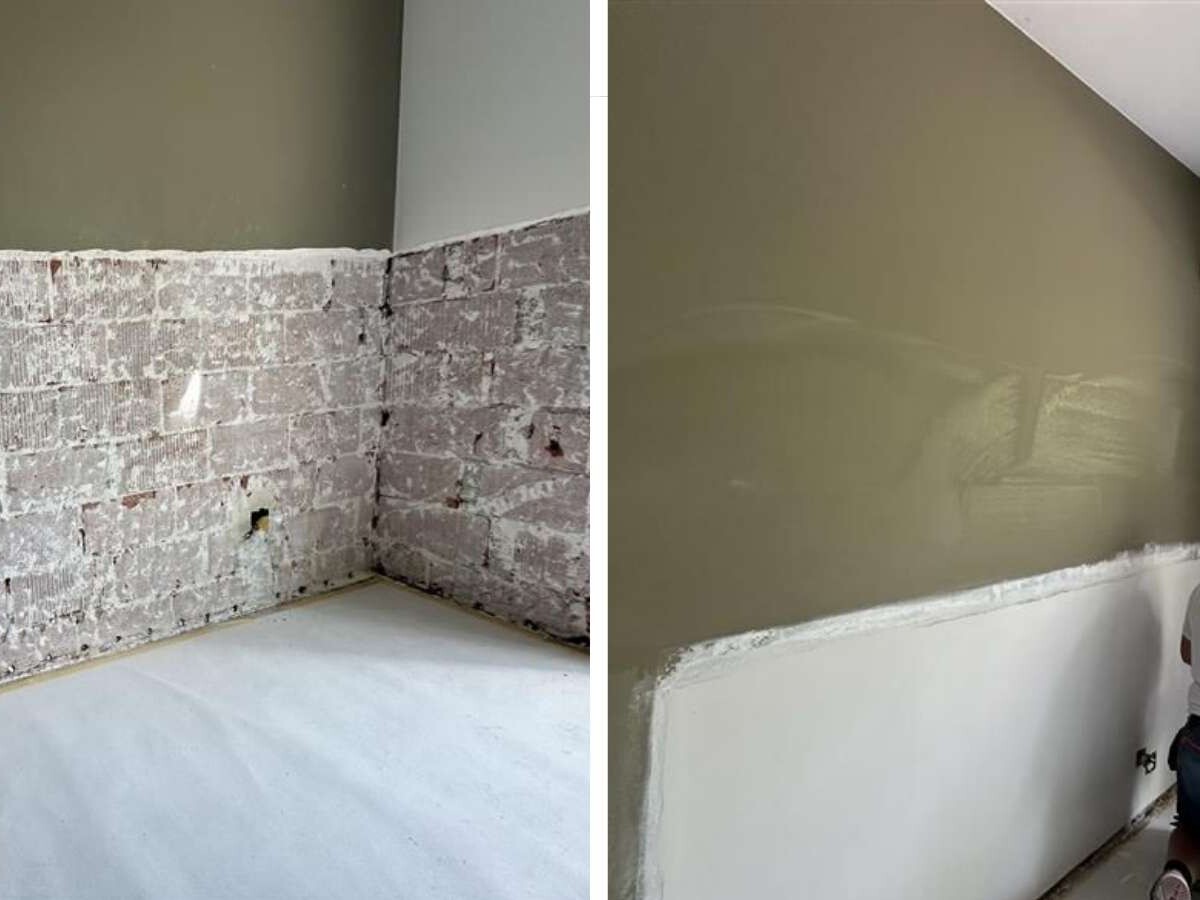
After moisture treatment, we install a salt-resistant membrane or use sanitising mortars, followed by a new, tight plaster. This prevents residual salts from the wall from damaging your new finish. This is used in any solution to any moisture problem to ensure a lasting beautiful result.
What does moisture control cost during a renovation?
Because every renovation project is bespoke, the cost depends on the severity of the damage and the technique. Just remember that moisture control significantly increases the value of your property and prevents further damage to the structure.
The ultimate renovation checklist for a moisture-free home
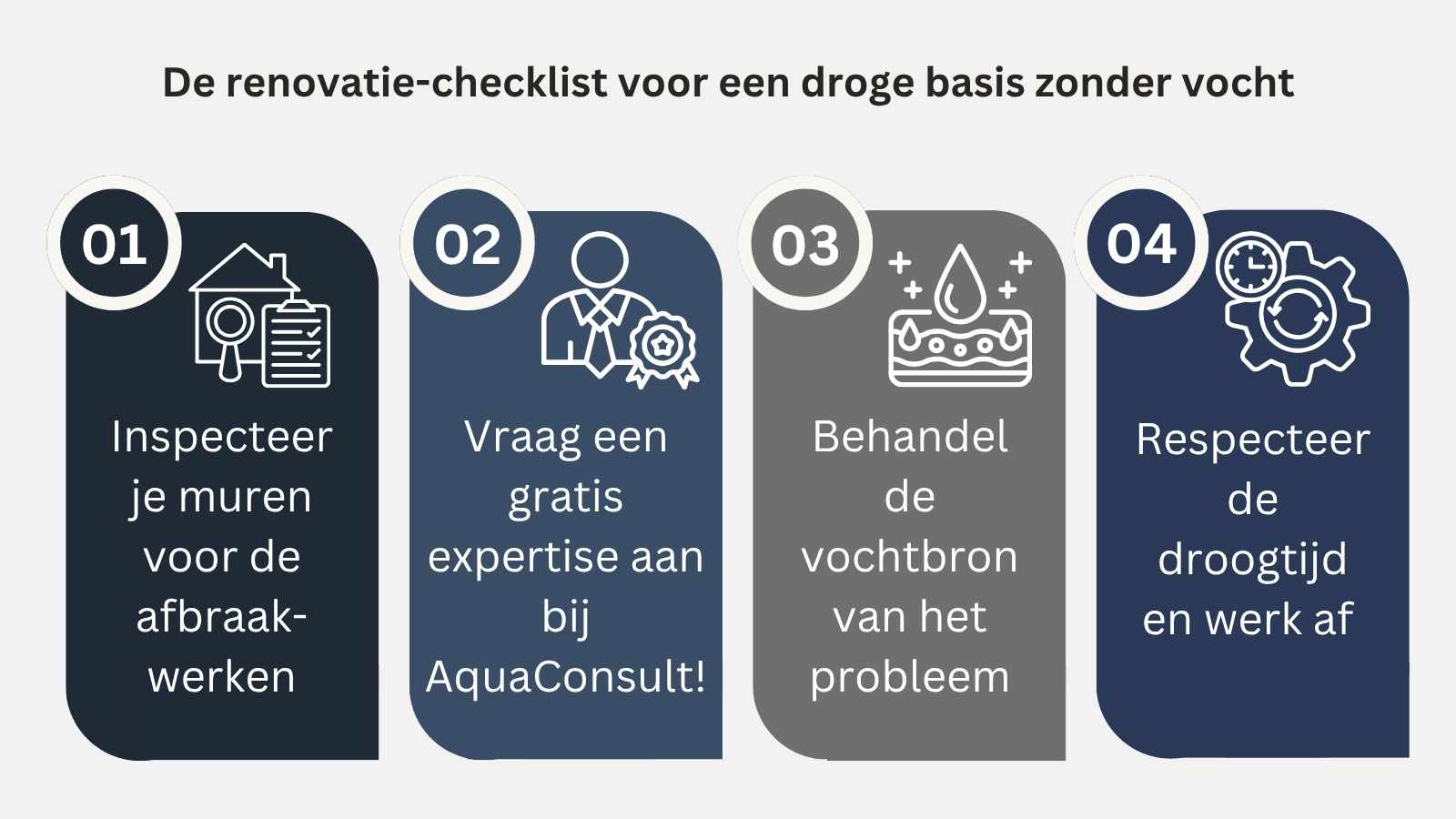
The success of a renovation depends on the right order of work. To prevent your new plaster or floor from being affected by damp in no time, our experts have prepared this handy checklist for you. Follow these steps carefully when making your home damp-proof.
Start your renovation on a dry basis
A healthy home is the only basis for a sustainable renovation. Don't let moisture ruin your dream project. Want to make sure your renovation plans start on a dry basis? Ask your free expertise to our experts at AquaConsult.
More information and brochure request
Answer the questions below and get more information and our brochure based on them. Would you like the cost price calculated? Then indicate this clearly in the text field below and we will do the necessary.