What is covered by moisture? A complex problem simply explained
When we talk about ‘moisture in your home’, we are usually talking about excess water that settles in the structure of your home or is present in the air you breathe. More than just an aesthetic problem in your home, it affects your home comfort, energy bills and even your health.
But to solve the problem, we first need to know which moisture enemy we are dealing with. What types of moisture are there really?
The different types of moisture at a glance
Damp walls: The common intruder
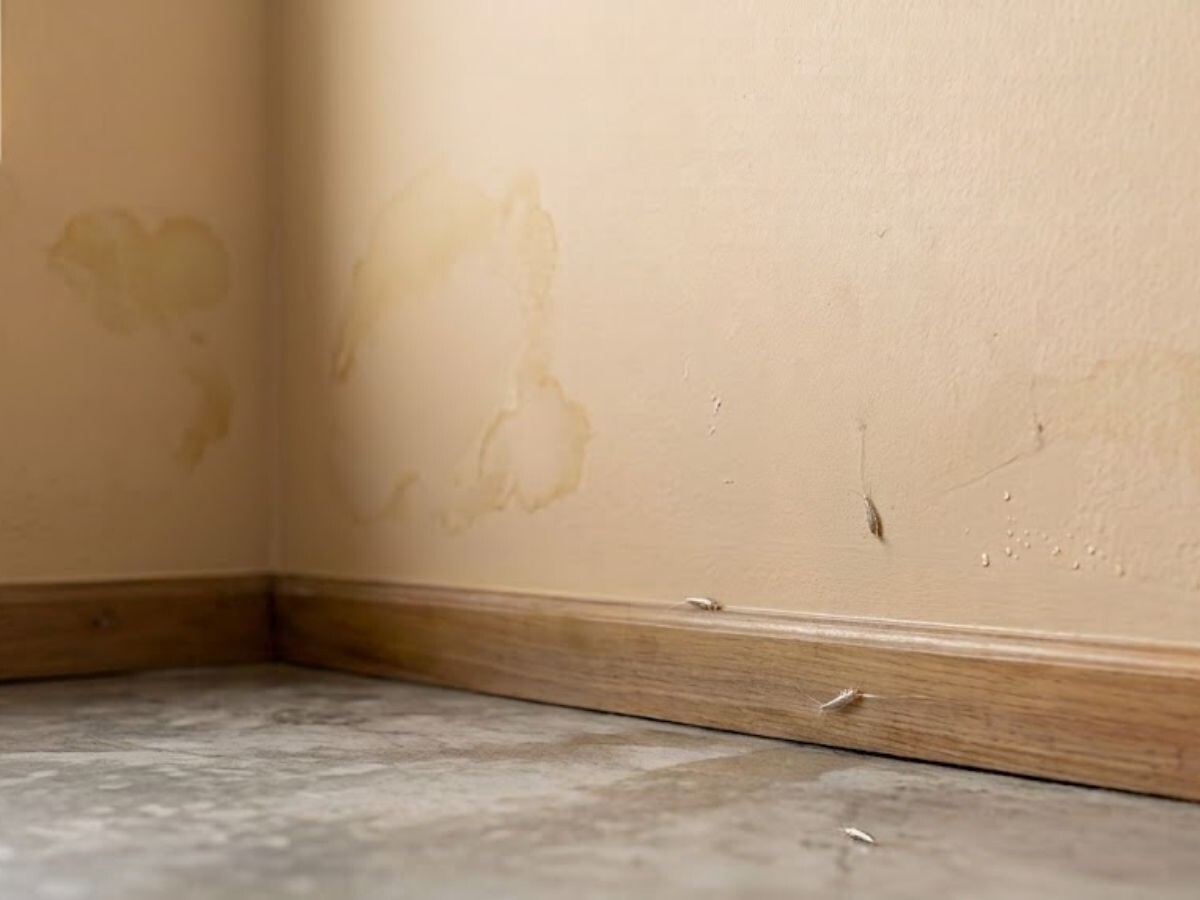
Damp walls are a collective term for masonry where the building materials are saturated with water. This can occur on both interior and exterior walls.
- What is the cause? It is often a combination of several factors: an outdated façade, minor leaks or faulty ventilation causing moisture to soak deep into the pores of the walls.
- How do you recognise it? With dark, clammy stains on the wallpaper, a musty smell in the room and paint starting to peel off the walls.
Basement moisture: extreme pressure from outside
Moisture in the basement literally means that the basement is no longer watertight. The basement is the lowest point of your home, so it is often the first to be affected by groundwater.
- What is the cause? The main cause is hydrostatic pressure. Groundwater pushes against the basement walls and floor. With cracks or porous walls, water seeps in.
- How do you recognise it? The presence of puddles of water on the floor after rain, white powdery deposits on the walls and extremely high humidity.
Rising damp: The enemy at the bottom of the wall
Rising damp means that groundwater climbs vertically up the walls. It literally draws from the bedrock into your living spaces.
- What is the cause? The lack of a proper water barrier. This makes your wall act like a sponge, soaking up soil moisture.
- How do you recognise it? The damage is limited to the underside of the walls, up to a maximum height of 1 metre. Think loose skirting boards and salt crystals on the bricks.
Permeable moisture: The impact of rainwater
Penetrating moisture is moisture that penetrates horizontally from outside through the façade. This especially after a heavy rainfall.
- What is the cause? A porous exterior wall or damaged grouting. The façade is no longer water repellent and allows water to penetrate into the inner wall.
- How do you recognise it? Due to moisture spots present in the middle of the wall and also darkening after heavy rain. You often see green deposits on the outer wall as well.
Condensation moisture: Living humidity in an insulated house
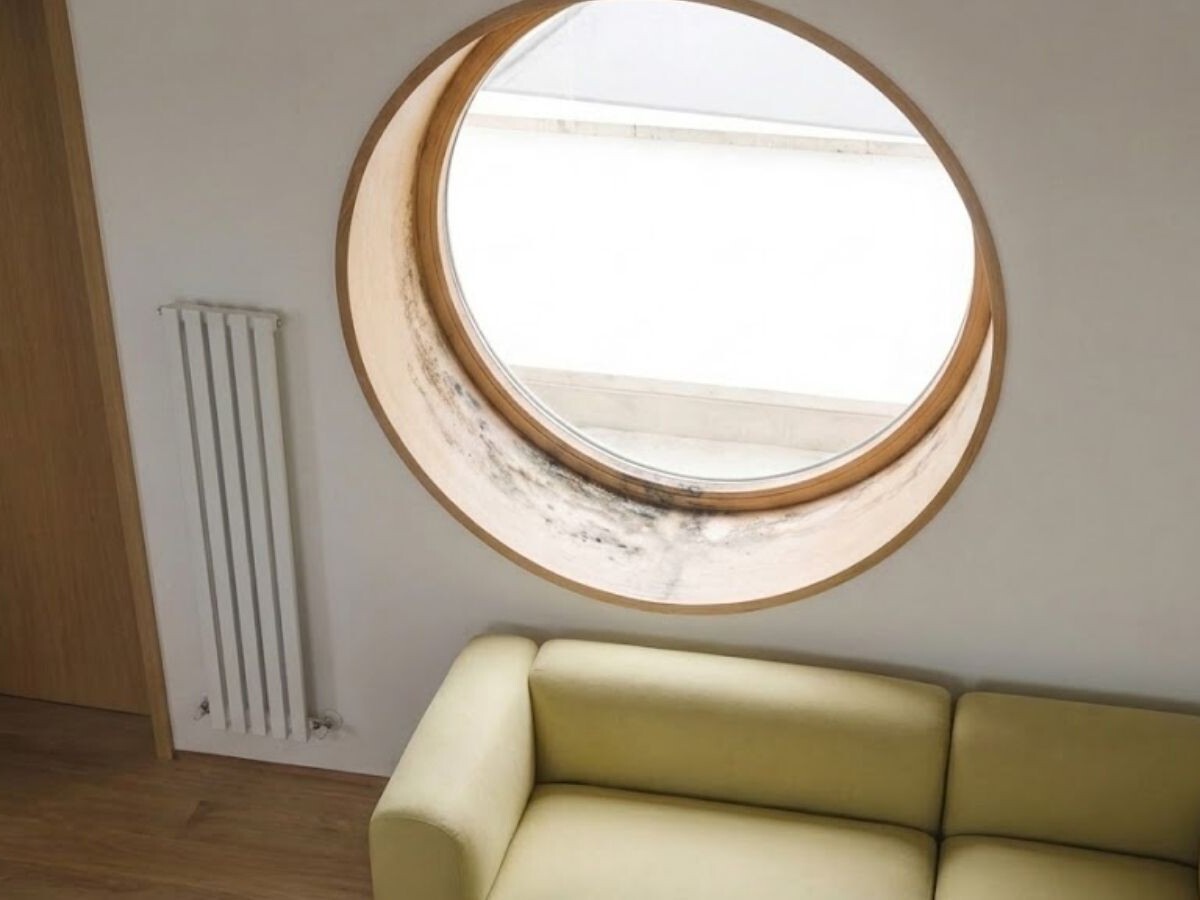
Condensation moisture arises from daily activities. It is the biggest cause of mould in modern, well-insulated homes.
- What is the cause? A lack of ventilation. Water vapour from cooking, showering or breathing cannot escape and then settles on cold surfaces such as windows and walls.
- How do you recognise it? Fogged windows in the morning, water droplets on windowsills and black mould dots in the corners of the ceiling.
Mould on the walls: The dangerous consequence
Mold on the walls are micro-organisms that are the ultimate evidence of an underlying moisture problem.
- What is the cause? Fungi need moisture and stagnant air to survive. Usually the source is condensation moisture or an untreated leak.
- How do you recognise it? The presence of black, green or grey furry spots and a musty smell that does not disappear by opening a window.
Moisture in new-build homes: Residual building moisture
Moisture in new-build homes is the water left in the building materials of a newly completed house.
- What is the cause? During construction, up to 5,000 litres of water are used for concrete and plaster. If this does not evaporate completely before the inhabitants move in, the moisture will remain trapped.
- How do you recognise it? There is a clammy atmosphere in the house, condensation is present on the windows and the walls dry out extremely slowly after painting.
How can you distinguish the different moisture problems?
It can be difficult to pinpoint the exact source of a damp spot. Many symptoms look similar at first glance, but if you look closely, you will see the subtle differences. With these rules of thumb, you will learn the main types of moisture distinguished from each other.
The distinction based on location
- Only at the bottom of the wall? If the damp patches and plaster damage stop at a height of about 80 cm to 1 metre, chances are 99% you are dealing with rising damp.
- Scattered all over the wall or in the corners? When spots are also higher on the wall or concentrated in the upper corners of a room, this usually indicates condensation moisture or penetrating moisture.
The distinction based on the moisture stain itself
- Black spots and fungus? Do you see small, black dots expanding? This is a typical feature of condensation moisture. Mould grows on walls, after all due to a lack of ventilation.
- White crystals or powder? Do you see white, salty rash on the bricks or plaster? This indicates rising damp or moisture in the basement, leaving minerals from the groundwater behind in the wall.
The distinction based on weather conditions
- Does it get worse after rain? If the stains on your wall darken or expand immediately after a rain shower, you are dealing with penetrating moisture. The moisture then penetrates from outside to inside.
- No link to the rain? If the spots are constant, then condensation moisture or a structural problem such as rising damp the culprit.
Tip: The 'Aluminium foil test'
Do you hesitate between penetrating moisture or condensation moisture? Then stick a piece of aluminium foil on the damp wall and let it sit for 48 hours.
- Moisture on the outside of the film? Then it condensation moisture. The moisture from the air in the room settles on the cold foil.
- Moisture behind the foil? Then the moisture comes from the wall itself, indicating resounding or rising damp.
Note: While these checks give you a good indication, moisture is often an insidious problem. Sometimes multiple causes are present at the same time. For watertight assurance a professional moisture measurement by an AquaConsult expert is always the safest choice.
Why taking action is crucial
Moisture problems ignoring is never a good idea. After all, the consequences are greater than you think.
AquaConsult's approach: from diagnosis to final solution
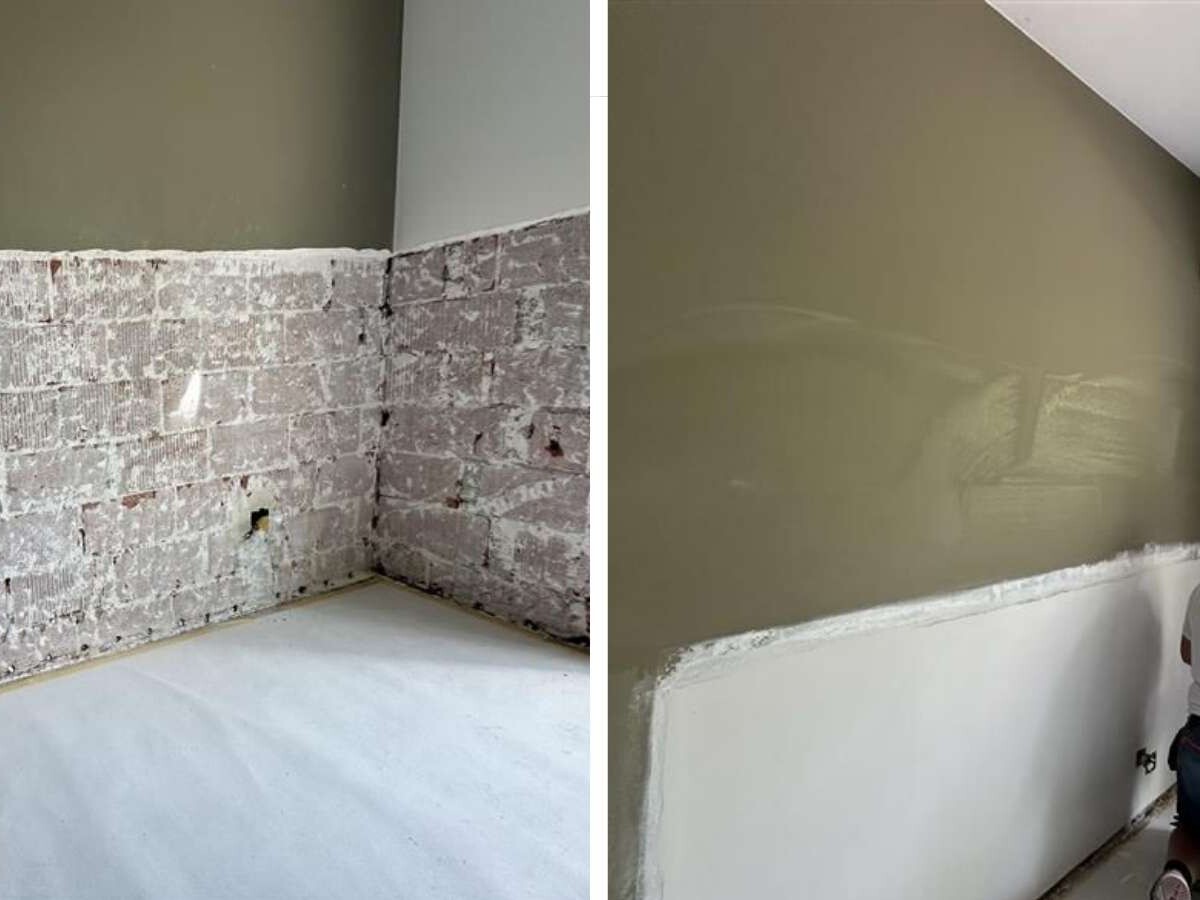
At AquaConsult, we don't believe in half-measures. Any moisture problem requires a specific, science-based approach.1. Free expertise: Our experts are happy to visit you throughout Flanders for a comprehensive moisture assessment. They look for the source of the problem and not just the symptoms.2. Customised solutions:
3. Warranty and follow-up: You enjoy a long-term guarantee (up to 30 years), so you can sleep soundly again for years to come.
Get rid of moisture today
Moisture problems are annoying, but they are perfectly solvable if you choose the right partner. Whether it is a damp cellar in Antwerp or rising damp in a charming house in the Flemish Ardennes, AquaConsult is there for you.Want to know what type of moisture is plaguing your home? Don't wait for the damage to get worse. Ask now your free expertise to AquaConsult.
More information and brochure request
Answer the questions below and get more information and our brochure based on them. Would you like the cost price calculated? Then indicate this clearly in the text field below and we will do the necessary.