The ideal humidity level in the bedroom: How to prevent condensation and mould
Do you wake up in the morning to find misted-up windows, damp sheets or a dry cough? Many Flemish people quickly open the window a crack, wipe the windowsill dry and think that’s the end of it. At AquaConsult We see every day that danger lurks right there in the bedroom. What many residents don’t realise is that, whilst sleeping through the night, you exhale and sweat out up to half a litre of moisture. Without the right level of humidity, your bedroom can, without you realising it, turn into a breeding ground for dust mites and hidden mould. Fortunately, you don’t need to carry out any complicated procedures to do that moisture problem in your bedroom. In this blog, you’ll find out what the ideal humidity level is in the bedroom, how to measure it correctly, and which simple routines or a professional damp-proofing solution you can keep damp problems out of your bedroom for good.

Why is the ideal level of humidity in the bedroom so important?
On average, you spend seven to eight hours a night – in fact, a third of your life – in your bedroom. This room, therefore, is particularly sensitive to fluctuations in air quality. There are, of course, a number of reasons for this.
- High levels of moisture build-up in an enclosed space: whilst you sleep, each person loses 0.3 to 0.4 litres of moisture through breathing and the skin. In an enclosed bedroom, this water vapour builds up quickly.
- Lower room temperature: because you keep a bedroom cooler than the living room, with an ideal temperature of 18°C to 20°C, the humid indoor air cools down more quickly and the moisture condenses as condensation on the cold windows and external walls.
- Thermoregulation whilst you sleep: your body needs a stable level of humidity to release excess heat at night. If there is too much moisture in the air, this becomes more difficult and you’ll sleep much more restlessly.
- Night-time recovery: whilst you sleep, your body and airways recover. However, indoor air that is consistently too humid or too dry puts a strain on your breathing and hinders that much-needed recovery.
What are the consequences if you do nothing about it?
If the humidity in your bedroom remains out of balance for a long time, you’ll notice the effects on both your health and your home.
When the humidity is too high, the most common phenomenon in Flanders:
- A restless night’s sleep: in a damp and stuffy room, your body finds it harder to release heat, causing you to wake up more often and feel less rested when you get up.
- Allergies and respiratory problems: from relative humidity From 55% to 60%, dust mites in your room multiply rapidly. This can lead to a blocked nose, a dry cough, irritated airways and asthma symptoms.
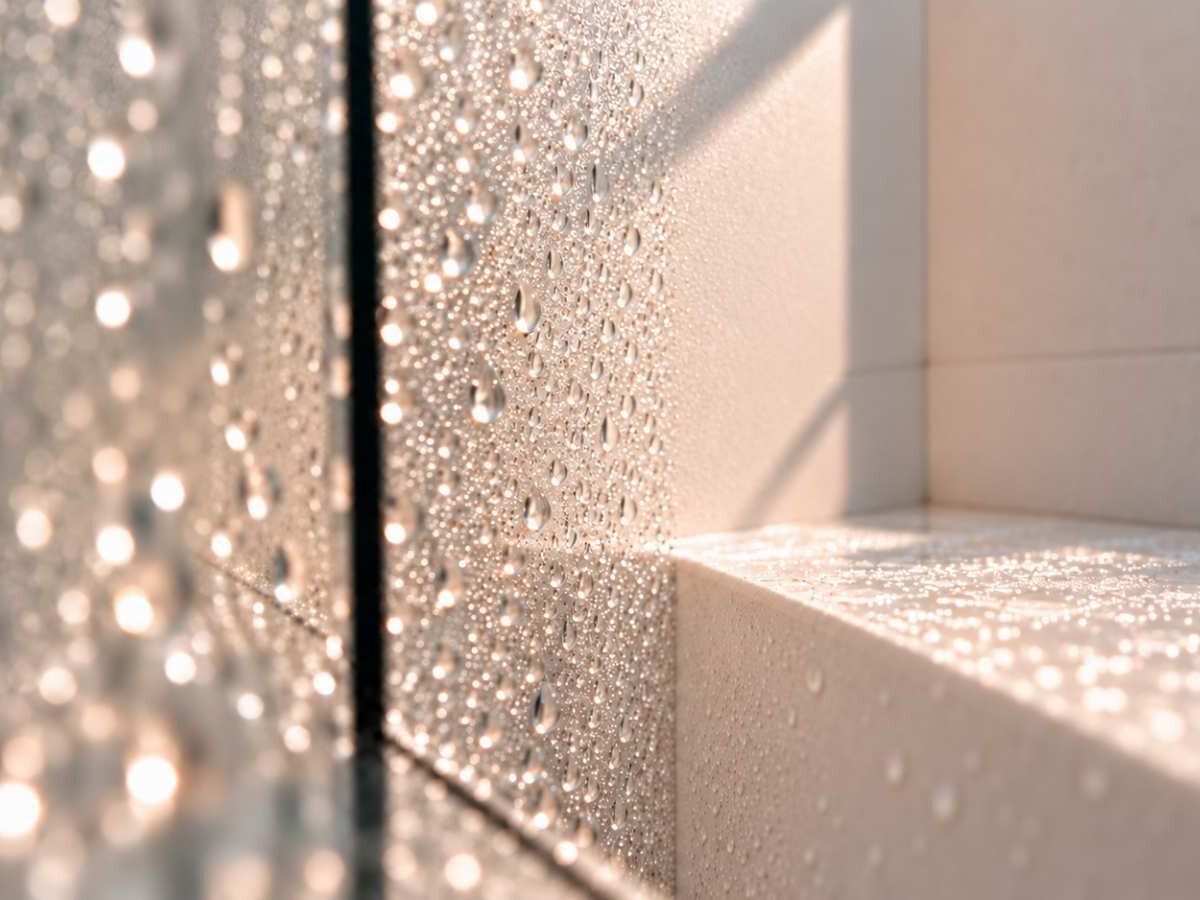
- Condensation moisture and black mold: excess moisture condenses on the coldest parts of the room, such as the windows, window frames and external walls. If this continues, black mould patches will form, releasing mould spores into the indoor air.
- Damage to walls and furnishings: persistently damp air will, over time, damage your plasterwork, paint and wallpaper. It also seeps into your mattress, bed linen and wardrobe, causing a persistent musty smell in your bedroom.
- Higher energy consumption: Humid air takes longer to heat up than dry air, which means your heating system needs more energy to keep the room at the right temperature.
If the humidity is too low, particularly in dry, freezing weather:
- Irritated mucous membranes and eyes: indoor air with a relative humidity below 35% dries out the mucous membranes in your nose and throat. This results in a sore throat, dry or stinging eyes upon waking, and an increased susceptibility to colds.
- Static electricity: you’re more likely to get little shocks from bed linen, clothes or door handles.
What is the ideal humidity level for a bedroom?
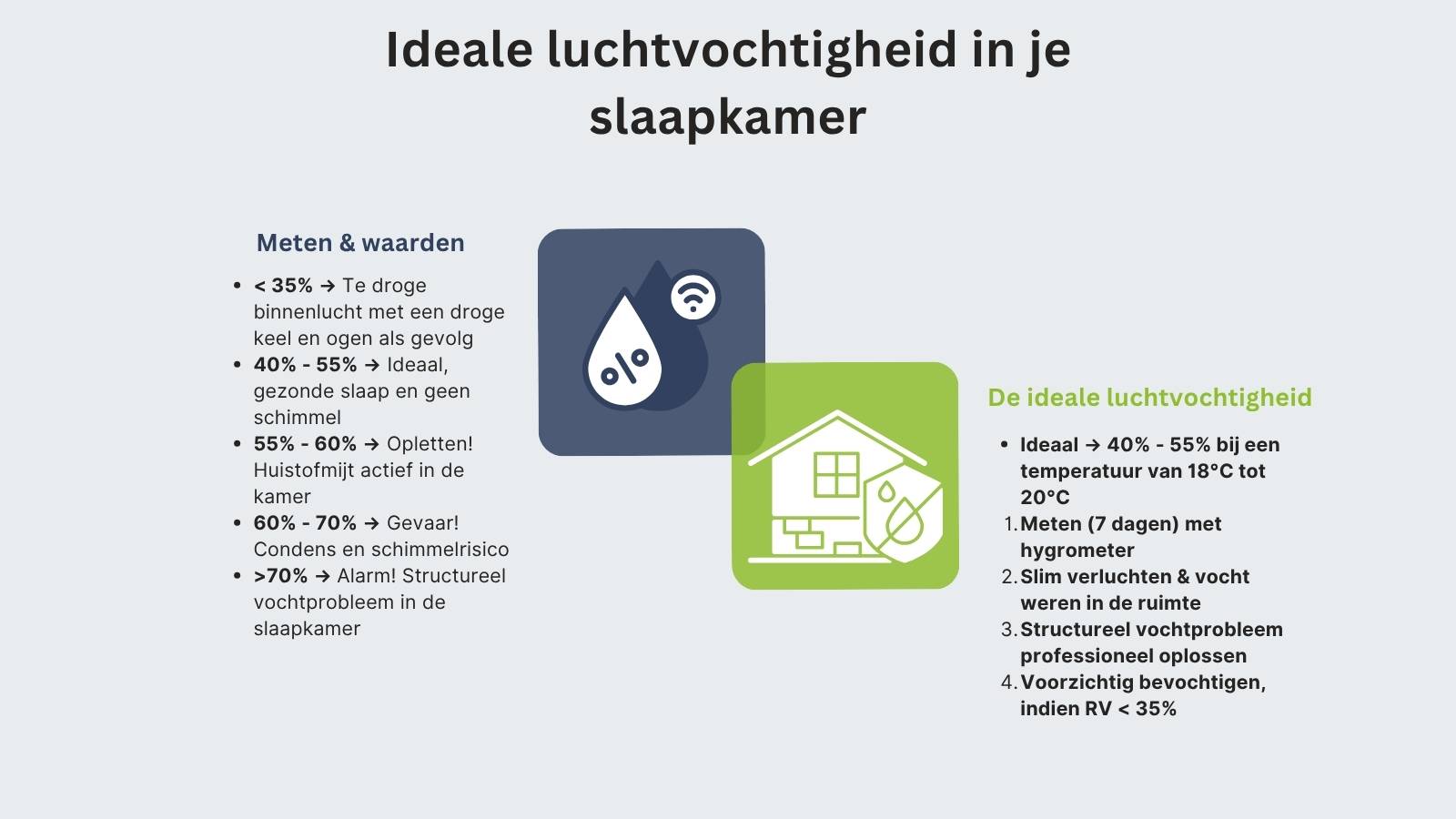
The ideal relative humidity (RH) in a bedroom is between 40% and 55%, at a room temperature of 18°C to 20°C.
In the rest of your home, such as the living room or kitchen, a slightly wider comfort zone applies, ranging from 40% to 60%. This difference is entirely down to the temperature in those rooms. Relative humidity indicates how much water vapour is present in the indoor air compared to the maximum amount that air can hold at a given temperature. Cooler air can hold less moisture than warm air. As it is cooler in a bedroom, the air cools down more quickly against cold windows or external walls and reaches the dew point more rapidly – the point at which water vapour turns into condensation droplets. Furthermore, house dust mites find ideal conditions for reproduction from as low as 55%. At AquaConsult, we therefore use 55% relative humidity as the safe upper limit for bedrooms.
An important distinction: night-time peaks versus long-term averages
Don’t be alarmed straight away if, when you wake up in the morning, you find the relative humidity is between 60% and 65%. As a person exhales and sweats out an average of 0.3 to 0.4 litres of moisture whilst sleeping, a temporary rise in humidity levels during the night is perfectly normal. What matters most is the room’s ability to recover.
- Ideal conditions: after getting up and airing the room, the humidity drops smoothly back to the ideal range of 40% to 55% within one to two hours and remains stable throughout the day.
- Problem: Does the reading consistently remain above 60% to 70% during the day, or do you see condensation on the inside of your windows every morning? If so, moisture is not being adequately removed from the bedroom and a targeted solution for damp required.
How do you achieve the ideal humidity level in the bedroom?
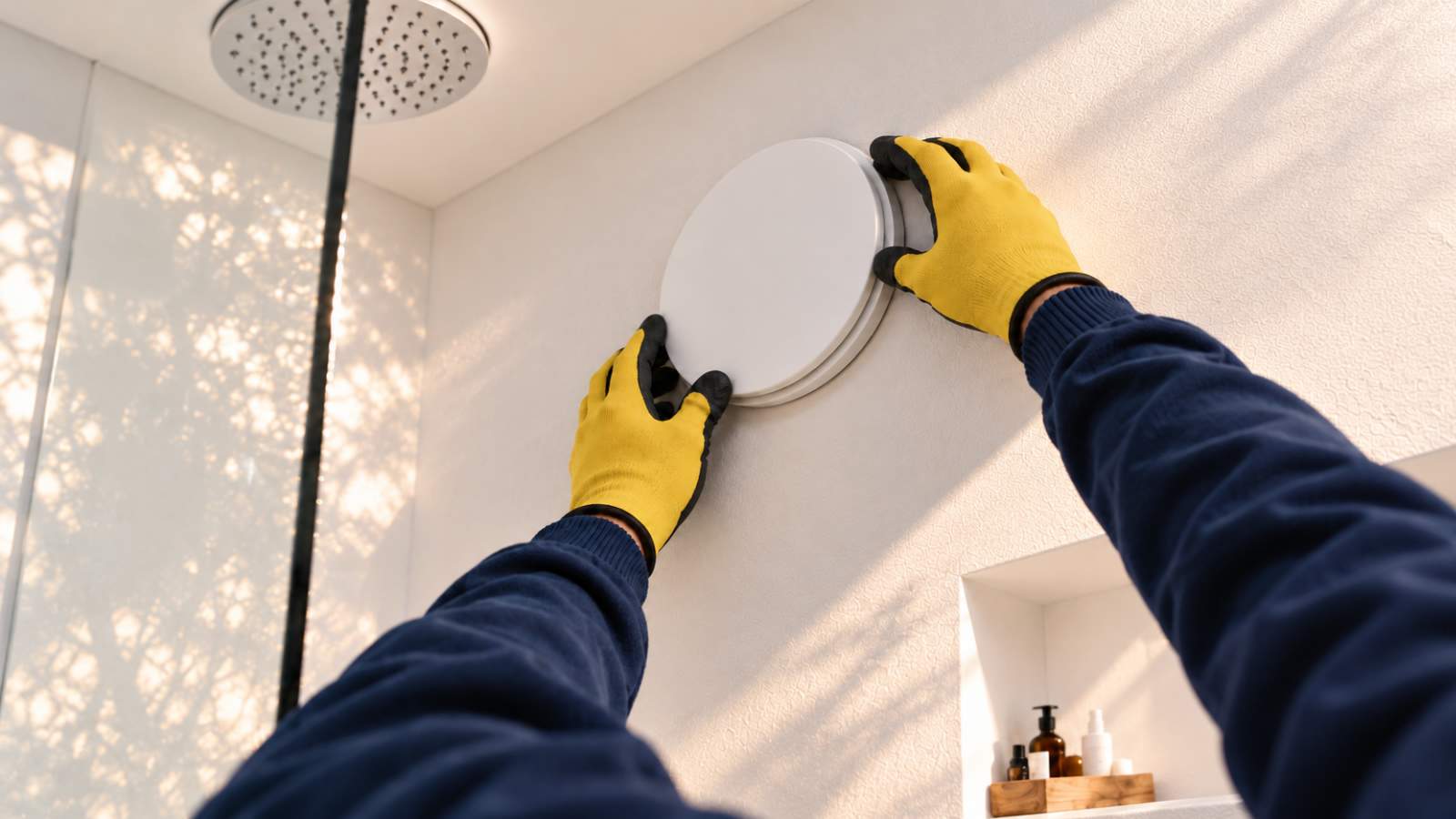
You cannot achieve a healthy relative humidity of 40% to 55% simply by opening the window once. At AquaConsult, we recommend a logical step-by-step plan: first, measure accurately; then adjust your daily routines and, where necessary, a structural moisture solution provided.
Step 1: To measure is to know
Before you take any action, you’ll want to know exactly how your bedroom is performing. So follow this simple measurement protocol for seven days.
- Choose an accurate digital hygrometer: opt for a device with a maximum margin of error of ±3%. Smart sensors are affordable and allow you to monitor night-time peaks clearly via your smartphone. Would you prefer to rely on a professional damp survey? If so, please our free expertise to.
- Position the meter at a height of 1.1 metres: place the device in the centre of the room at bed height. Keep the sensor away from radiators, external walls, windows or the door to an adjoining bathroom.
- Take measurements at two fixed times: note down the reading just before you go to sleep and immediately upon waking. If possible, test both nights when you are alone and nights when there are two of you.
- Make a note of any notable events: write down when you brought the washing in from the line, turned the heating up or someone had a shower.
Important distinction: A hygrometer only measures the humidity in the air in the room. Does a wall itself feel cold or damp to the touch? If so, you have a specialist moisture measurement necessary to rule out the presence of damp in the brickwork.
Overview: what do the readings on your hygrometer mean?
- < 35% – too dry: risk of a sore throat, dry eyes, irritated airways and static shocks from your bedding.
- 40% – 55% – ideal zone: optimum sleeping comfort and minimal risk of house dust mites, condensation or fungi.
- 55% – 60% – area of concern: no immediate damage yet, but house dust mites are becoming active here.
- 60% – 70% – danger zone: increased risk of condensation moisture on cold surfaces and where mould is starting to form.
- ≥ 70% – structural damp problem: this often indicates insufficient ventilation, a thermal bridge or a damp problem in the wall.
- ≥ 80% – alarm signal: only normal as a very brief spike immediately after a hot shower in an adjoining bathroom.
Step 2: Adjust your daily routines and ventilation habits
In many bedrooms, you can improve the humidity levels simply by preventing moisture from building up and by ventilating more effectively.
- Remove unnecessary sources of moisture: do not dry washing on a rack in the bedroom or hall. Do you have an adjoining bathroom? If so, keep the door closed whilst showering and afterwards. A hot shower can easily cause a spike above 80%. If this figure does not drop back below 65% within an hour, the moisture will drift straight into your bedroom.
- Use the 'shock ventilation' method in winter: open your bedroom window wide for 10 to 15 minutes immediately after getting up, and repeat this in the evening for 5 to 10 minutes if necessary. Cold air contains little moisture and warms up quickly indoors, causing the relative humidity to drop. Never leave your window ajar for hours on end in winter, as this causes the interior walls to cool down and makes condensation form even more quickly.
- Note stifling summer days: Air the room more often in summer, but only briefly, preferably early in the morning or late in the evening. Is it hot and muggy outside? In that case, opening a window will actually let in extra moisture, so it’s better to rely on mechanical ventilation to remove the indoor air.
- Leave the bedroom door ajar: this natural draught allows moisture and CO₂ to be drawn towards the ventilation outlets in the house. Do you prefer to sleep with the door closed for peace and quiet or privacy? If so, ensure there is an open window grille, sufficient clearance under the door or a mechanical air supply.
Step 3: Choose a permanent damp-proofing or ventilation solution
Have you noticed that the humidity in your bedroom doesn’t drop within one to two hours of airing the room, or does your hygrometer consistently read around 65% to 70%? If so, simply opening a window is no longer enough, and a more targeted approach is needed.
- A dehumidifier as a temporary solution: a portable dehumidifier set to 50% RH helps to quickly eliminate persistent spikes. Choose a model with a quiet night mode, don’t place it right next to your bed, and empty the water tank before going to sleep. This is merely a stopgap measure, however, as the problem will return as soon as you switch the appliance off.
- Mechanical ventilation as a sustainable solution to damp: in well-insulated homes, damp remains without mechanical ventilation trapped. A demand-controlled ventilation system, such as System D with humidity sensors, automatically extracts the humid indoor air as soon as the humidity level rises. Always bear the noise level in mind, as the guideline value for a bedroom is ≤ 30 dB(A), so that the system can continue to run undisturbed even at night.
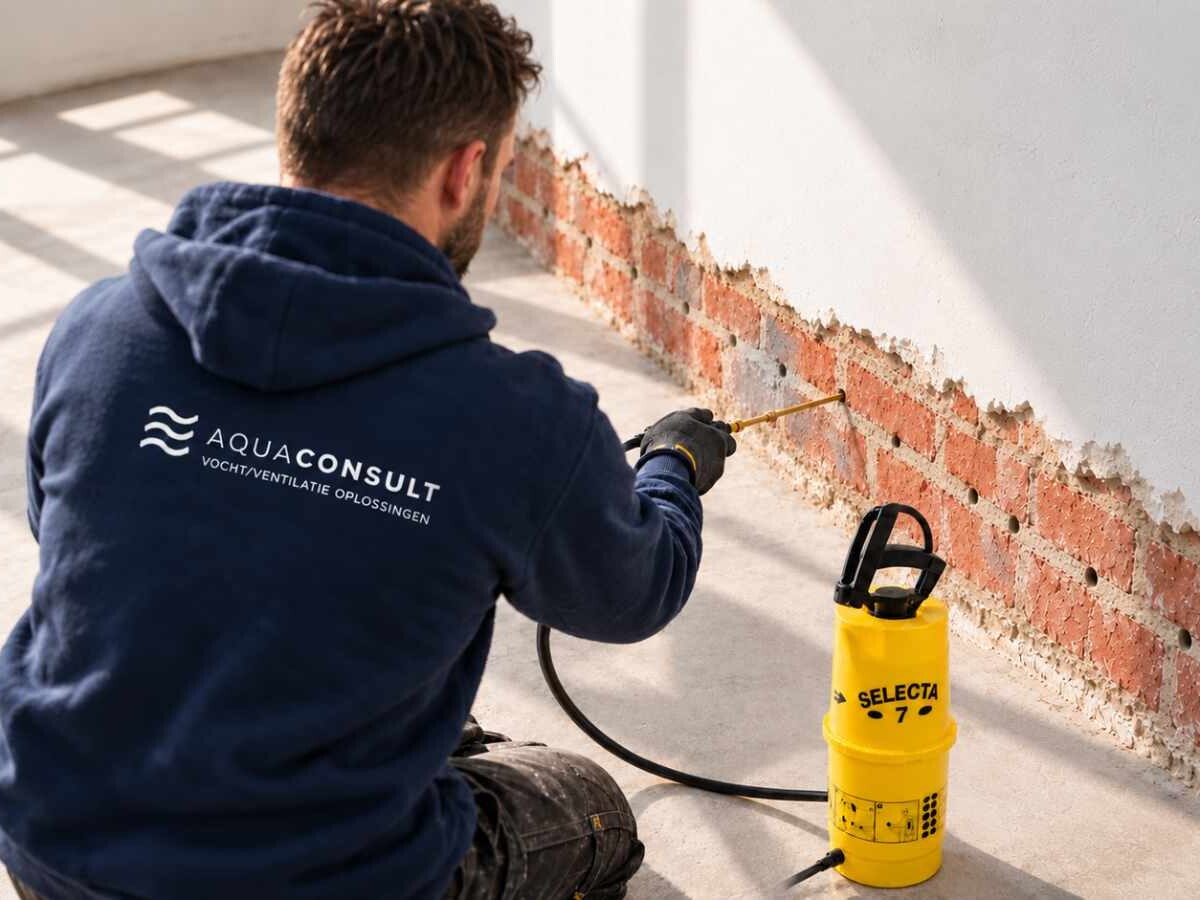
- Targeted moisture control in the case of structural causes: If specific areas of the wall remain damp, if you notice a persistent musty smell, or if black mold Does it keep reappearing in the same place? If so, the cause is often a thermal bridge in the façade, penetrating moisture, rising damp or a hidden leak. In that case, a professional damp survey and targeted treatment is needed to tackle the damp problem at its root once and for all.
Step 4: What if the air in your bedroom is just a bit too dry (< 35% – 40%)?
During dry, freezing spells in winter, intensive ventilation can make the air indoors too dry. Do you find you have a sore throat or dry eyes? If so, gradually and carefully bring the relative humidity in your bedroom back up to a comfortable level.
- Turn the heating down by 1 to 2°C: cooler air holds relatively more moisture, making the room feel less dry straight away.
- Hang a humidifier tray on the radiator: a simple and safe way to slightly increase the humidity without the risk of oversaturation.
- Choose houseplants in moderation: a spoon plant, areca palm or curly fern will evaporate some water, but don’t keep the potting soil too wet to prevent mould.
- Use a humidifier with a hygrostat: always choose a model that switches off automatically, and clean the water tank thoroughly every week to prevent the growth of bacteria.
There is one golden rule to follow here: As soon as your 55% hygrometer beeps, switch off any form of humidification immediately. This is because excessive humidification quickly creates an ideal environment for dust mites once again, and fungi.
What are the benefits of the ideal level of humidity in the bedroom?
If you consistently maintain the relative humidity in your bedroom between 40% and 55%, you’ll notice the difference straight away in the quality of your sleep, your health and the condition of your home.
Keep humidity in your bedroom under control once and for all
Monitoring the ideal humidity level in the bedroom doesn’t have to be a complicated task. By taking targeted measurements in your room and sticking to the recommended range of 40% to 55%, you can take a big step towards a fresh, healthy and mould-free indoor climate with smart routines. If, however, you notice that your hygrometer consistently stays above 65% despite regular airing, or if there’s condensation on your windows every morning or dark mould patches are appearing, Then simply opening a window is no longer enough, and the cause lies deeper – think of insufficient ventilation capacity, a thermal bridge in the façade or an underlying moisture problem in the wall. At AquaConsult, we help you resolve this once and for all, without any guesswork. Our experts will visit you anywhere in Flanders for a no-obligation on-site damp survey. We measure both the air quality and the moisture content in your walls, identify the exact cause and draw up a sustainable solution to damp tailored to your home. Request your free expertise … and enjoy a healthy, dry bedroom every night once again.

More information and brochure request
Answer the questions below and get more information and our brochure based on them. Would you like the cost price calculated? Then indicate this clearly in the text field below and we will do the necessary.