

Do you suffer from moisture in the bedroom? You're not alone: in Flanders many bedrooms suffer from moisture problems. Think of problems such as a musty smell, condensation forming on windows or moisture spots on walls.
Recognising moisture in the bedroom
A bedroom is an important room in your home. It is the room in which you relax, get your sleep, watch TV or perhaps work or study. In other words, the bedroom is a place where you should like to be and where you would rather not be moisture problems have.
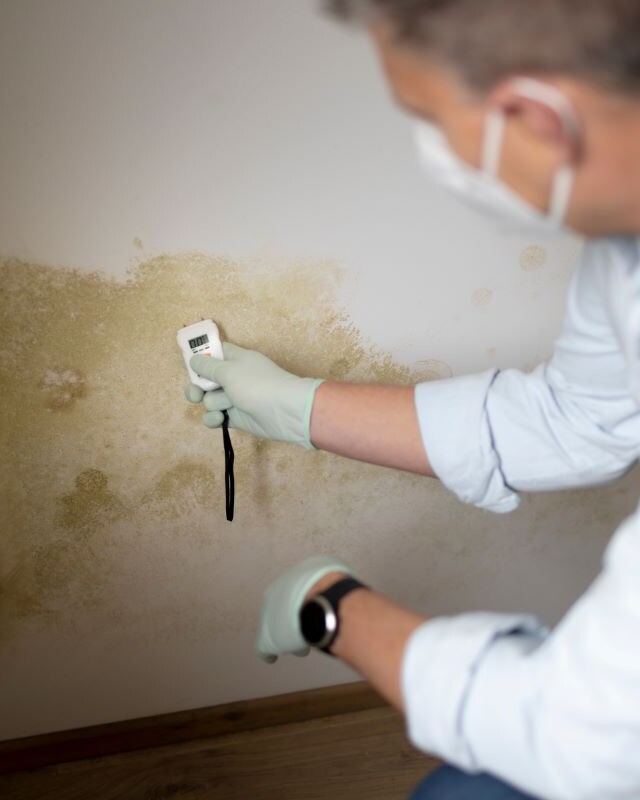
An ideal humidity level for a bedroom is between 40% and 60%. Is the value greater than that? Then chances are that sooner or later, you will experience humidity stains and problems. You can usually recognise an overly humid bedroom by the following symptoms:
If you notice these issues in your bedroom, it's a good idea to get a moisture specialist enable.
Consequences of a damp bedroom
Consequences of a damp bedroomIf you notice the previous characteristics in your bedroom but do not intervene, it can lead to all kinds of negative effects. We list the main ones:

Causes of an excessively damp bedroom and their solutions
There are several causes of bedroom moisture, each with their own moisture solution. It is recommended to use a moisture expert in order to determine the exact cause. Once the exact cause is known, a suitable solution can also be provided. The most common causes are:
1. Condensation moisture
Condensation moisture is a common cause of a damp bedroom, as condensation is often caused by human actions. Think, for instance, of residents breathing or perspiring. Sleeping or cleaning can also increase humidity. When this moisture has nowhere to go, it will settle against cold surfaces. In addition thermal bridges be the culprit.
The ideal solution to condensation dampness is to make your bedroom the best it can be ventilate, so that the excess moisture can leave. You can take action yourself in this regard, for example. Here are some tips:
As you can see, you can do a lot yourself. However, you can also enlist the help of a mechanical ventilation system. For example, in a type D ventilation system, both supply and return air are fully mechanically controlled by means of valves. This system thus provides a precise balance in air circulation within the house.
Remark: in some cases, another moisture problem leads to higher humidity and consequently condensation moisture. For example resounding or rising damp.
2. Rising damp
Is your bedroom on the ground floor? Then rising damp lead to moisture in the bedroom. This occurs when there is a problem with or lack of the water barrier, causing groundwater moisture to penetrate the walls of the bedroom.
Rising damp is best tackled professionally by having injecting your walls. Then experts drill holes in the damp walls, and then inject them with a damp-proof product.
3. Penetrating moisture
It can also penetrating moisture to the cause of a damp bedroom. This is moisture that penetrates through the outside of the house due to (heavy) precipitation and seeps through the interior walls.
Penetrating moisture in the bedroom area is best combated through facade impregnation. In this process, a transparent but waterproof layer is applied to the façade. This liquid fills the pores of the facade and forms protective layers, provided the facade is clean and damage-free.
4. Leaks
Finally, a leak in one of the pipes can lead to an excessively damp bedroom. As leaks are often not immediately visible, the moisture problem is often only visible after several months. To solve this, it is best to call in a specialist/plumber. This person has the necessary equipment to detect leaks that are not visible to the human eye. After such leak detection, you will also receive a report and professional advice regarding the necessary repairs.
Additional tips against a damp bedroom
Want to reduce the humidity in your bedroom while you wait for moisture control, or are you looking for ways to prevent moisture problems? With these simple tips, we'd love to help you get started!
Solving and treating an excessively damp bedroom
Are you experiencing moisture problems in the bedroom? Don't wait until it's too late. Let AquaConsult help you and request your free bedroom moisture diagnosis today.
Frequently asked questions about damp bedrooms
A damp bedroom calls for a swift and, above all, well-thought-out approach. Damp in your bedroom not only damages your walls and furniture, but it also disrupts your sleep. If you notice damp patches, peeling wallpaper or condensation on the windows If you notice this, it is best to take the following steps straight away.
- Ensure there is good air circulation in your bedroom: open the windows wide for 15 to 30 minutes every day to replace the damp indoor air with drier outdoor air. Also leave the interior doors ajar during the day to allow for sufficient air circulation.
- Minimise sources of excess moisture in the room: do not dry washing in the bedroom, and avoid using plants that release a lot of water vapour as decoration.
- Maintain a consistent temperature in the room: make sure your bedroom doesn’t get too cold and, above all, doesn’t drop below 15 to 16 °C. In cold rooms, water vapour from your breath and perspiration condenses much more quickly on cold external walls and windows.
- Tackle the cause, not just the symptom: the fungi Polishing away or painting over the damp patches only provides a temporary visual solution. Without professional intervention to tackle the source of the damp, it will return the moisture problem back soon.
Tip from the AquaConsult experts: Is the humidity in your room consistently above 60%? If so, simple household tips won’t be enough. Let a free expertise carried out by a specialist in your region. That way, you’ll know straight away whether the damp problem is caused by condensation moisture, a thermal bridge or penetrating moisture through the façade.
You spend a third of your life in bed and, therefore, in your bedroom. Sleeping in a room that is too damp therefore has direct consequences in various areas.
- Disturbed sleep and a clammy feeling: with high humidity In the bedroom, your body finds it harder to release sweat and heat to regulate your body temperature. This results in a clammy bed, a lot of tossing and turning during the night, and a shallow sleep pattern.
- Health risks: a damp indoor environment in the bedroom can trigger respiratory problems and coughing, and can cause or exacerbate allergies and asthma.
- Persistent and musty odours: damp in the bedroom seeps unnoticed into the porous materials in the room. As a result, your mattress, pillows, bed linen and clothes in the wardrobes take on a musty smell that is difficult to wash out.
- Damage to the finish and interior of your bedroom: in the long term, damp causes visible damage. Just think of wallpaper coming away, peeling paint, mould stains on the ceiling and warped furniture or floors.
- Attracting pests and mould: damp bedrooms provide the ideal breeding ground for dust mites, silverfish and mould spores that settle in the corners of the room.
Have you noticed one or more of these issues in your home? If so, don’t wait until the damage or health problems get worse. AquaConsult operates locally in Flanders and we’d be happy to pop round to identify the root cause of the damp in your bedroom once and for all with our free expertise.
Yes, sleeping in a damp room poses health risks. The World Health Organisation points to structural moisture problems and fungi in the home is therefore considered to be a direct cause of respiratory conditions.
- Chronic irritation of the airways: fungal spores and house dust mite faeces irritate the mucous membranes. This manifests as night-time coughing, a blocked nose, a sore throat, wheezing and chronic sinusitis.
- Worsening of allergies and asthma: people with allergies are more likely to experience a recurrence of symptoms. In asthma sufferers, a damp sleeping environment can even trigger frequent and severe attacks.
- Skin problems: the presence of mould and dust mites in your bedroom can cause or aggravate eczema, rashes and itching.
- Fatigue and headaches: exposure to toxic moulds, such as black mold, and impaired oxygen uptake lead to unexplained headaches, listlessness and reduced concentration during the day.
- Additional risk for vulnerable groups: babies, young children, the elderly and people with a weakened immune system are at the greatest risk of developing chronic bronchitis or allergic reactions.
To dehumidify a damp bedroom in the short term, you can opt for quick, temporary solutions. These might include placing chemical moisture absorbers in your wardrobes or using an electric dehumidifier in the room. Although a portable dehumidifier removes a considerable number of litres of moisture from the ambient air every day and temporarily reduces the humidity in your bedroom, it consumes a lot of electricity and merely masks the symptoms of the underlying moisture problem. As soon as you stop using a dehumidifier, that damp feeling or the mould will return immediately. These temporary fixes never tackle the root cause of the damp problem.
For a final moisture solution a structural and professional intervention by a damp specialist such as AquaConsult is required. Depending on the exact cause in your home, we offer a bespoke damp treatment with a 100% guarantee. If the problem is persistent condensation moisture that builds up at night whilst you’re asleep? Then we’ll install a mechanical ventilation system with heat recovery, which continuously extracts polluted indoor air without the need for major demolition work to install the system. We notice during our free expertise that the problem comes from outside, as in resounding or rising damp, then we’ll sort this out professionally via facade impregnation or wall injection. This ensures that the bedroom is thoroughly dehumidified, allowing you to enjoy a healthy and carefree sleeping environment once again.
The ideal relative humidity In a bedroom, the temperature should be between 40% and 60%. Within these limits, you’ll sleep in a healthy indoor environment and prevent condensation from forming on the cold windows or walls in the room.
Does the humidity level consistently rise above 60%? If so, mould and dust mites will have free rein in your bedroom. With a simple hygrometer, you can quickly check whether your bedroom falls within these safe limits. So ask your free expertise and our experts will measure this for you.
Open your bedroom windows wide for 15 minutes every day to let the damp indoor air out. Make sure the room temperature stays at least 15 to 16 °C, and do not dry wet laundry in your bedroom.
Does the clammy feeling persist, or is it condensation moisture in your bedroom? If so, these basic habits are no longer enough to reduce the humidity in your bedroom. In that case, it’s time for a professional damp-proofing solution tailored to your bedroom. Our experts will then install a mechanical ventilation system with heat recovery in your bedroom. This system continuously removes excess moisture from your bedroom in a particularly energy-efficient way.
A humidity level A 70% reading in your bedroom is harmful and, above all, unhealthy for the occupants. At these levels, there is an acute risk of mould in your bedroom, leading to musty odours and respiratory problems or worsened allergies.
Do you consistently measure a humidity level of 70% or higher in your bedroom? If so, then a free expertise carried out by one of our experts to determine the exact cause, such as condensation moisture or a thermal bridge, to be identified immediately with a bespoke quotation for a final moisture solution.
For small, enclosed cupboards in your bedroom, traditional moisture absorbers containing calcium chloride or silica gel work best at drawing excess moisture out of your clothes and textiles.
However, dehumidifiers are simply not enough for a whole bedroom. To permanently remove dozens of litres of moisture from a room each week, you do not simply absorb the moisture in the room, but remove it in a controlled manner using a professional mechanical ventilation solution tailored to AquaConsult’s needs.