Silverfish in the house? Why they are a sign of an underlying damp problem
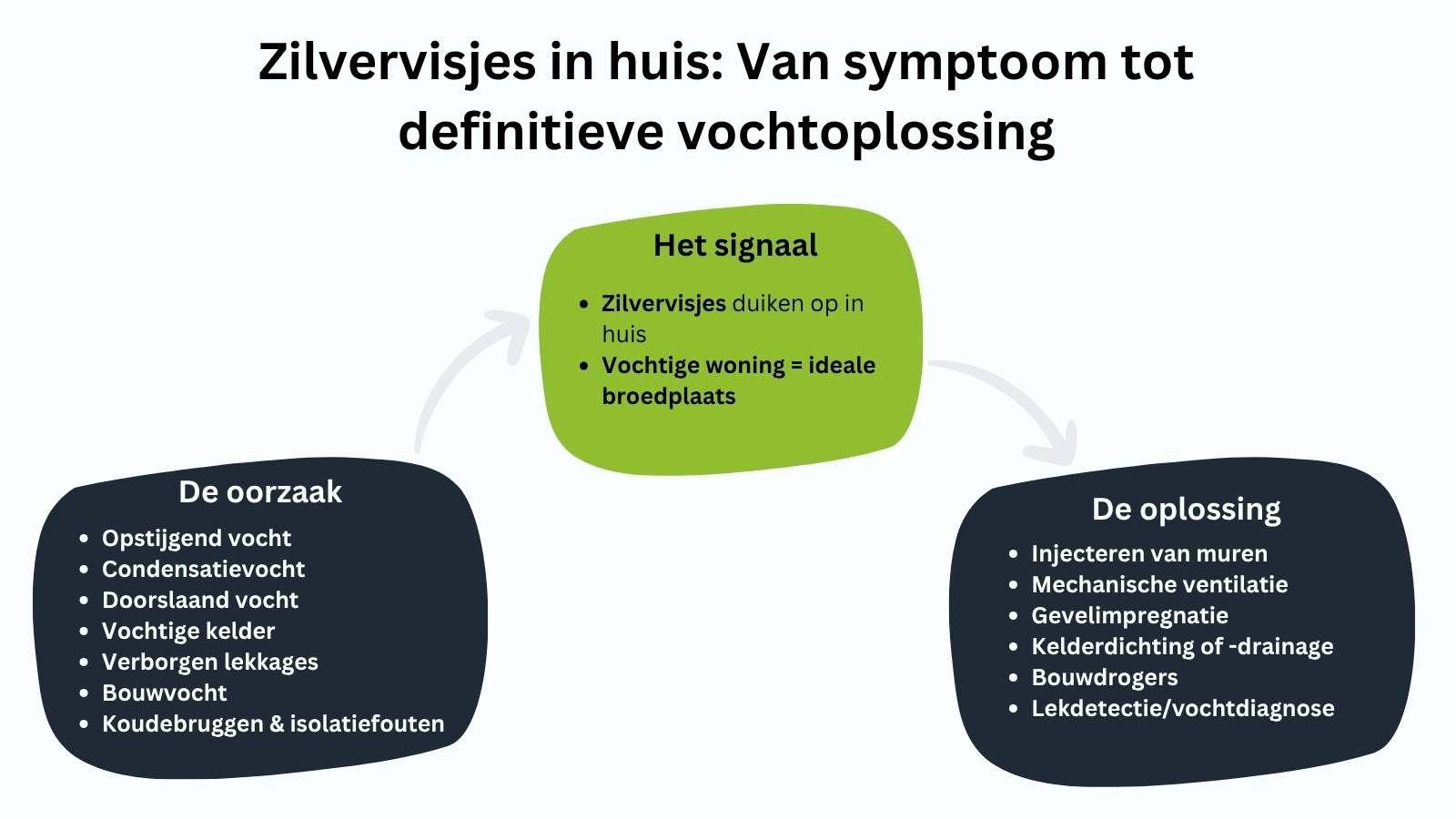
Getting rid of silverfish in the house using sprays or traps, whilst you moisture problem will continue to exist? That’s like trying to mop up with the tap still running. Those little, silvery creatures can only survive in places where relative humidity is structurally too high. They are not the real problem in the house, but they are a symptom of a damp home that is crying out for help from its occupants. From condensation on the windows to rising damp in the walls: silverfish appear when the climate inside the house is out of balance. And as long as the source of damp isn’t dealt with, they’ll keep coming back. That’s why the specialists at AquaConsult explains exactly how the link between damp and silverfish works, how to identify what type of damp problem you have, and which professional damp-proofing treatments you can get your home back to being healthy and dry.

What exactly are silverfish in the home?
The silverfish, also known as Lepisma saccharina, is a small, wingless insect belonging to the order Thysanura, a group of wingless insects. They are nocturnal creatures that hide away during the day in the dark nooks and crannies of your home. As such, they only emerge once it gets dark indoors.
In your damp flat they go in search of food rich in carbohydrates, starch and sugars. We’re not talking about the sort of food we eat, but things like wallpaper paste, cardboard, glue and skin flakes. What many people don’t realise is that silverfish are microscopic mould on your walls, in the corners of the room and on the ceiling. They do not bite, do not carry diseases and do not damage the load-bearing structures of your home, but the presence of silverfish can quickly make your home feel unhygienic and may cause minor damage to your wallpaper.
How can you spot silverfish in your home?
You can recognise a silverfish in your home by its specific characteristics.
- Appearance: they are 7 to 12 millimetres long and have an elongated, teardrop-shaped body that tapers towards the rear.
- Colour: their bodies are covered in shiny, silvery scales that glisten in the light.
- Anatomy: they have two long antennae at the front and three distinctive antennae at the back that look like threads.
- Movement: they have no wings, but move quickly with a characteristic, snake-like wriggling motion.
- Location: you’ll almost always find them along the skirting boards, under your cupboards or around the drains in wet areas such as the bathroom, the toilet, the cellar or the laundry room.
Note: Do not confuse the silverfish in your home with booklice. Booklice are duller in colour, larger and thrive in dry, warm places where they gnaw at your books and documents. The silverfish always moisture in the house required.
Why do you find silverfish in your home?
Silverfish don’t just turn up in your home by chance. They are actually attracted to damp areas, which provide the perfect living environment for them. The main reason for their presence in the home can be traced back to three factors.
- Excessive humidity: silverfish have thin skin and dry out quickly in a dry environment. That is why they relative humidity They need at least 70% to 80% in the home in order to survive and reproduce.
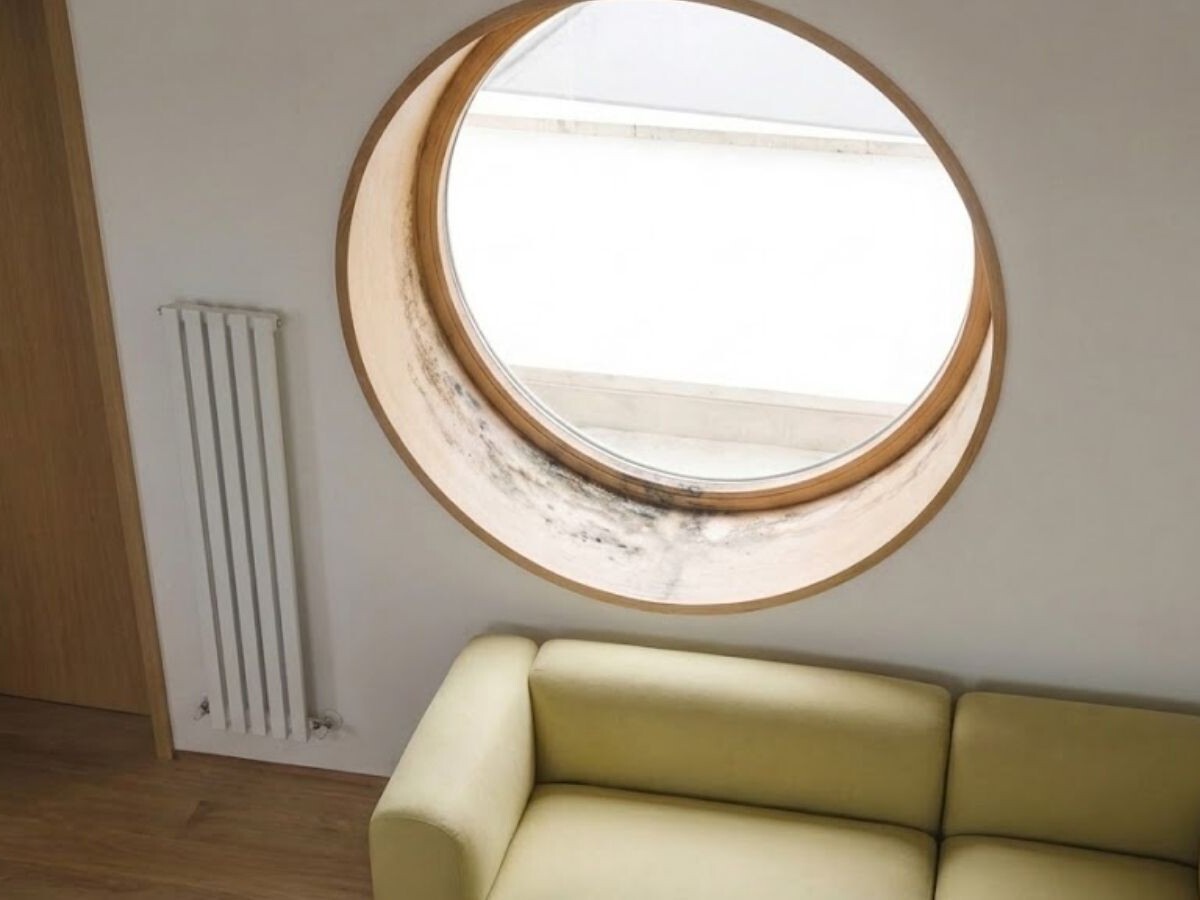
- Presence of mould: damp walls, corners and skirting boards provide the ideal surface for invisible fungal spores in the house. For silverfish, this is an irresistible source of food.
- Sufficient shelter: poorly finished skirting boards, gaps between tiles, worn-out sealant edges and cavity walls provide the ideal – and, above all, dark – hiding places where they can let their eggs hatch undisturbed.
In short: Do you regularly spot silverfish in your home as evening falls? If so, that’s a clear sign that the indoor climate in that particular room is too damp and that there may be an underlying moisture problem.
The link between silverfish and damp problems in the home
Silverfish cannot survive in a dry room or home. Their thin exoskeleton offers them little protection against dehydration, meaning they are constantly dependent on high relative humidity in-house capacity of at least 70% to 80%. If you regularly spot silverfish in your home, it’s never a coincidence. It’s a direct indication of an underlying moisture problem in the home. But not every damp problem is the same. At AquaConsult, we’ve found that silverfish are attracted by a wide variety of situations.
How does AquaConsult deal with silverfish in the home?
At AquaConsult, we do not use temporary chemical treatments to control silverfish in the home; instead, we tackle the root cause of the moisture problem for good. No moisture means no fungi And without moisture or mould, silverfish simply cannot survive in your home.
1. Rising damp: Professional wall injection
- The treatment: we inject a high-quality, damp-proof injection seal at the base of the walls to an impermeable moisture barrier to create.
- The result: the brickwork and plasterwork gradually dry out right through to the core.
- Effect on silverfish: the damp breeding ground behind your skirting boards disappears completely. Their eggs and larvae dry out completely and the silverfish colony dies off.
2. Condensation: Controlled mechanical ventilation
- The treatment: we install a smart and mechanical ventilation system in your damp rooms, which automatically extracts the damp indoor air and replaces it with fresh, filtered and heated outdoor air.
- The result: relative humidity at home, it falls and remains stable at a healthy 40% to 50%.
- Effect on silverfish: mould on the walls and the nests disappear for good. The silverfish’s food chain collapses and the adult specimens are the first to die off, meaning that, over time, the young ones will no longer survive either.
3. Damp cellar: Cellar waterproofing or cellar drainage
- The treatment: we’ll make the cellar walls watertight again using 100% via a basement tank using cement grouting layers or by draining the groundwater in a controlled manner via a pumping system from basement drainage.
- The result: a permanently dry and usable cellar.
- Effect on silverfish: the silverfish colony is destroyed. This puts a definitive stop to the constant migration of silverfish through your pipework into the rooms above.
4. Penetrating damp: Facade impregnation
- The treatment: After cleaning the façade, we apply facade waterproofing Apply a transparent, water-repellent protective coating to the exterior wall.
- The result: the rain then rolls off the façade, whilst the interior wall continues to breathe and is able to dry out.
- Effect on silverfish: the interior walls of your home dry out. Even on the top floors, the silverfish can no longer find damp spots to drink from or take shelter in, causing them to die out.
5. Hidden leaks and building damp: Leak detection and building drying
- The process: we detect hidden leaks in your home using thermal imaging cameras, without any demolition work, whilst our free damp assessment or speed up the drying process in your new-build home with professional building dryers.
- The result: the hidden source of damp is therefore stopped straight away and the structure of your home dries out.
- Effect on silverfish: their secret water oases behind your cupboards, pipe casings or plasterwork will disappear immediately.
Stop trying to get rid of silverfish in your home; start with permanent solutions to damp
Silverfish in the home are much more than just an annoying pest in the bathroom or cellar. They are a direct warning of a excessive humidity or a hidden moisture problem in your home. Carrying on spraying with chemical products or setting traps will, in the long run, only cost you money and cause a great deal of frustration. You’re only treating the symptoms of an underlying damp problem. Only when you tackle the source of the damp once and for all will the silverfish in your home disappear and dry out of their own accord. Ready to say goodbye to damp and silverfish in your home for good? Then don’t keep faffing about with temporary fixes. Let our experts carry out a thorough analysis of your damp problem. They’ll visit you, with no obligation, anywhere in Flanders for a free expertise.


More information and brochure request
Answer the questions below and get more information and our brochure based on them. Would you like the cost price calculated? Then indicate this clearly in the text field below and we will do the necessary.