Mould on the wall in your bedroom? Causes, risks and the definitive solution
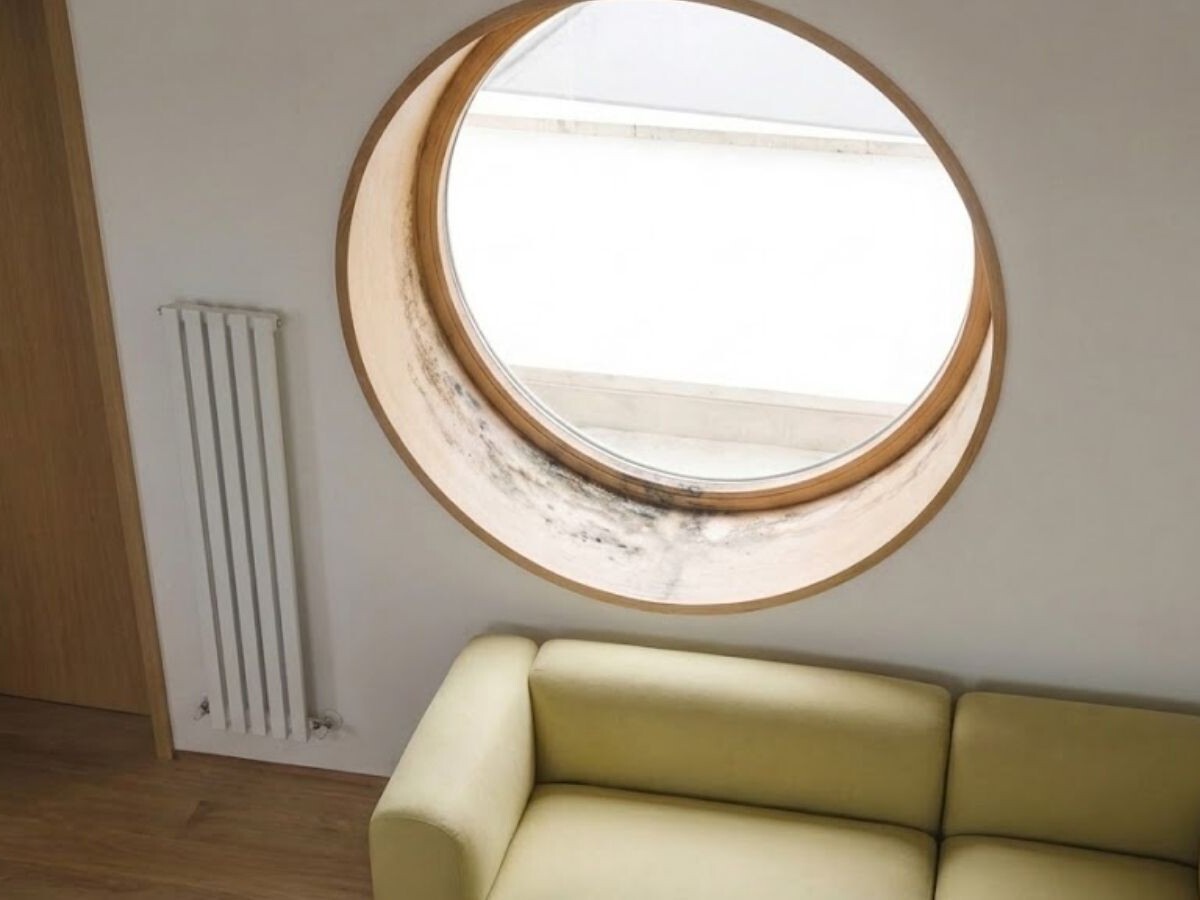
Have you noticed black spots, musty odours or peeling wallpaper in your bedroom? If so, you’re probably dealing with mould on the wall. Mould on the bedroom wall is one of the most common moisture problems in Belgian homes. Because we spend hours breathing and sweating in our bedrooms, it doesn’t take long for condensation moisture. However, condensation isn’t always the only cause of mould on your bedroom walls. In this blog, we at AquaConsult I’d like to explain how mould develops on the wall of your bedroom, and what the risks are for your health and which moisture solution is needed to get rid of mould from your bedroom for good.


Why does mould tend to grow on the walls of your bedroom?
The bedroom is the room in your home most prone to mould growth. There are therefore many different causes for this moisture problem cause in your bedroom.
The consequences and risks of mould on your bedroom wall
Mould on the walls of your bedroom is not just an aesthetic problem; it also affects both your health if the condition of your home. As you spend an average of 7 to 8 hours a night in your bedroom and are constantly breathing in mould spores, the risks are particularly high.
6 steps to a mould-free bedroom
To mould on the wall To get rid of mould in your bedroom once and for all, you need a structured approach. This step-by-step guide will help you minimise mould spores straight away, clean your bedroom safely and choose the right professional damp-proofing solution to choose.
Step 1: Minimise immediate damage and prevent the spread of traces
Have you spotted mould behind your wardrobe or next to your bed? If so, never brush or sand it whilst it’s dry. Doing so will send the millions of invisible mould spores on the wall flying around your bedroom.
It is better to open the windows in your bedroom. Above all, ensure there is direct and cross-ventilation in the room. Then, lightly dampen the mouldy area with a cloth to stop the mould spores from spreading. Also, always leave a gap by placing your bed and wardrobes at least 5 to 10 centimetres away from the wall. Finally, be sure to wash any textiles in your bedroom, such as your bed linen and curtains, at a temperature of at least 60°C.
Step 2: Cleaning mould safely
Bleach only bleaches the mould on the surface of your bedroom wall; it does not tackle the roots of the mould spores in the porous plaster.
Of course, there are a number of other ways to safely remove the mould from your bedroom wall.
- Bicarbonate of soda solution: dissolve 6 grams of bicarbonate of soda in a litre of warm water and scrub the mouldy area clean.
- Cleaning vinegar: apply the cleaning vinegar to the mouldy area, leave it to work for an hour, then rinse it off with water.
- But never mix bleach with vinegar, as this can produce toxic chlorine gas.
Step 3: Control the humidity in your bedroom
A healthy level of relative humidity In the bedroom, it ranges between 40% and 60%. Does the humidity remain consistently too high due to daily condensation And doesn’t manual aeration help? If not, then a mechanical ventilation system AquaConsult has the solution.
It is a decentralised mechanical ventilation system, such as a continuously controlled Type D ventilation system with heat recovery. It automatically extracts the humid air from your bedroom and brings in fresh, dry outside air. This prevents permanent condensation moisture.
Step 4: Tackle the underlying cause of the damp
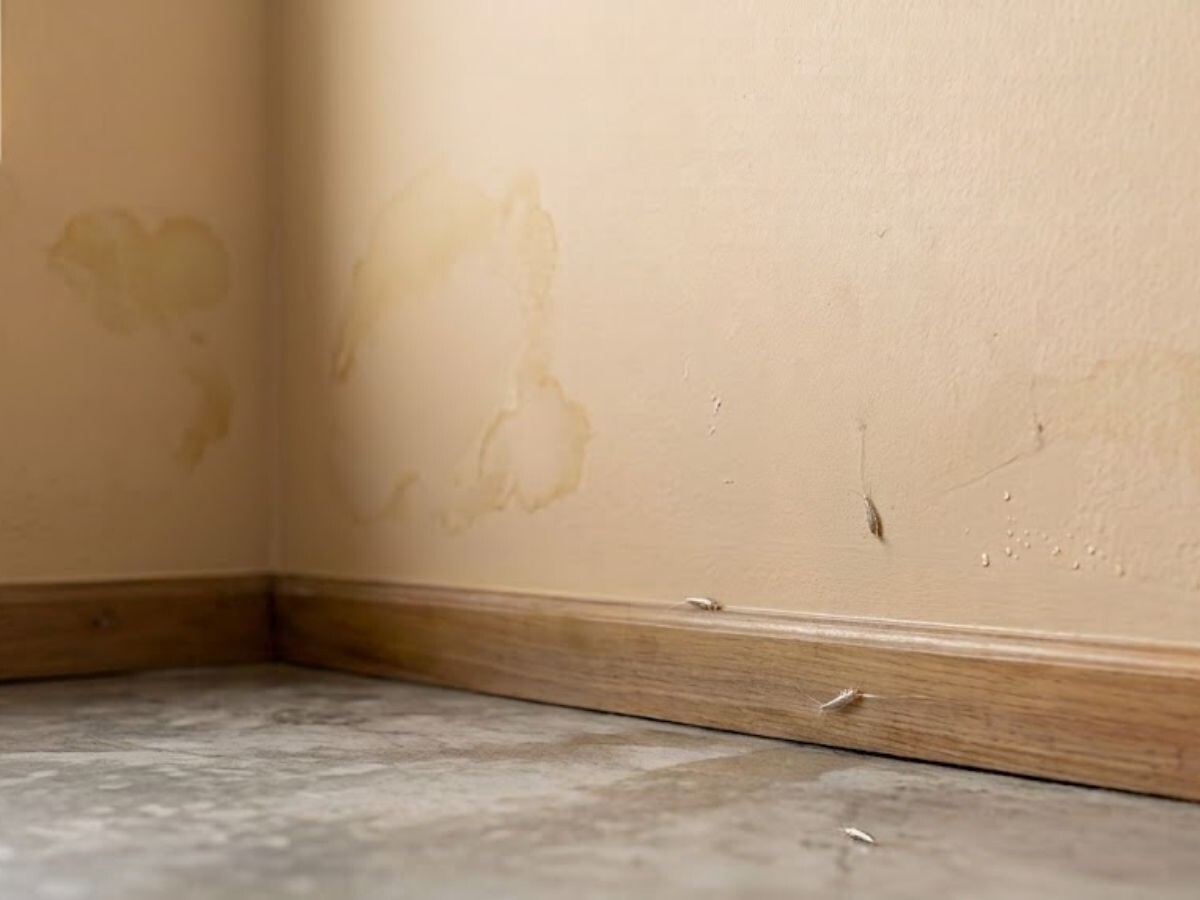
Does the mould keep reappearing in specific places on your bedroom wall? If so, this is a structural problem moisture problem which must be dealt with professionally by AquaConsult.
- Rising damp: Do you have a bedroom on the ground floor? If so, groundwater may well seep up through the bottom of your bedroom wall due to the lack of a water barrier. AquaConsult solves this by to inject the walls of your bedroom using a moisture-repellent gel. This gel forms an impenetrable chemical barrier against rising damp.
- Penetrating moisture: If rainwater is seeping through your damaged or porous façade, AquaConsult is the solution facade impregnation . This makes the façade water-repellent without compromising its breathability.
- Leaks: if you suspect there is a hidden leak in the walls of your bedroom, AquaConsult will a targeted moisture measurement to identify the source of the moisture problem to locate it without causing any damage.
Step 5: Repair and paint correctly
There’s no point in painting over a damp or untreated mouldy wall in your bedroom, because the mould it will grow through it again within a few weeks.
- Always wait until the bedroom wall has dried out completely: only after AquaConsult’s moisture solution Once this has been done and the wall is dry, you can start repairing your bedroom wall.
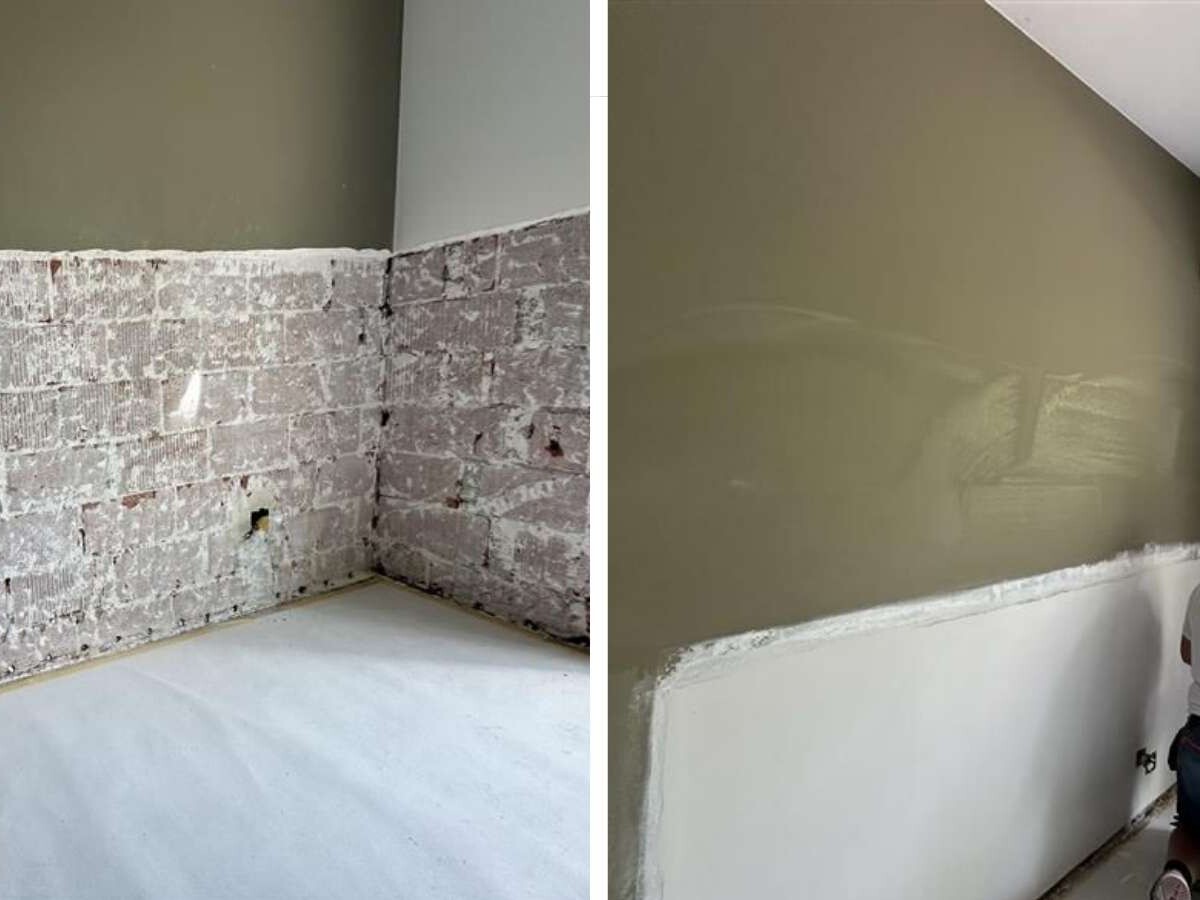
- Replacing damaged plaster: chip away the mould-affected or soft plaster from the wall and apply a new layer of plaster. Or let our experts the plastering decorate your bedroom wall.
- Primer and paint: apply a mould-resistant primer to your wall and finish it off with a high-quality, vapour-permeable wall paint.
Step 6: Request a free damp assessment from AquaConsult
Don’t just guess at the cause of the mould on the wall in your bedroom, because to measure is to know.
Our experts will be coming free of charge on site throughout Flanders using professional measuring equipment. The damp expert determines this using an objective moisture diagnosis exactly which moisture problem identify the cause of the mould on your bedroom wall and draw up a bespoke treatment plan with a guarantee of results.
Put an end to mould on the wall in your bedroom once and for all
Mould on the wall A damp problem in your bedroom is something you should never ignore. Although you can temporarily reduce the amount of mould spores with emergency measures and a gentle clean, this only tackles the symptom. As long as the underlying source of damp, such as condensation moisture, rising damp or penetrating moisture, if the problem isn’t sorted out, the mould spores are bound to reappear on your bedroom wall. Furthermore, the continuous inhalation of mould spores poses a direct risk to your health and a good night’s sleep. With a targeted, structural solution to damp Not only do you protect your home from costly consequential damage, but, above all, you ensure a healthy and safe sleeping environment. Do you want to get rid of mould, damp walls or a musty smell in your bedroom once and for all? Let the experts at AquaConsult identify the exact cause of your damp problem. Our damp experts will visit you free of charge and with no obligation anywhere in Flanders. Enquire now your free expertise to.
More information and brochure request
Answer the questions below and get more information and our brochure based on them. Would you like the cost price calculated? Then indicate this clearly in the text field below and we will do the necessary.