Water in the cellar after rain? Follow this step-by-step guide for immediate action
Every homeowner’s worst nightmare is discovering water in the cellar after a heavy summer storm or days of continuous rain. Water in the cellar after rain is, unfortunately, a common occurrence in Flemish homes. Whether it’s a few annoying puddles by the floor-to-wall joint or a cellar that floods completely after every downpour, the impact on your home and your state of mind is significant. As well as the physical damage to stored belongings, the damp can quickly lead to mould, a persistent musty odour and, in the long term, even damage to the building structure. At AquaConsult Every day we see just how discouraging a damp cellar may be the case. Many people start mopping in a hurry or quickly slap a coat of waterproof paint over the wet cellar wall, only to realise once again during the next downpour that the moisture problem is exactly the same again. Professional damp-proofing calls for a well-considered and systematic approach that tackles the cause at its source. In this blog, we’ll explain step by step what you should do immediately if your cellar is flooded, how to carry out an initial assessment yourself, and what definitive moisture solutions AquaConsult will make your cellar dry and usable again.


Immediate steps to take if water gets into the cellar following a heavy downpour
What should you do if your cellar is flooded? This is the question you’ll ask yourself as soon as you notice water in the cellar after rain. Taking immediate action is crucial. Switch off the electricity straight away, check whether the water is sewage, document the damage with photos for your fire insurance, and gradually pump the cellar dry using a submersible pump.Acting hastily when your cellar is flooded often leads to dangerous situations or problems with your insurance. If your cellar is suddenly flooded, follow these steps.
Is this yet another instance of your basement flooding after it’s rained? If so, mopping up and pumping out the basement is really just treating the symptoms, and your foundations have a structural moisture treatment required.
Causes: why does your cellar get flooded after rain?
When a heavy downpour hits the ground around your home, the large volume of rainwater accumulates directly against your foundations. This causes hydrostatic pressure. This means that the mass of water is pressed against the underground part of your home – namely your cellar – with enormous force. The groundwater then inexorably takes the path of least resistance, which is usually the cellar floor or the cellar walls. From that point on, there is a damp cellar.
Depending on the type of property, the age of the building, local soil conditions and the groundwater level, water can enter your home – and particularly your cellar – in various ways.
- A weak or damaged seam: The base joint is the junction between the cellar floor and the cellar walls. As the floor and walls are laid separately, this joint is, by its very nature, a weak point. Due to the movement of the building or rising groundwater pressure, hairline cracks form here, through which water seeps first.
- Porous cellar walls: Here we are talking about lateral water infiltration. Older properties built with bricks or concrete blocks will, over time, experience wear and tear in the brickwork and pointing. Water that remains in the ground after rain slowly seeps through the cellar walls, resulting in damp patches and active water ingress.
- Rising groundwater through the cellar floor: Where the groundwater level is high or the soil is clay and has poor permeability, water pushes directly up against the cellar floor from below after a rain shower. In the case of old tiled floors, cobblestones or thin, cracked concrete floors, the water forces its way up through the joints and cracks.
- Poorly sealed cable and pipe penetrations: Utility pipes for electricity, gas, water and sewerage often enter the house through the basement wall. If the areas around these penetrations are not finished to a 100% watertight standard, they provide a direct route for rainwater to enter your basement when groundwater pressure rises.
- Cracks and fissures in the foundations or walls: Settlement cracks are caused by the house settling or fluctuations in the groundwater level. These cracks compromise the watertightness of your foundations. Under high hydrostatic pressure, even a small hairline crack is enough to allow litres of water to seep into your cellar.
- Overloaded sewerage systems and sewer backflow: During a downpour, the public sewerage system is sometimes unable to cope with the volume of water. The water rises and finds a way out via the lowest point in your home, namely the drain, the sink or a toilet in the cellar.
- Poor drainage around the house: Sometimes the problem lies outside the cellar itself. In that case, we refer to a damp cellar due to environmental factors. Just think of blocked drainpipes, broken gutters or a patio that slopes towards the house. As a result, all the rainwater collects right at the foot of the cellar wall.
- Condensation at high humidity: Warm, humid outdoor air that, after a summer shower penetrates the cool cellar, strikes on the cold walls and floor. This condensation moisture causes damp patches and mould, which is often mistaken for a leak in the cellar.
What is the cause of the damp in your cellar?
A wrong one moisture treatment, such as sealing a cellar wall when the problem actually lies with the cellar floor or the joint between the wall and the floor, costs money and does not solve the moisture problem not. AquaConsult carries out a thorough damp survey to determine the exact cause.
Carrying out an initial damp assessment yourself
With this handy checklist, you can find out for yourself within half an hour where the moisture problem exactly how it comes about. This means you’ll have valuable information at your fingertips as soon as you call in an expert from AquaConsult.
- Damp at the junction between the cellar wall and floor: The butt joint has failed. This is the most common weak point when groundwater pressure rises.
- Wet streaks or damp patches on the cellar walls: There is lateral water ingress. Rainwater seeps horizontally into your cellar through porous brickwork or damaged joints.
- Puddles of water that accumulate on the cellar floor: This indicates high groundwater pressure beneath the basement floor’s foundations. The rising groundwater finds its way upwards through cracks or porous concrete.
- Water around pipes or cables: The pipe penetrations are no longer watertight. Water is seeping into your cellar along the route of the utility pipes.
- Water bubbling up from the drain: You are experiencing sewer backflow because the street drainage system cannot cope with the heavy rainfall in time.
- Inspection outside the house: Check that your drainpipe isn’t overflowing, that the gutters are clear of leaves, and that the paving around the house slopes slightly away from the building.
When should you call in an AquaConsult expert straight away?
If you notice visible cracks in the brickwork, salt efflorescence or saltpetre, plaster coming away, or do you notice that the moisture problem returns after every rain shower? Then it’s time for a professional damp survey tailor-made.
AquaConsult’s definitive solutions for damp: Basement tanking vs. basement drainage
When it comes to structural and professional damp-proofing In this regard, AquaConsult uses two methods to permanently resolve the issue of water in the cellar following rainfall. These are basement and basement drainage. Which method is right for your home depends entirely on the source of the damp and the water pressure present. By a free expertise By applying to AquaConsult, you ensure that a permanent solution to damp from you damp cellar.
Basement tanking or waterproofing to prevent water ingress through the basement walls
Basement tanking or waterproofing This involves waterproofing the cellar walls using a multi-layer cement or mortar system. AquaConsult uses this method to apply an impermeable barrier to the inside of your cellar walls.
- When is basement tanking carried out?: For cases of slight to moderate damp ingress through the cellar walls or porous bricks. Or when the cellar floor is still in perfect condition and does not let water through from below. Or if you want to convert the cellar into a dry living space, hobby room, utility room or cool storage area.
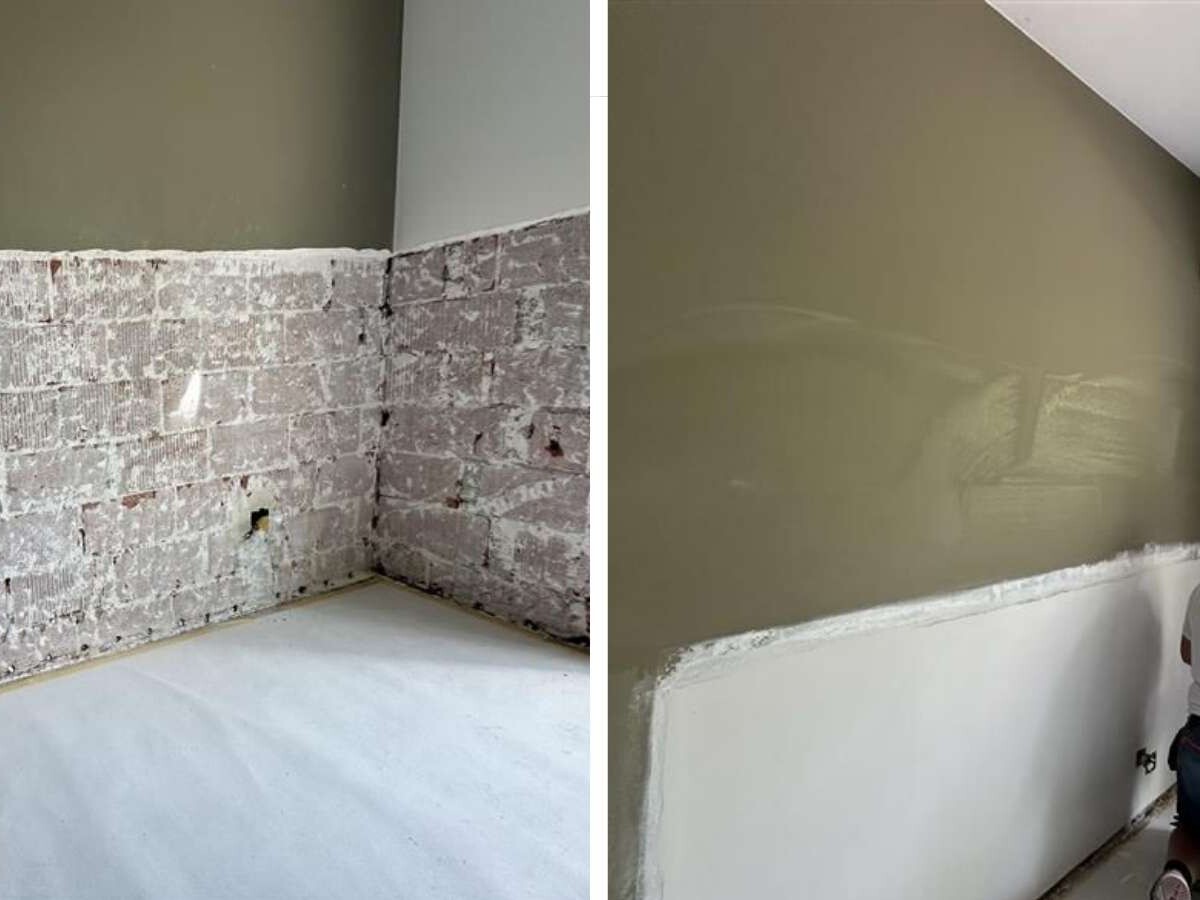
- How is basement waterproofing carried out?: The process begins by removing and cleaning old, damaged layers of plaster and paint down to the bare stone or concrete. Our experts then begin preparing and repairing the cellar walls. Cracks, fissures and damaged joints are meticulously cut out and filled with a fast-setting mortar. A reinforcement is also added to the floor-wall junction. The junction between the cellar floor and wall is fitted with an extra-reinforced waterproofing corner to seal the vulnerable joint. Finally, they apply the cement layers. Several layers of waterproof mortar and cement are applied to the basement walls until a rock-solid, smooth and dry shell is created.
- When does basement waterproofing not work?: In cases of extremely high groundwater pressure, where water is actively forced upwards through the cellar floor. And when the foundations are subject to continuous settlement or vibrations, which could cause a rigid cement layer to crack again over time.
Basement drainage as an active water drainage system
When, after every heavy downpour, water rises through the cellar floor or continues to seep into the cellar via the joint, desperately trying to stem the excess pressure is often a losing battle. Basement drainage opts for a different, smart approach by collecting the water in a controlled manner and draining it away immediately.
- When is basement drainage carried out?: When groundwater rises and pushes up through the cellar floor after rainfall. And when there is continuous, high hydrostatic pressure on the foundations. Or when the cellar walls are too porous or damaged to seal the cellar simply by basement to make it waterproof.
- How is basement drainage carried out?: It all starts with the installation of a dimpled membrane. The cellar floor is covered with a specially embossed, waterproof dimpled membrane featuring micro-channels. This is followed by the formation of the drainage channels. Any water that penetrates collects in these channels and is channelled from below to the lowest point in the cellar. The collected water then flows to a pump pit fitted with a powerful, automatic submersible pump. The pump automatically and silently discharges the collected water into the mains drainage system or a rainwater tank. The cellar floor is then neatly finished with a new layer of concrete.
- When does basement drainage not work?: When there is no power supply in the cellar – after all, the submersible pump needs electricity to work – we provide a battery backup in critical cellars. Or when there is only a localised condensation or a tiny patch of damp on the cellar wall. In that case, cellar drainage would be too drastic a measure, and a simple damp-proofing treatment would suffice.
Are you unsure which solution is right for your cellar?
AquaConsult will visit you free of charge to a thorough damp survey. We measure the hydrostatic pressure and advise you on the most sustainable method for your home.
Put a definitive stop to water in your cellar after rain
Water in the cellar after rain is a stressful damp problem that you’d rather see sorted out today than tomorrow. Don’t get bogged down with mops, buckets or temporary DIY solutions that merely shift the damp problem elsewhere. To protect your home effectively against mould, musty odours and structural damage, a professional and bespoke approach is essential. Would you like to know exactly which damp-proofing solution will make your cellar 100% dry and usable again? The specialists at AquaConsult are here to help, with over 20 years’ experience throughout Flanders. Enquire today your free expertise to.
More information and brochure request
Answer the questions below and get more information and our brochure based on them. Would you like the cost price calculated? Then indicate this clearly in the text field below and we will do the necessary.