Do you have damp patches in your home? Treating damp walls
A damp wall in the house is never the problem itself, but rather a symptom of an underlying moisture problem. Have you noticed peeling wallpaper, mould, flaking paint or white salt efflorescence on your interior walls? If so, damp has found its way into the structure of your home. Painting over the damp patches or quickly applying a damp-proof primer won’t solve the problem. The damp will simply find another way to the surface of your walls. To a damp wall To resolve the problem once and for all, the specific cause of the damp problem must be tackled using the correct and, above all, professional moisture solution. We at AquaConsult We’ll explain what damp problems are causing the damp walls in your home and the specific damp-proofing solutions we use to make your home 100% dry again.

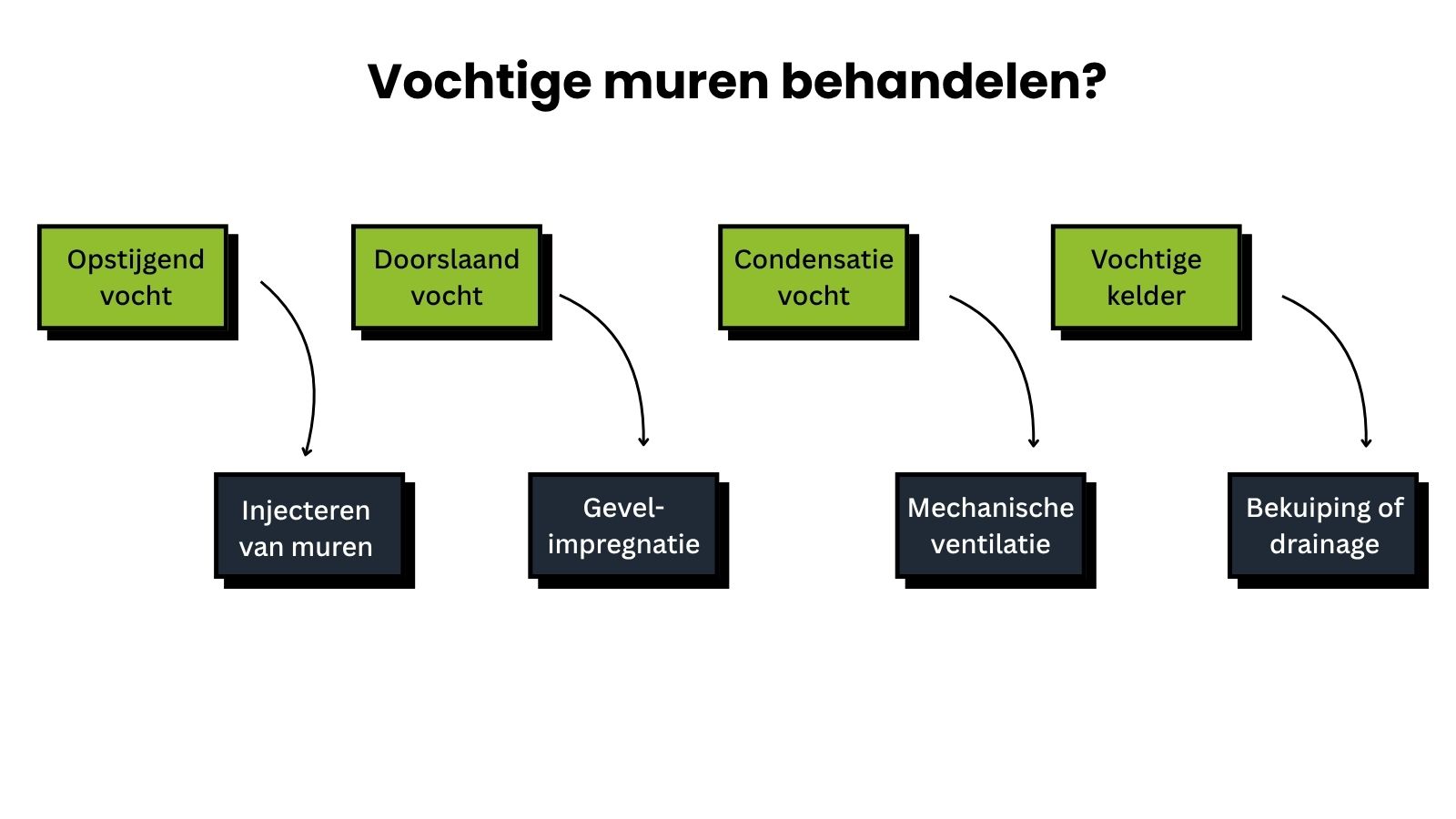
What type of damp is causing your damp wall?
Before any actual drilling, blasting or grouting takes place, our experts carry out a free expertise determine on the spot exactly where the damp is coming from. Damp walls caused by one of these four specific moisture problems.
Cause 1: Rising damp
Rising damp is groundwater that seeps up through the foundations and the base of the walls, rising through the entire wall. This occurs when a water barrier – the damp-proof course at the base of the wall – is missing, damaged or worn.
Rising groundwater causes damp walls in the house, as the bricks and mortar in your foundations act like a sponge. Without a high-quality damp-proof course or water barrier, the brickwork effortlessly draws the groundwater upwards. Along with this damp problem, mineral salts are also drawn up from the ground into the wall. When the groundwater evaporates, these salts remain in the wall and plastering, where they continuously draw moisture from the air inside.
So how do you identify rising damp as the cause of damp walls in your home?
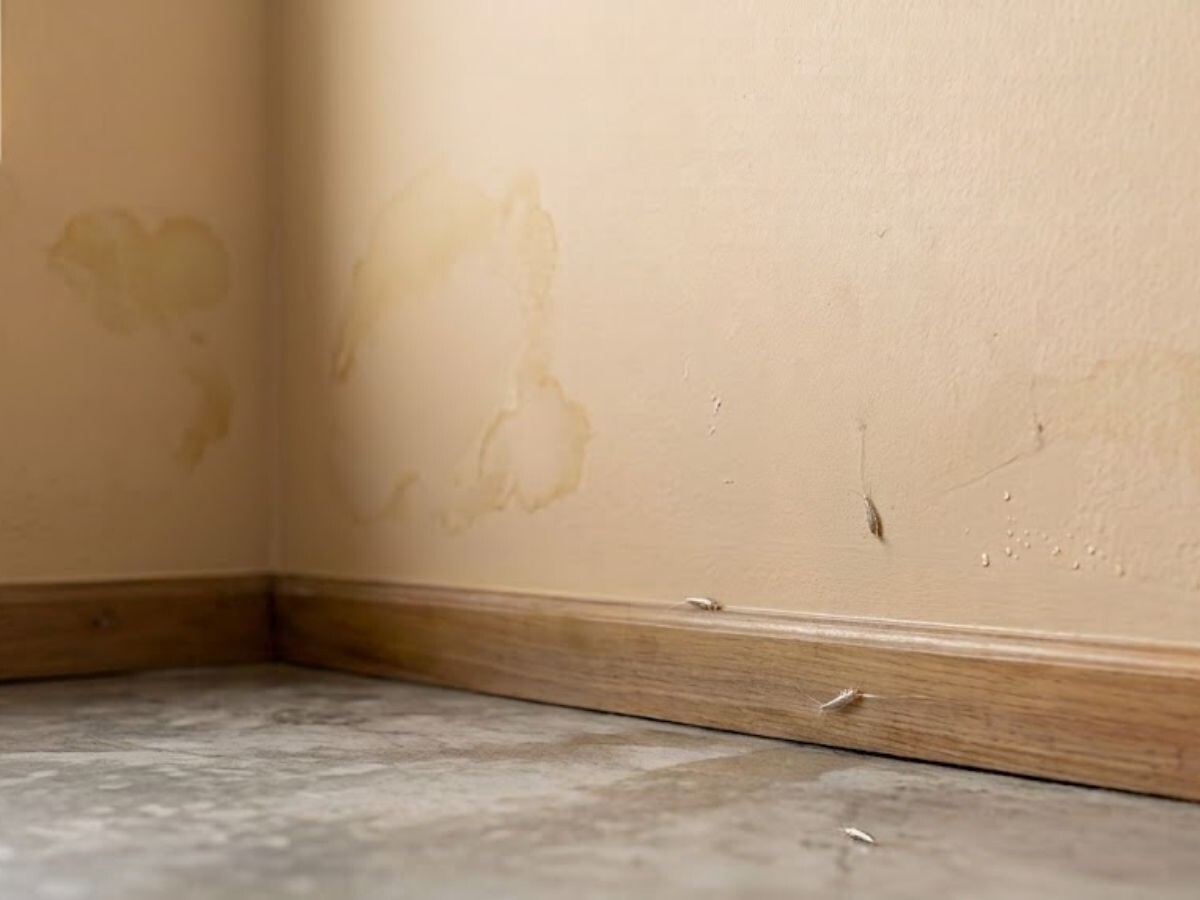
- Damp patches, peeling wallpaper or flaking paint at the bottom of the walls on the ground floor, up to a height of 1 to 1.5 metres.
- Loose or rotten skirting boards and crumbling, powdery plasterwork.
- White salt rash or saltpetre which lies on the wall like a fluffy layer.
- The damp problem is limited solely to the walls in your home that are in direct contact with the ground.
Cause 2: Rising damp
Penetrating moisture This is rainwater or external moisture that penetrates your home from outside through a damaged or porous façade and eventually reaches your internal walls.
Rainwater or external damp seeping in causes damp walls inside the house. Due to the weather, frost damage or age, your façade loses its protective function. If the bricks become porous or the pointing develops cracks, the façade absorbs water every time it rains. This damp works its way through the external wall and then appears on the inside of your home.
How can you recognise moisture seepage?
- Damp patches in random places on the walls and even on the floors above.
- The damp patches are getting worse or spreading after heavy or prolonged rainfall.
- Visible damage to the exterior of your home, such as bricks cracked by frost, cracks, porous mortar joints, or green algae and moss growth.
Cause 3: Condensation
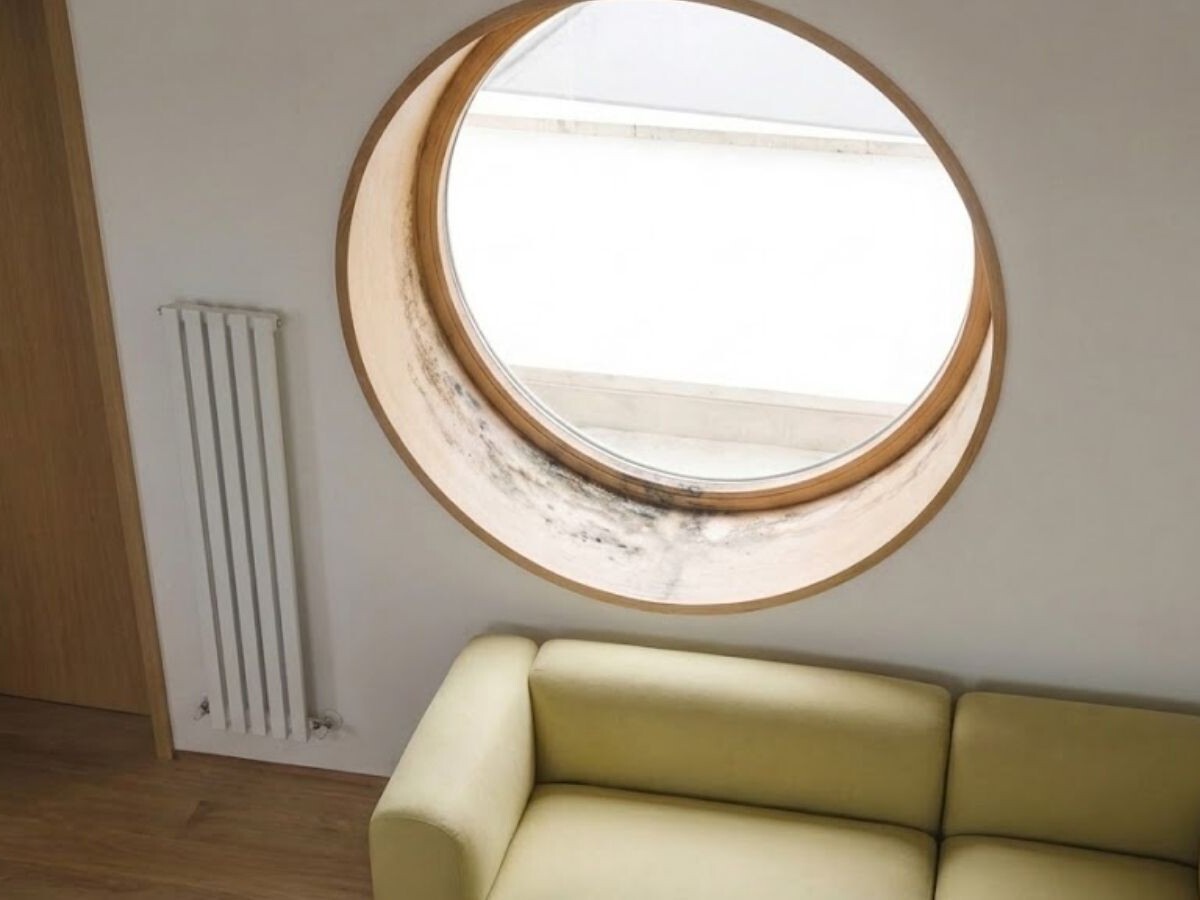
Condensation moisture is caused by the daily production of moisture in the home whilst cooking, showering, drying the washing and even breathing. When this moist indoor air cannot escape from your home, it condenses as condensation on the coldest surfaces in space.
Moisture from the air causes damp walls in the house, because without proper ventilation the indoor air becomes saturated with moisture. As soon as this warm, damp air comes into contact with the cold walls in the living area, the air cools down significantly and the water vapour condenses into liquid water on the wall. This causes the wall to feel permanently damp, which is the ideal breeding ground for fungi.
How can you tell if there’s a lack of ventilation in your home?
- Black mould spots, mainly in the corners of the walls, around the window frames or behind heavy cupboards in the living area.
- Mist on the windows or water droplets on the windows, especially in the morning.
- A musty, damp smell in the house that won’t go away.
- You health complaints worsen during the colder autumn and winter months.
Cause 4: Damp in the cellar and water ingress
Damp in the cellar, also known as a damp cellar This occurs when groundwater enters the cellar under high pressure through the cellar walls, the floor or the joint between them.
A damp cellar, or damp rising from the cellar, causes damp walls in the house, as the cellar is situated entirely below ground level. As a result, the walls are constantly subjected to high lateral pressure from the surrounding groundwater. Old or damaged cement layers crumble, allowing the water, under this high pressure, to be forced inwards through the cracks and porous bricks. This damp not only seeps into the cellar walls, but can also spread to the living areas above.
How can you tell if walls are damp as a result of water seeping into the cellar?
- Damp or soaking-wet cellar walls, occasionally accompanied by visible seepage or dripping water.
- Puddles of water on the cellar floor, particularly after periods of heavy rainfall or when the groundwater level is high.
- A constant musty smell in the house and mould on the stored items or wooden structures in the cellar.
How does AquaConsult treat your damp wall?
Each moisture problem calls for an effective, specific, professional moisture control tailored. Here at AquaConsult, we are committed to sustainable moisture control solutions which tackle the source of the damp, so that your walls dry out completely and remain permanently dry.
Solution 1: Wall injection
The injecting your walls This is carried out using a high-quality moisture-resistant injection gel, combined with a salt-resistant membrane or remedial plaster.
- Our experts drill injection holes, each 10 to 12 centimetres in size, into the wall, just above the floor.
- Under low pressure inject They inject a moisture-repellent grout into the injection holes, which penetrates deep into the core of the masonry.
- They then chip away the salt-damaged plaster from your wall and apply a salt-resistant membrane or restoration plaster before the wall is finished again with professional plastering work.
The injected gel spreads into the pores of the brickwork in your walls and hardens to form an impenetrable chemical barrier against damp. It rising groundwater can no longer rise up through your walls. And the salt-barrier membrane prevents any mineral salts left behind in the wall from attracting moisture and damaging your new plasterwork or paintwork.
Solution 2: Facade impregnation
Professional façade waterproofing Any water-repellent treatment must be preceded by a thorough restoration of your façade.
- We’ll start by carrying out a thorough inspection of your façade. Damaged bricks will be replaced, cracks will be repaired, and porous pointing will be chiselled out and repointed.
- Once the façade has been restored, we clean the external wall to ensure that the pores of the brick are open.
- We then spray a transparent, water-repellent liquid – also known as a water-repellent treatment – over the entire external wall.
The liquid applied to the entire external wall during a façade impregnation treatment penetrates deep into the bricks and forms an invisible, water-repellent protective layer for your home. The rainwater From now on, moisture will be repelled from the façade and will no longer seep through to the interior walls. As the water-repellent treatment is vapour-permeable, the façade continues to ‘breathe’, allowing any trapped moisture from inside the house to evaporate outwards, but not the other way round.
Solution 3: Controlled ventilation
The installation of a decentralised or centralised mechanical ventilation system against damp walls in the house.
- During this process, our experts analyse a free damp survey the humidity and air flow in your home to determine the required capacity for the mechanical ventilation system.
- We install a quiet and energy-efficient ventilation system, such as a decentralised unit with heat recovery or a centralised mechanical extraction system.
- The ventilation system measures continuously relative humidity in the living area and switches on automatically when necessary.
By continuously extracting the damp and polluted indoor air and replacing it with fresh outdoor air, the relative humidity in the home falls to a healthy level. As the air is no longer saturated with water vapour, there can be no condensation condense more on the cold walls in the living area. Also, the mould on the walls lose their habitat and disappear for good.
Solution 4: Cellar tanking or cellar drainage
Complete waterproofing of the cellar via basement or basement drainage.
- For basement tanking: our experts remove all loose layers from the walls down to the brickwork. Leaks are sealed with cement, after which we apply several waterproof layers of cement and resin to the walls and floor. This creates a seamless and watertight tank.
- For cellar drainage: if the groundwater pressure is too high for a cellar tank, we fit a dimpled membrane to the walls and/or the floor. An automatic submersible pump collects the water and pumps it into the sewer system.
Both cellar tanking and cellar drainage relieve the pressure from the groundwater and completely seal off the cellar. Your cellar walls will dry out and the space is guaranteed to be 100% dry and ready for use again.
Solve the problem of damp walls in your home once and for all with AquaConsult
The aesthetic concealment of a damp wall Installing it won’t make any difference as long as the source of damp remains. Whether it’s rising damp, penetrating moisture, condensation moisture or a damp cellar: only a targeted and professional damp-proofing solution provides a long-lasting result and protects the value and health of your home. Would you like to know the exact cause of the damp walls in your home and how to fix them permanently? Don’t let damp and mould continue to damage your home. Enquire today a free expertise . That way, you’ll know exactly where you stand, with no surprises later on.

More information and brochure request
Answer the questions below and get more information and our brochure based on them. Would you like the cost price calculated? Then indicate this clearly in the text field below and we will do the necessary.