Water damage following a severe summer thunderstorm? Causes & solutions
A summer downpour following a heatwave immediately exposes the weak spots in your home. This is particularly true in regions with fluctuating groundwater levels or a high degree of paving, such as Antwerp or Ghent. After a heavy summer thunderstorm, many homeowners suddenly find that their cellar has flooded or that damp walls in living areas. Panic is the first and natural reaction, as water damage escalates very quickly. But simply guessing at the cause of the moisture problems At that point, it’s often a waste of money. That’s why, at AquaConsult with a free expertise or a damp survey which enables us first to carry out a precise and, above all, building physics-based assessment on site. Only then do we move on to a definitive and suitable moisture solution. In this blog, you’ll discover the most common damp-related issues following a heavy summer thunderstorm, how to minimise this damage, and why a targeted approach can prevent further damage to your home.

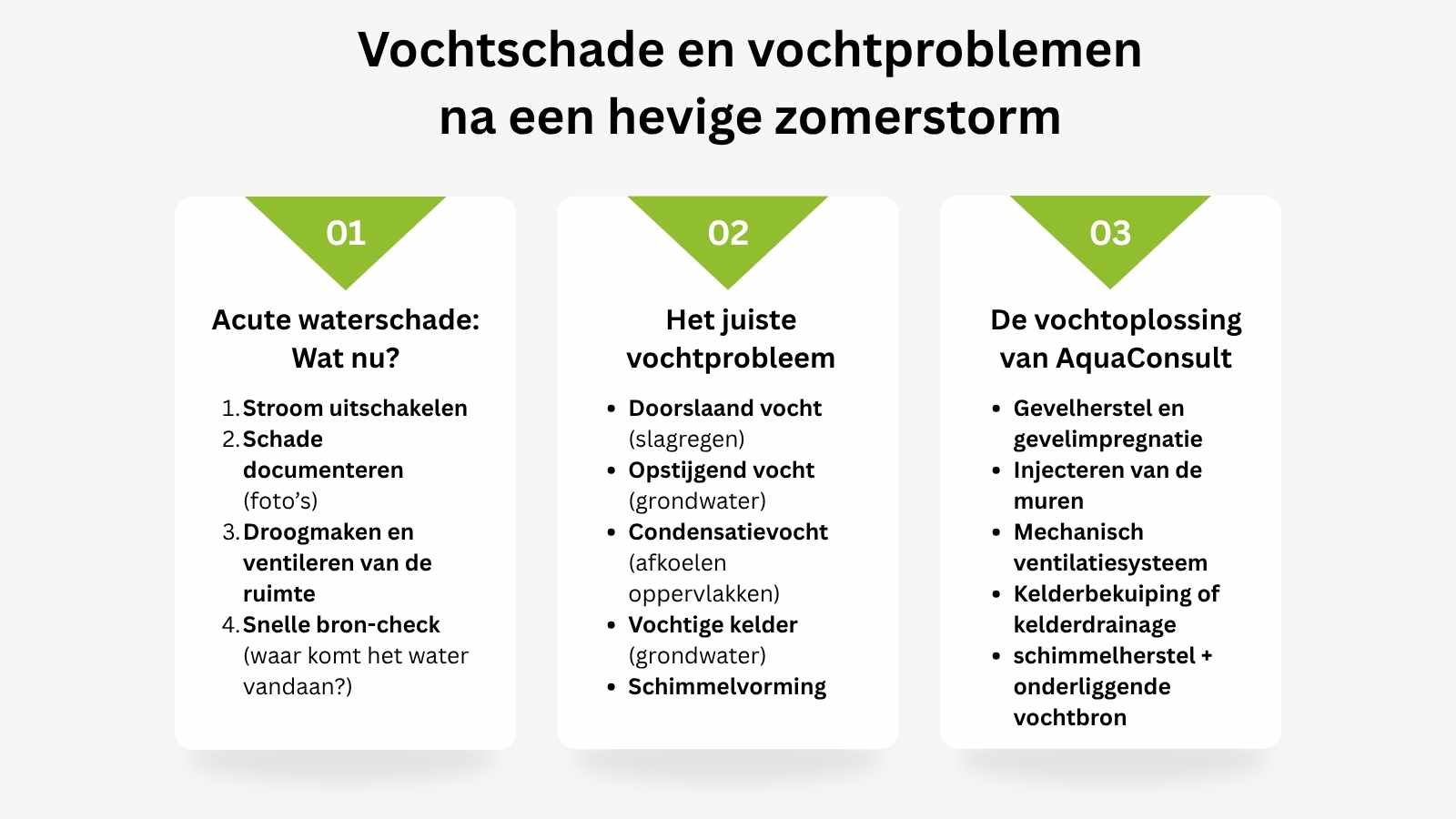
Acute water damage: What should you do straight away?
In the event of an acute water ingress, take immediate action to minimise structural damage to your home.
A dried-up damp patch on the wall does not mean that the danger has disappeared or gone away. Damp that seeps deep into the brickwork and the floor slab will, in time, cause persistent fungi and structural damage.
Penetrating damp: Damp walls caused by driving rain
During a summer thunderstorm, the strong wind drives the rain horizontally against the façade of your house with great force. After a spell of warm weather or a heatwave The brickwork or plaster often shows minute shrinkage cracks and drying cracks. Wind pressure then forces rainwater through the porous facing brick, damaging the jointing, worsening any existing cracks or affecting the worn sealant edge around the window. This is what we refer to as a serious damp problem.
What causes moisture to seep through
Penetrating moisture is rarely limited to a damp external wall. As soon as water penetrates the façade, it triggers a chain reaction of visible and invisible damage to the interior finish of the walls and the building’s structure. You can recognise this by the following symptoms:
- Damp patches that appear high up on the wall or around the window frames.
- Crumbling plaster, peeling wallpaper or blisters on the interior wall.
- White salt efflorescence on the interior brickwork.
- Reduced thermal insulation performance of the façade, leading to a higher energy bill.
AquaConsult’s permanent moisture solution
AquaConsult does not believe in quick fixes that are merely cosmetic moisture solutions. We first restore the structural integrity of the external wall by thoroughly repairing damaged bricks and broken mortar joints. Only once the façade is structurally sound do we apply high-quality façade impregnation . This transparent, breathable protective layer makes the façade completely water-repellent, without trapping moisture inside the wall.
Rising damp: Damp walls caused by damp rising from the foundations
During a cloudburst, a massive amount of rainfall falls on the ground around your home in a short space of time. The ground becomes completely saturated, causing the groundwater level to rise sharply. If the water barrier beneath your home is missing, damaged or no longer adequate due to overload, the porous masonry of the foundations will soak up the groundwater like a sponge. You will then be faced with eand a problem with rising damp.
What causes rising damp
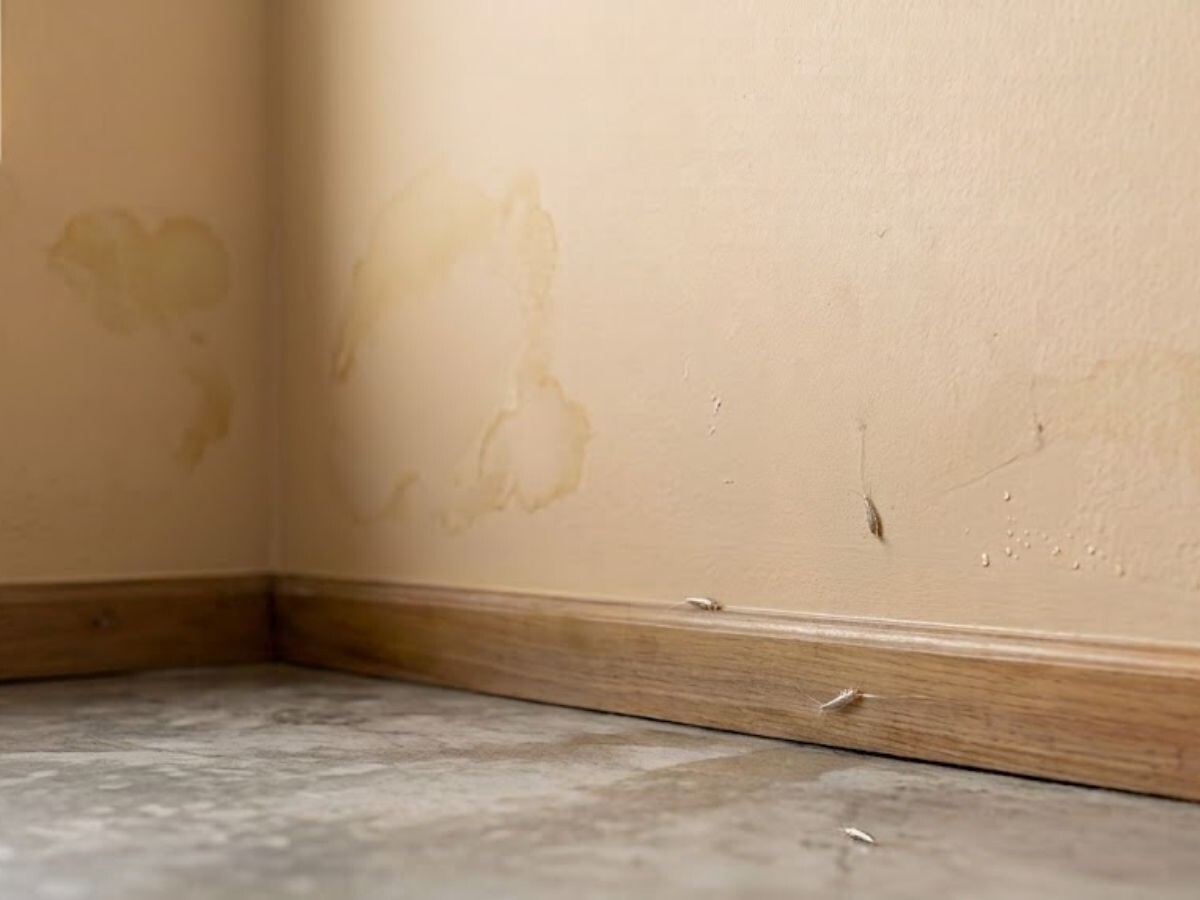
When rising damp As it works its way through the foundations, groundwater, together with the soil salts dissolved in it, gradually seeps into the living spaces. This causes persistent damage that becomes visible at the base of the wall.
- Damp patches that appear at the base of walls, up to a height of about 1 metre, and slowly spread upwards through the wall.
- Skirting boards that are coming away or have gone mouldy.
- Salt crystals on the plasterwork that cause the paint and finish to crack.
- A persistent musty smell in the living areas on the ground floor.
AquaConsult’s permanent moisture solution
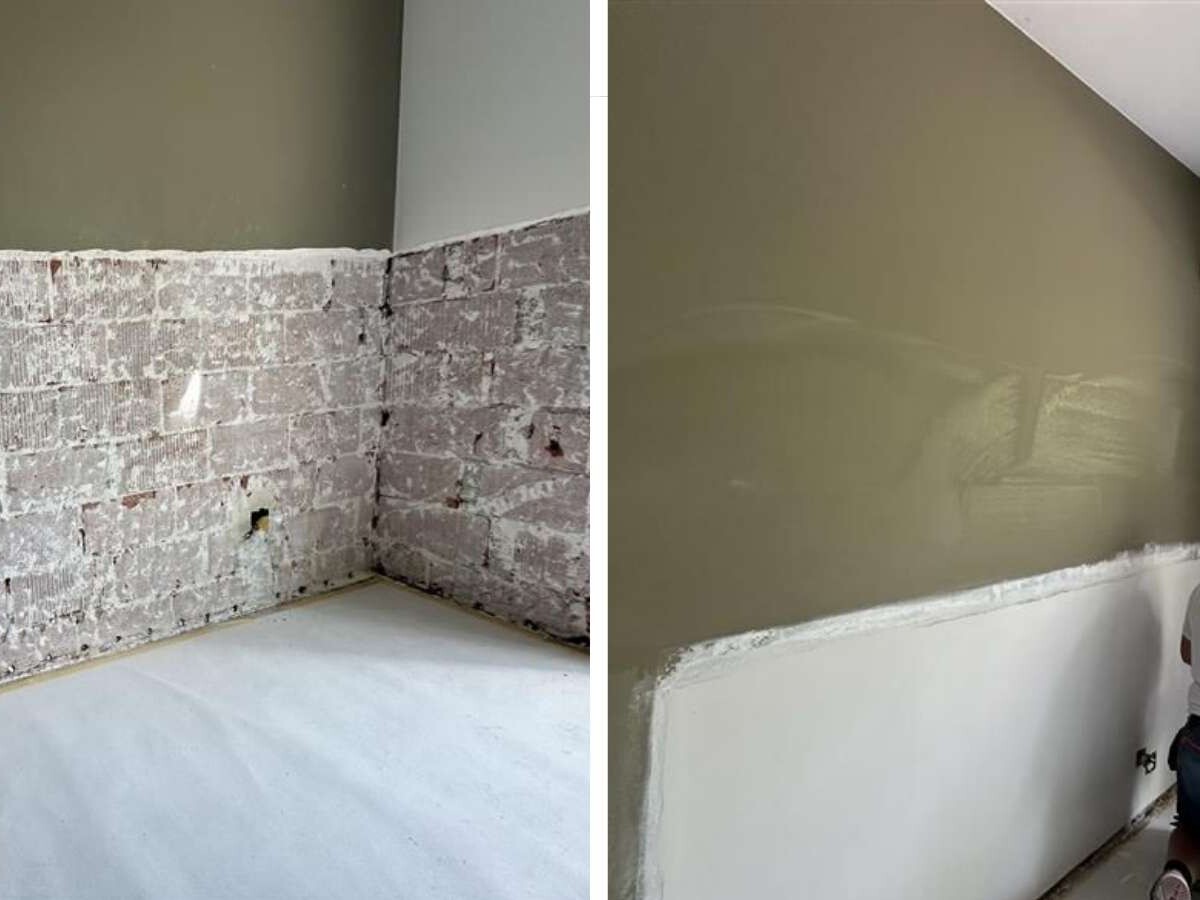
We treat rising damp at the source via wall injection. Our experts drill holes at regular intervals just above floor level and, under controlled conditions, inject a high-quality, moisture-repellent gel or liquid. This agent expands within the pores of the brickwork and forms an impermeable, permanent chemical barrier that permanently stops rising groundwater.
Condensation: Damp walls caused by temperature differences
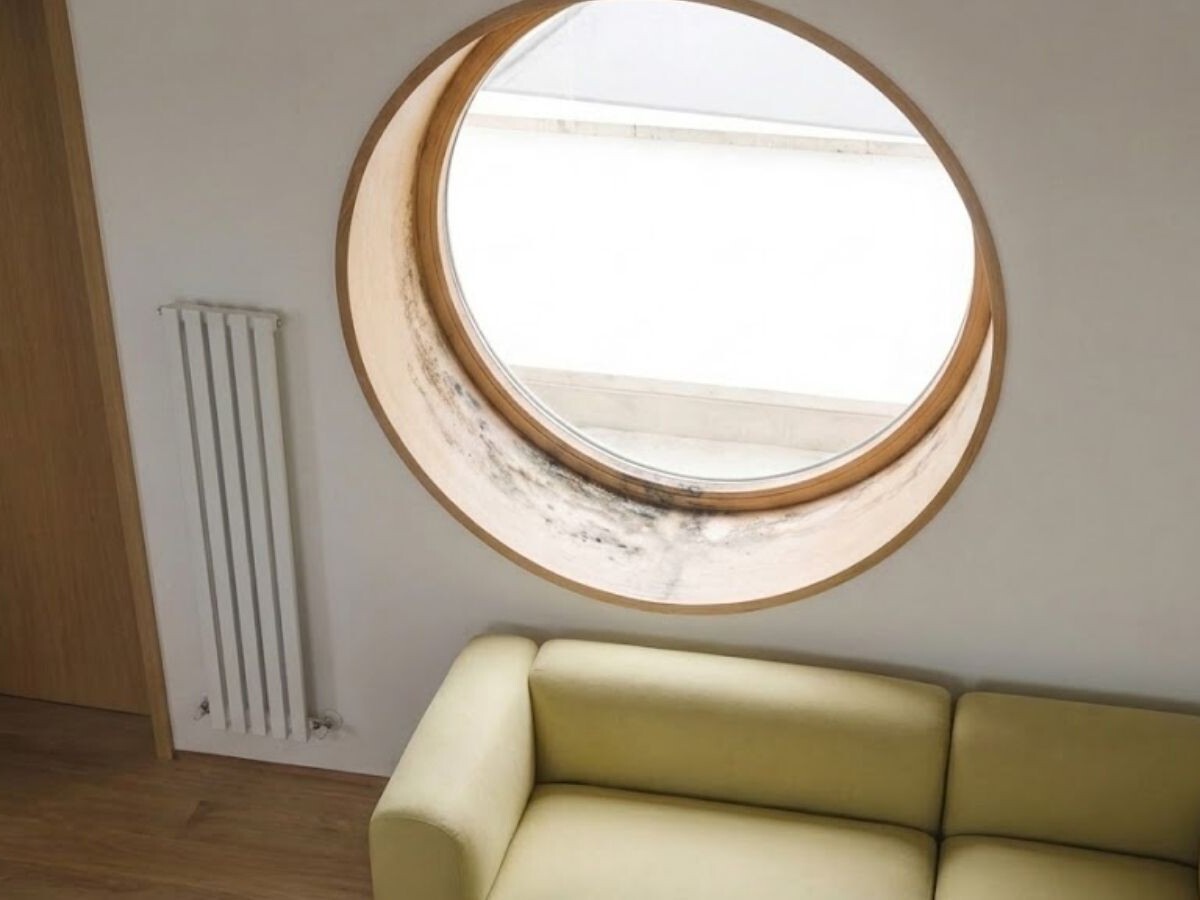
After a stifling heatwave The air inside your home is full of trapped heat and moisture. When a sudden and, above all, violent summer storm and a drop in temperature cause the façade and windows to cool down extremely quickly, a thermal shock occurs. The warm, humid indoor air comes into contact with the cooled surfaces in the house and immediately condenses into water. This is known as a problem with condensation.
What causes condensation
Condensation moisture At first glance, it often looks like a leak, but it is caused purely by damp indoor air condensing on cold surfaces in the home, such as windows and walls. If not dealt with in good time, this constant exposure to damp will lead to a nuisance throughout the entire interior.
- Mist-covered windows and damp, clammy interior walls, particularly in corners and at thermal bridges.
- Water droplets on ceilings and the appearance of mould patches around windows and in unventilated corners.
- Paint and wallpaper coming away without there being any external leak.
AquaConsult’s permanent moisture solution
A mistake moisture diagnosis often leads to unnecessary and costly damp-proofing works. That is why, at AquaConsult, we first carry out a precise building physics survey using our free expertise. If the problem turns out to be condensation, we will eliminate the source of the damp by installing a bespoke, energy-efficient, decentralised or centralised ventilation system such as mechanical ventilation. This ensures that excess moisture is continuously removed, maintaining a healthy indoor climate.
Damp cellars: Groundwater infiltration and flooded cellars
A cellar is situated below ground level and, following a severe summer storm, is exposed to extremely high hydrostatic pressure. The rising groundwater presses against the cellar walls and the floor slab with enormous force. The most vulnerable points are the butt joint – the connection between the cellar floor and the cellar wall – old layers of cement, small cracks and pipe penetrations. If the groundwater finds its way through these vulnerable points under high pressure, we refer to this as a damp cellar.
What causes a damp cellar?
As soon as the groundwater pressure breaches the barrier provided by the basement structure, this has immediate and far-reaching consequences for the usability and structural safety of the entire house.
- Stagnant water or a completely flooded cellar floor following a cloudburst.
- Puddles of water around the base of the cellar walls.
- Crumbling cellar walls, rusting pipes and a storage room that’s unusable.
- Moisture seeping up from the basement into the living areas above.
AquaConsult’s permanent moisture solution
AquaConsult offers two specialist solutions for sealing a damp cellar, depending on the situation:
- Basement tanking or waterproofing: If the structure of the cellar walls and floor is sufficiently strong, we strip the walls and apply several layers of waterproof mortar or cement that can withstand the built-up groundwater pressure.
- Basement drainage: In the event of extremely high groundwater pressure or a porous cellar floor, we install a dimpled membrane on the walls and/or floor. The seepage water is collected in a controlled manner and drained via a system of channels to a sump fitted with an automatic submersible pump, which pumps the water into the sewer system.
Mould on walls and ceilings
Mold are the direct result of untreated water damage or prolonged moisture problems. Mould spores are always present in the air, but they need moisture and an organic substrate such as plaster, paint or wallpaper to take hold and develop. Mould growth can begin very quickly, within 24 to 48 hours of a flood or water ingress caused by a summer storm.
What causes mould
Mold are not merely a cosmetic problem on the wall. They pose a direct risk to living comfort and health of the residents. The effects are quickly felt in the indoor climate.
- Black, green or hairy patches on walls, ceilings, behind cupboards and around window frames.
- A persistent, musty-sour smell that permeates furniture and clothing.
- Serious health complaints such as allergic reactions, chronic respiratory conditions, asthma and headaches.
AquaConsult’s permanent moisture solution
Simply scrubbing away mould is pointless unless the source of the damp has been dealt with. That is why we at AquaConsult follow a two-step plan:
- We carry out a professional mould treatment to remove the spores and stains safely and thoroughly.
- At the same time, we tackle the root cause, such as penetrating moisture, a damp cellar or poor ventilation.
Only when the wall remains dry will the mould problem be permanently resolved.
Make your home moisture-resistant for a severe summer storm with AquaConsult
Let a violent summer storm the value and do not compromise the comfort of your home. Avoid guesswork and opt for the certainty of an accurate moisture diagnosis. Our damp specialists will visit you anywhere in Flanders for a thorough analysis of the damp problem. We offer honest advice and a permanent damp-proofing solution tailored to your home. Enquire your free expertise to AquaConsult.
More information and brochure request
Answer the questions below and get more information and our brochure based on them. Would you like the cost price calculated? Then indicate this clearly in the text field below and we will do the necessary.